




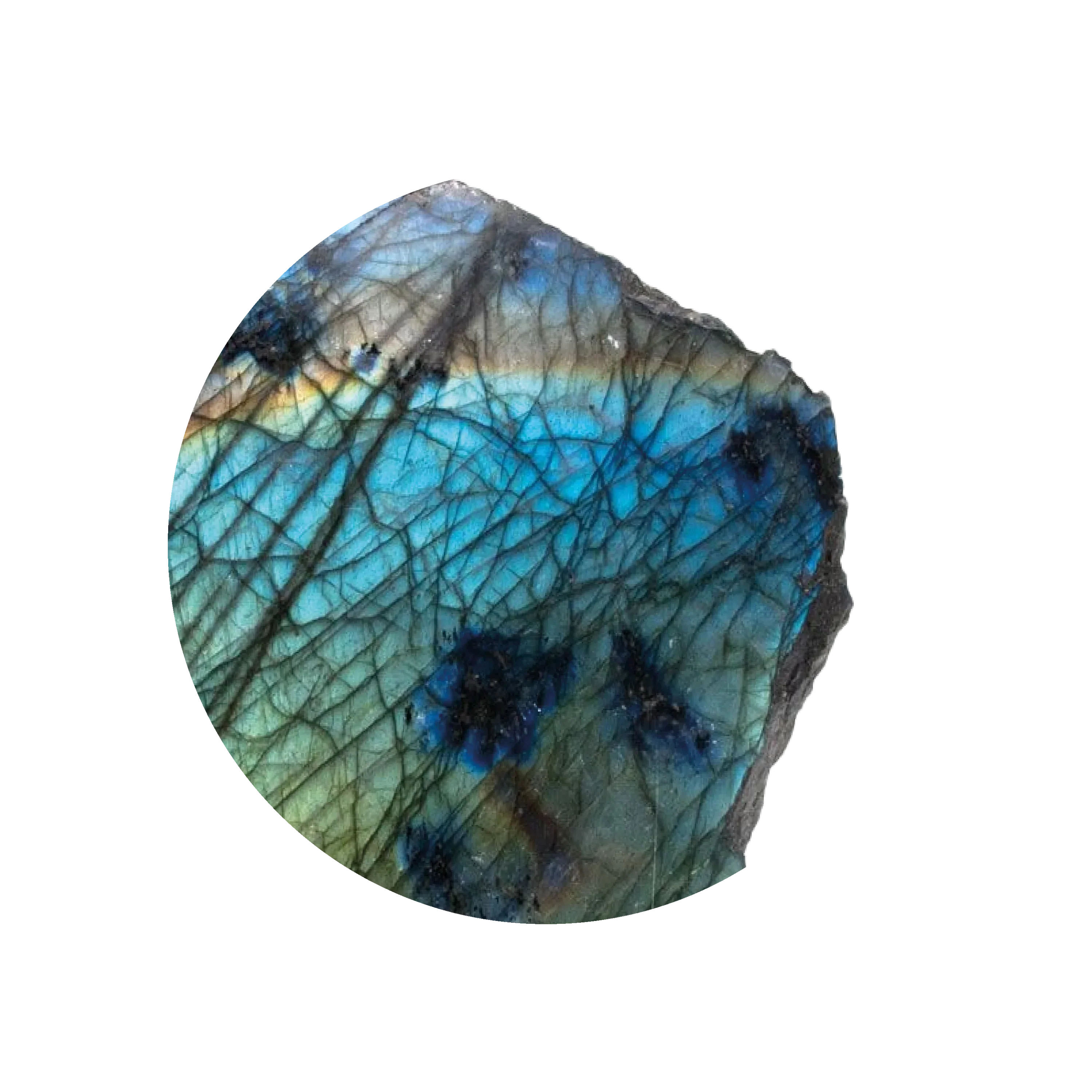
Labradorite: The Stone of Transformation and Why It's Having a Moment
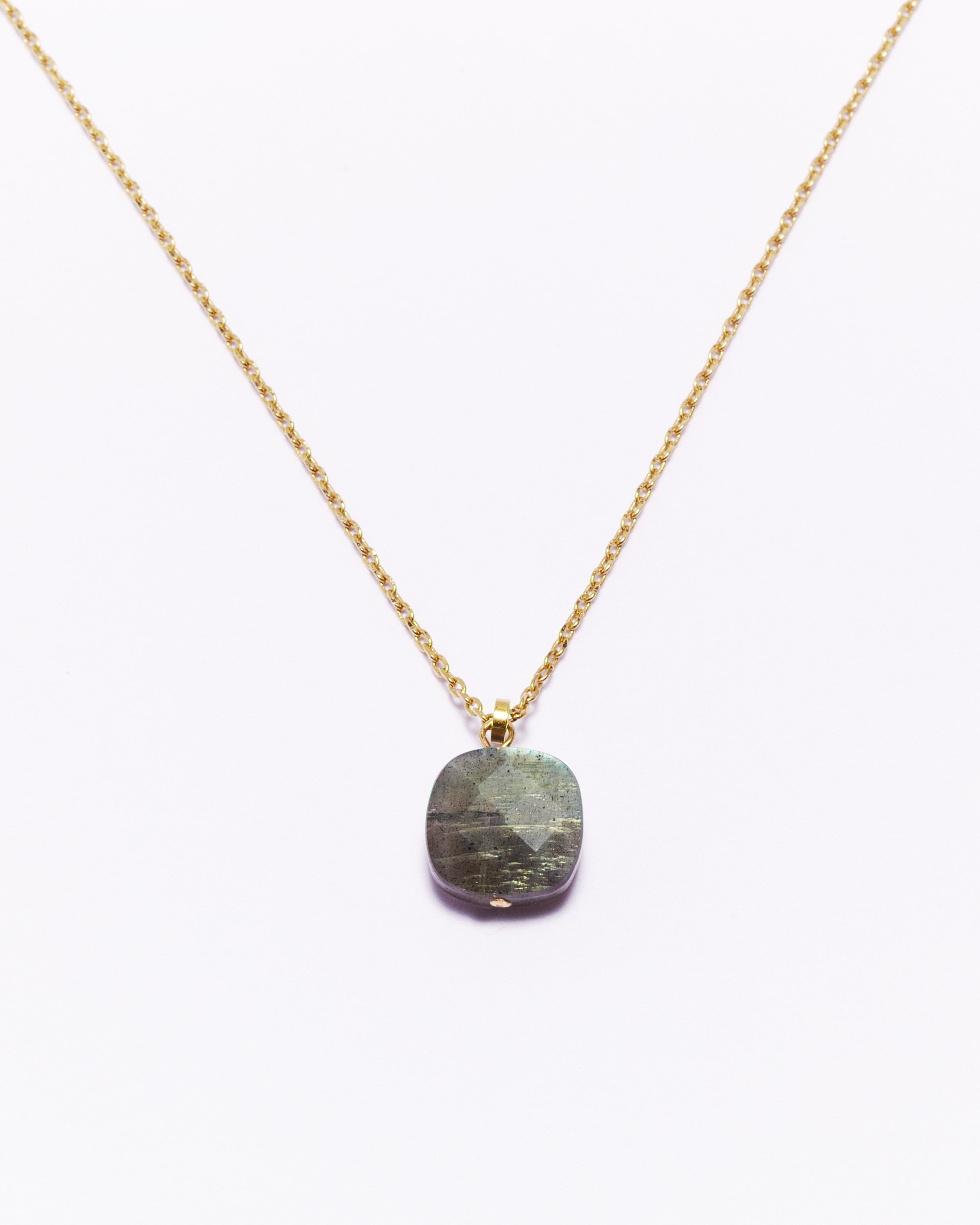
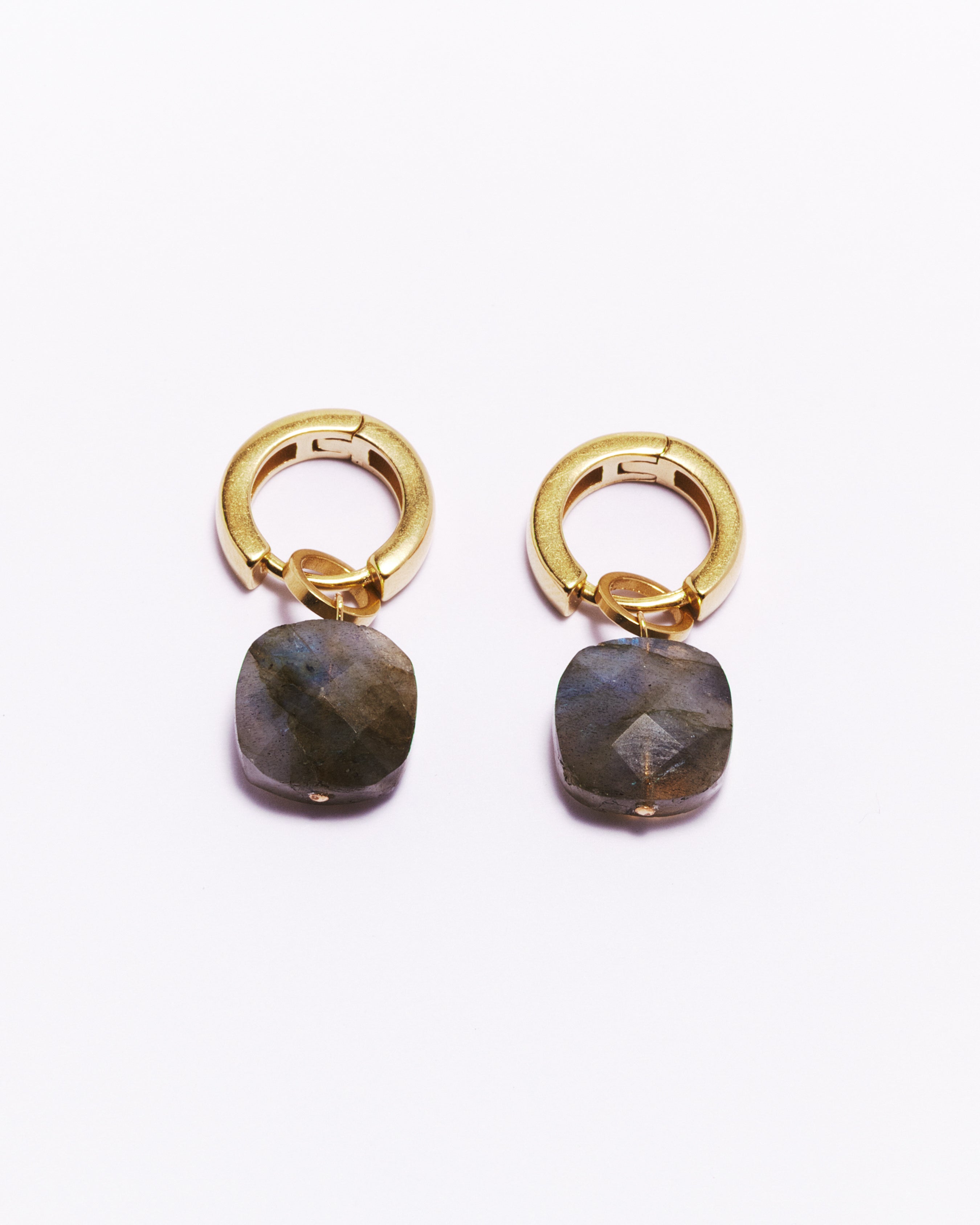
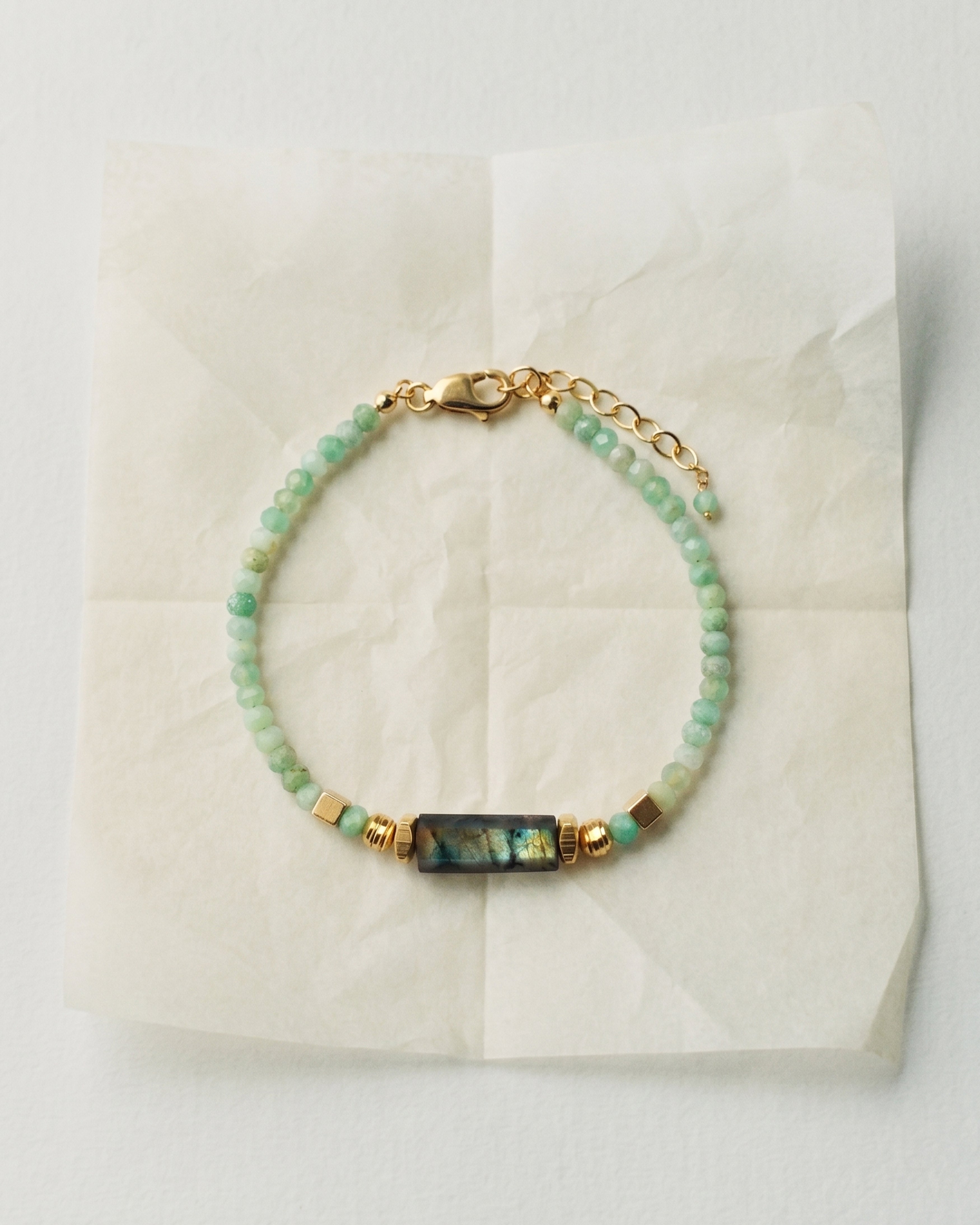
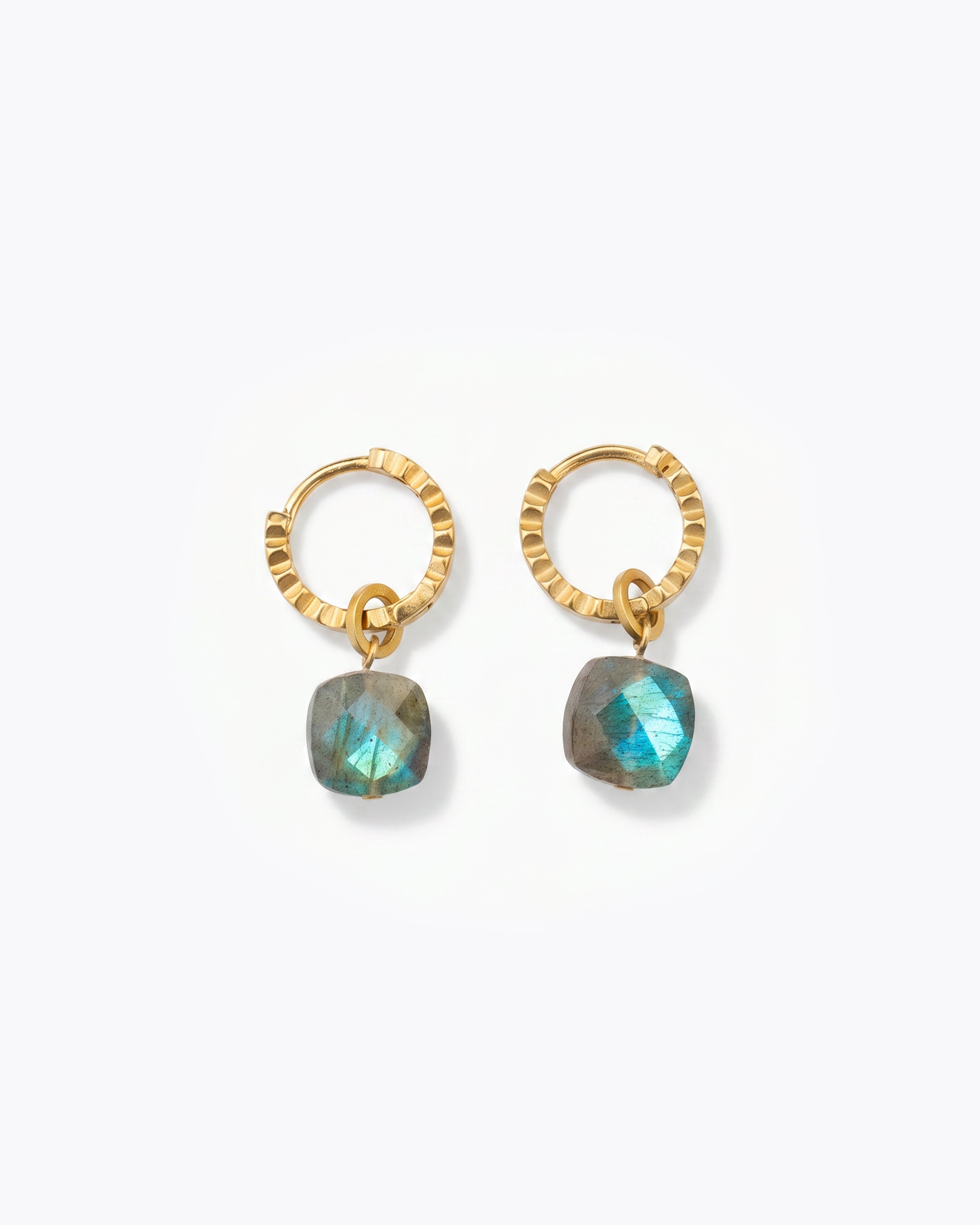
Labradorite looks, at first glance, like a dark and unremarkable stone. Grey. Dense. A little rough at the edges. Then you tilt it toward the light, and the interior ignites: electric blue, gold, deep green, sometimes violet. Colors that have no business being inside a grey rock, shifting and moving as the stone moves.
That transformation, the sudden revelation of what was always there, is not just the stone's most distinctive quality. It is its essential nature. And it is exactly why people drawn to deep change tend to find themselves drawn to labradorite.

What Is Labradorite?
Labradorite is a member of the feldspar group of minerals, first documented by Western science in 1770 when Moravian missionaries discovered it on the coast of Labrador in Canada, giving the stone its name. It has since been found in Finland, Madagascar, Ukraine, and other locations around the world, each deposit producing stones with slightly different color qualities.
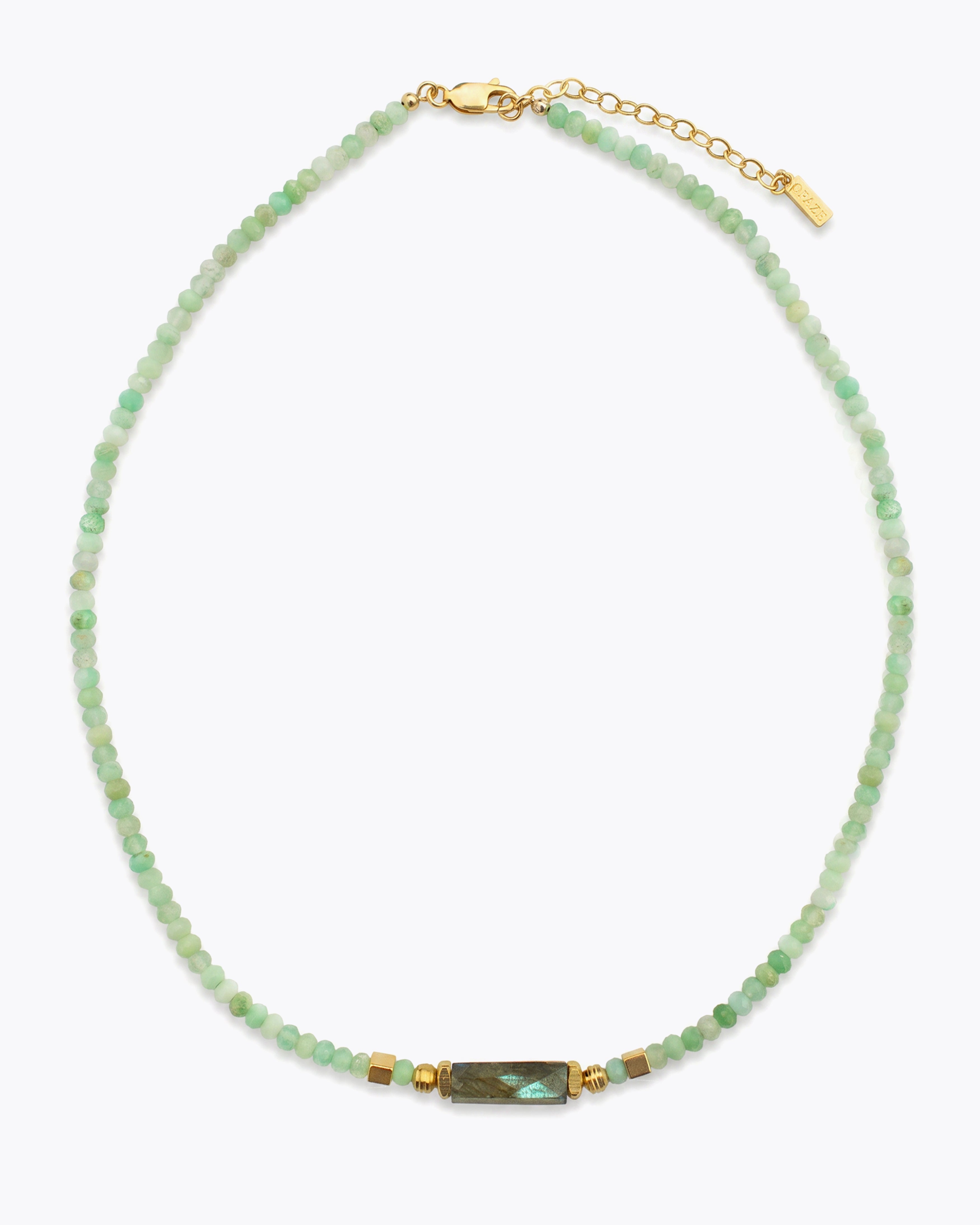
The phenomenon that makes labradorite extraordinary is called labradorescence: an optical effect produced by light scattering through the stone's internal structure of twinned crystal layers. The colors seen are not pigment. They are light itself, caught and transformed by the architecture of the stone. This is why the colors shift as the stone moves. You are watching light behave differently depending on the angle at which it enters.
The intensity and range of labradorescence varies considerably from stone to stone. Some labradorites show a single strong blue flash. Others contain the full spectral range: blue, gold, green, orange, violet, all visible within the same stone at different angles. These are called spectrolite and are particularly prized.
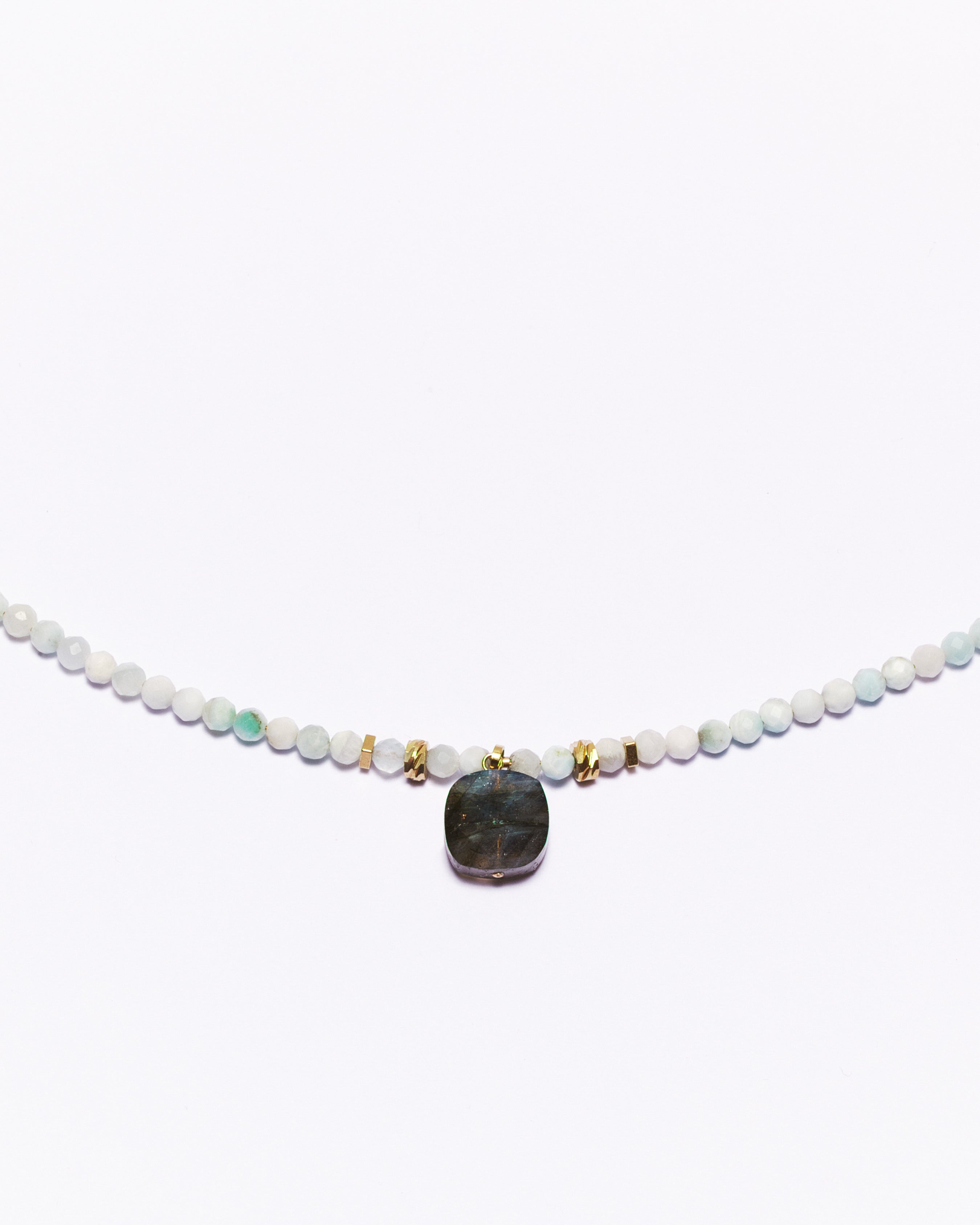
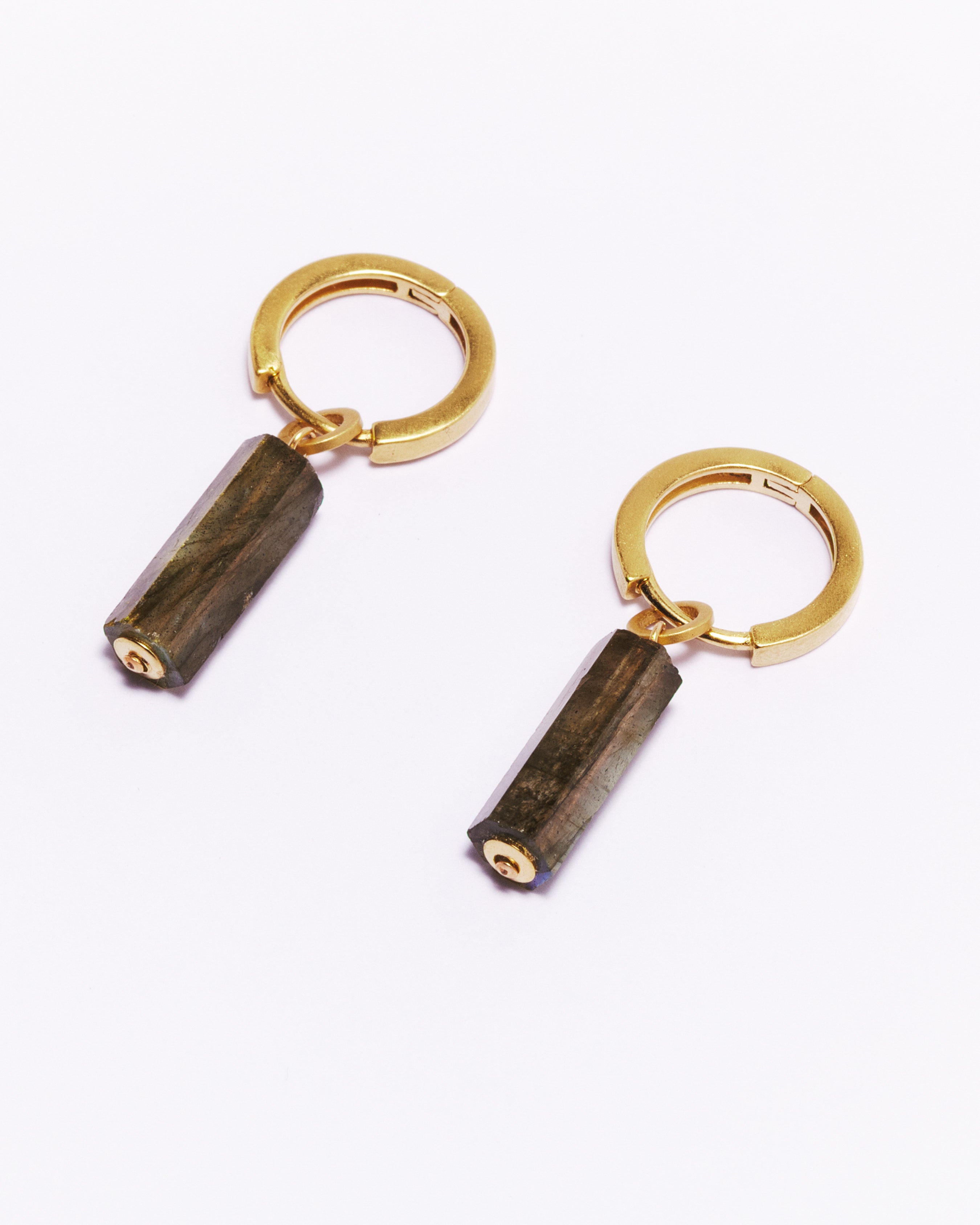
At Opaze, we source labradorite with strong, clear labradorescence and visible depth. The stones we work with are not background elements. They are the reason the piece exists.
Labradorite Meaning and Tradition
The Inuit people of Labrador, who knew the stone long before Western science named it, called labradorite the frozen fire of the aurora borealis. Their tradition held that the Northern Lights had been captured within the stone, and that a great warrior had struck the cliffs with his spear to release most of the light back into the sky, leaving some behind, trapped in the stone forever.
This origin story is extraordinarily precise as a description of labradorescence. The Inuit were observing something real. The light inside labradorite genuinely does behave like aurora light: scattered, shifting, unexpectedly present.

In various esoteric and crystal healing traditions, labradorite carries consistent associations with transformation, the capacity to move through significant change without losing your core self; with protection, particularly the protection of one's energy field during periods of vulnerability; and with intuition, the ability to access knowledge that has not yet been rationalized.
What most traditions agree on is this: labradorite is a stone for the in-between. For the chapter that has not yet resolved. For the person who is becoming something they cannot fully name yet.
Why Labradorite Is Having a Moment Right Now
Pinterest trend data shows a significant increase in searches for iridescent stones in 2025 and 2026. Labradorite sits at the center of this movement, and the reason is not purely aesthetic, though the aesthetic case is obvious.
The broader cultural moment is one of transformation at scale. The number of people navigating significant life changes, questioning inherited structures, and seeking objects that reflect their inner experience rather than their social performance is growing. Labradorite speaks to that experience better than almost any other stone.
It is also a stone that rewards close attention. In an era of surface-level content and rapid consumption, wearing a stone that looks different every time you see it is a small, daily argument for depth.
How to Style Labradorite Jewelry
Labradorite's base color is dark, which makes it one of the most versatile gemstones for styling. It works with neutrals, with black, with warm earth tones, and with the kind of layered, considered wardrobe that is Opaze's natural home.
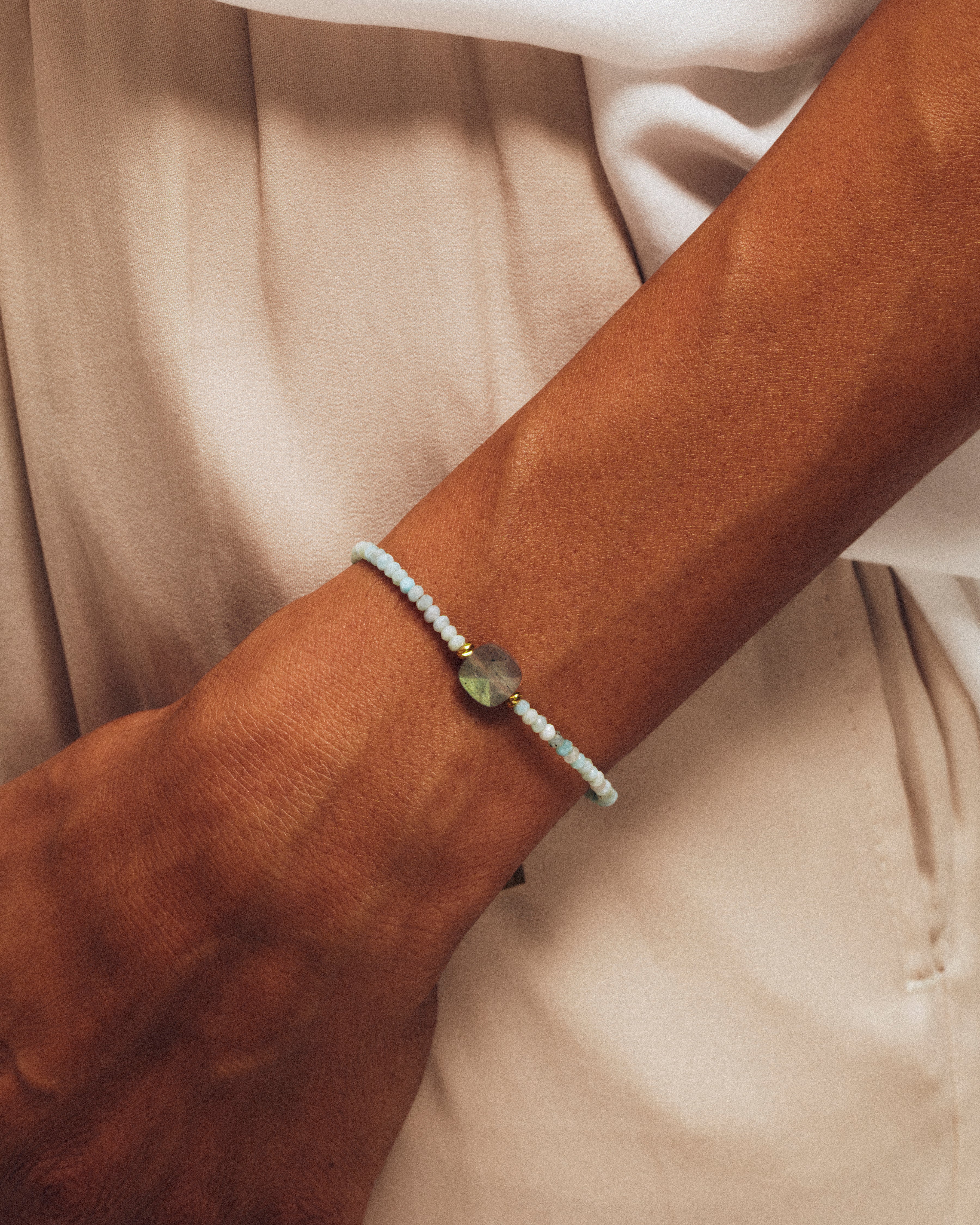
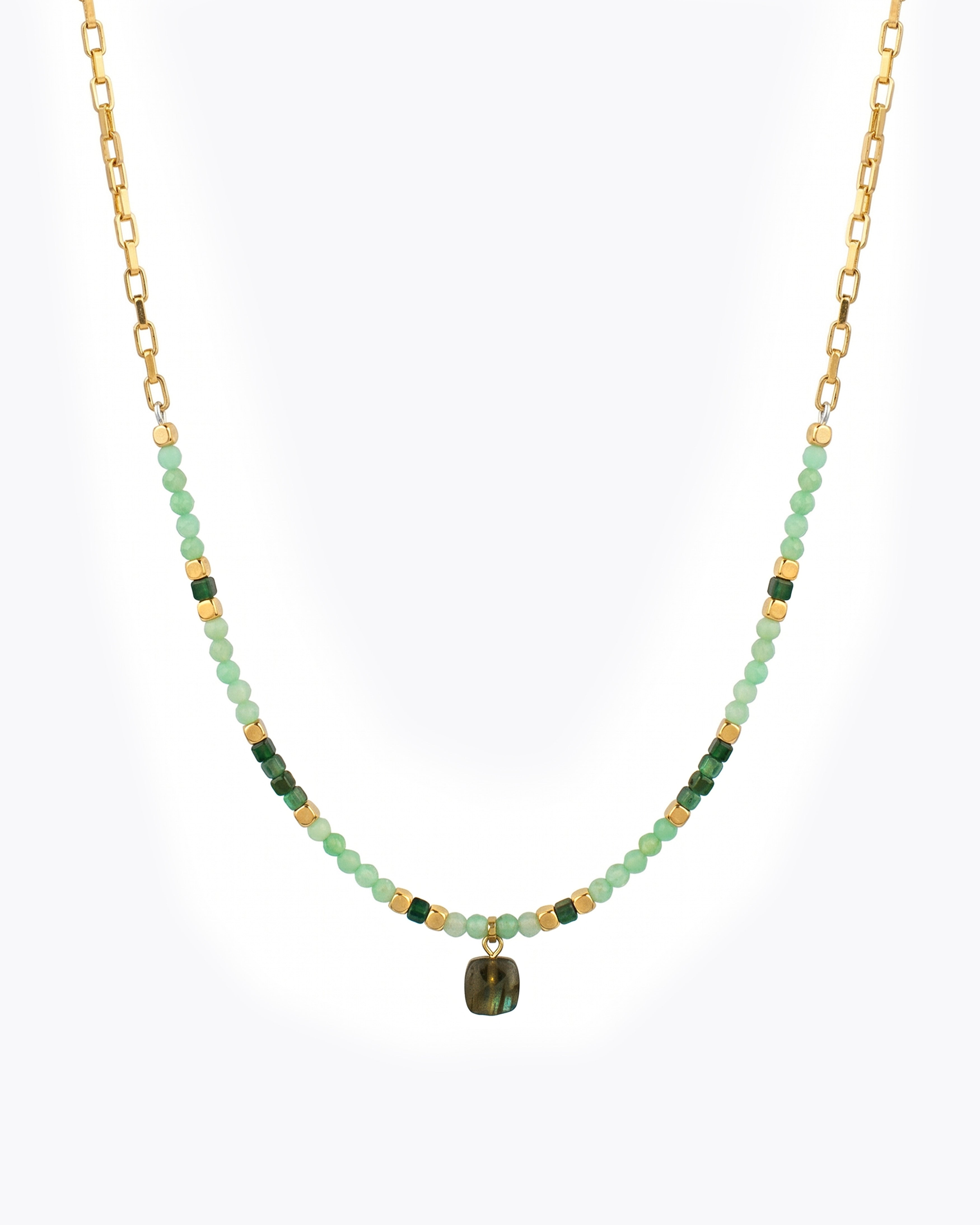
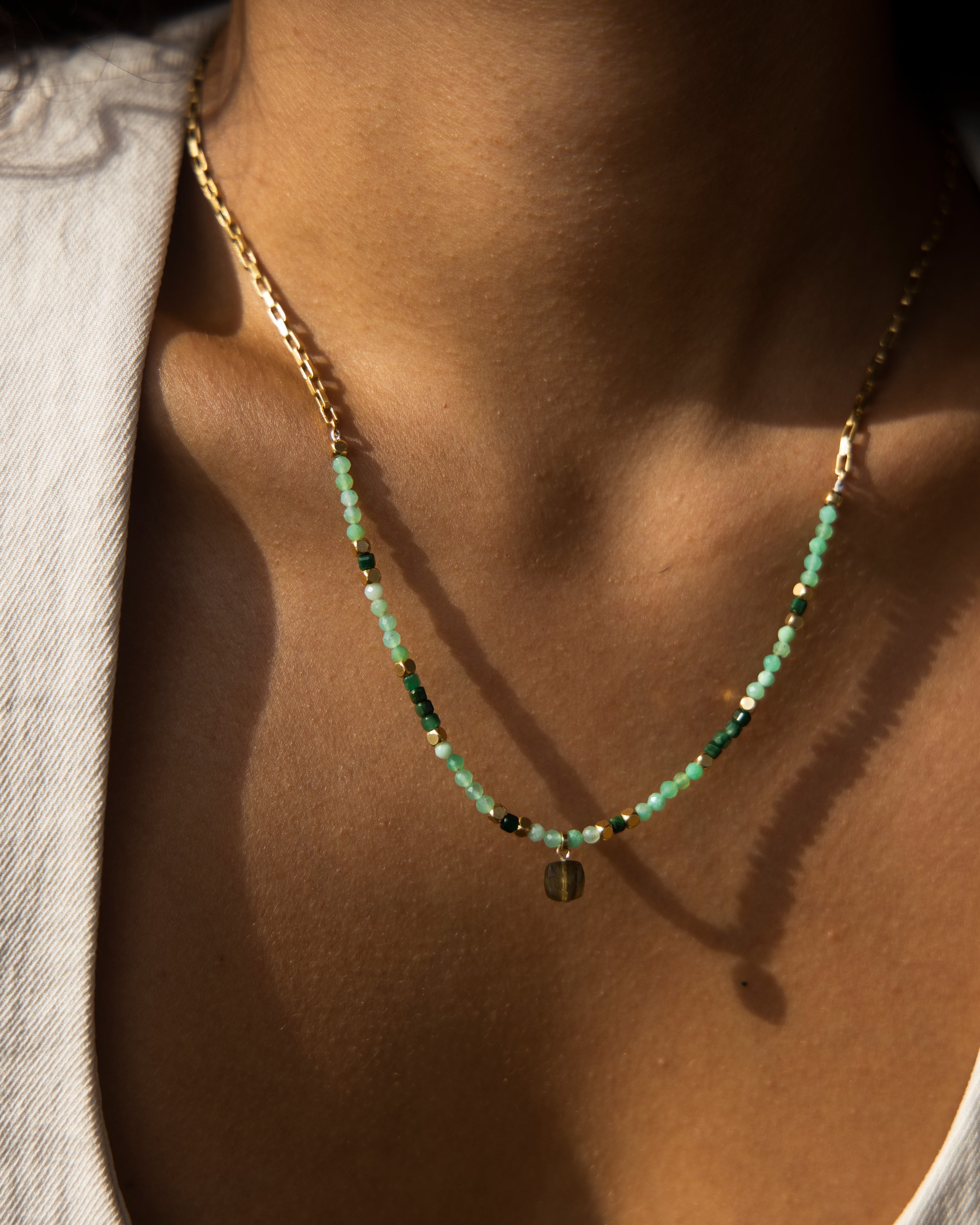
As a pendant: a labradorite pendant worn on a delicate gold chain against a simple top is one of the most quietly powerful jewelry statements possible. The stone catches light all day. People notice it without always understanding why.
As a ring: a labradorite ring set in gold is a daily object worth looking at. Wear it on whichever finger draws you, and notice how the stone changes throughout the day as the light changes around it.
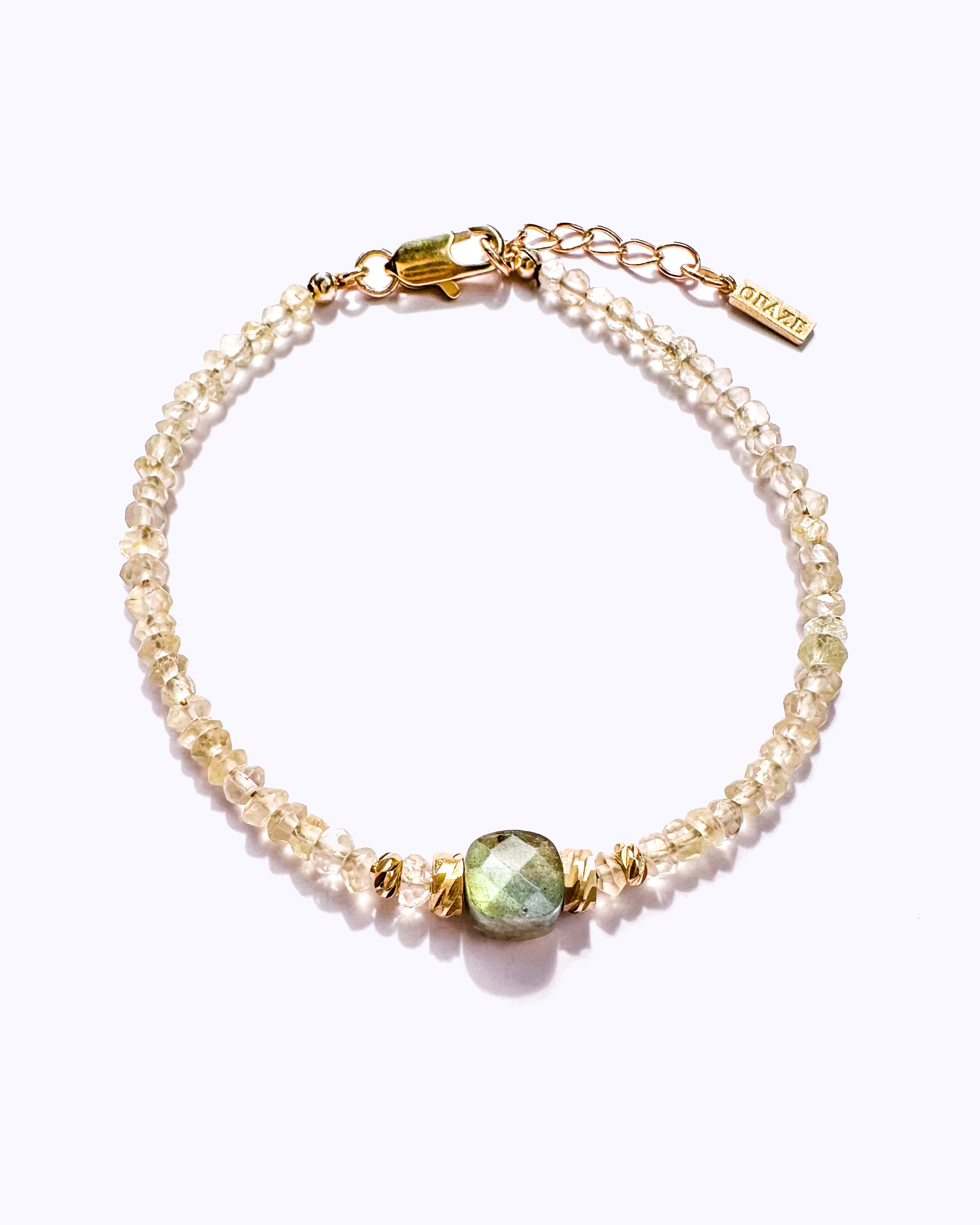
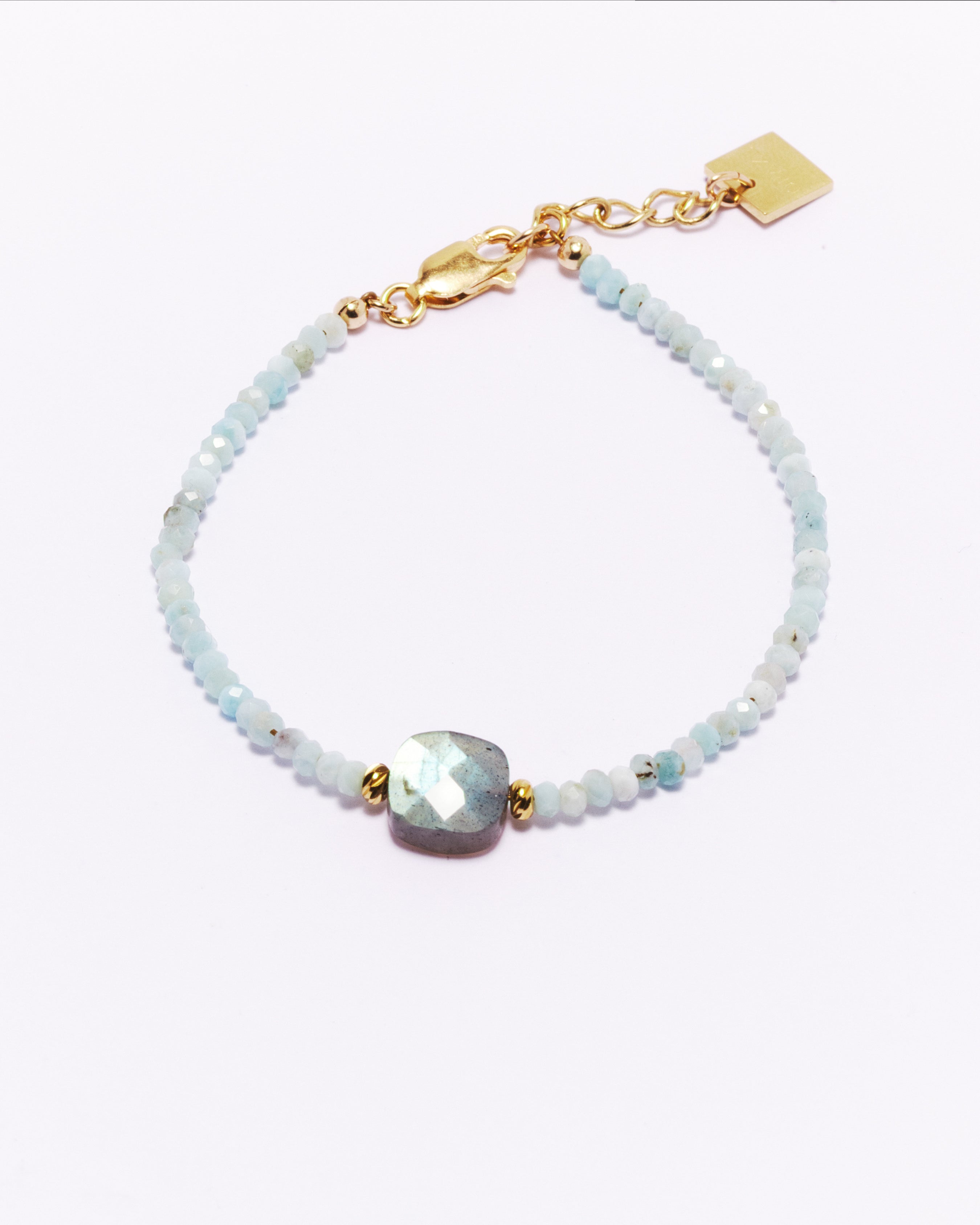
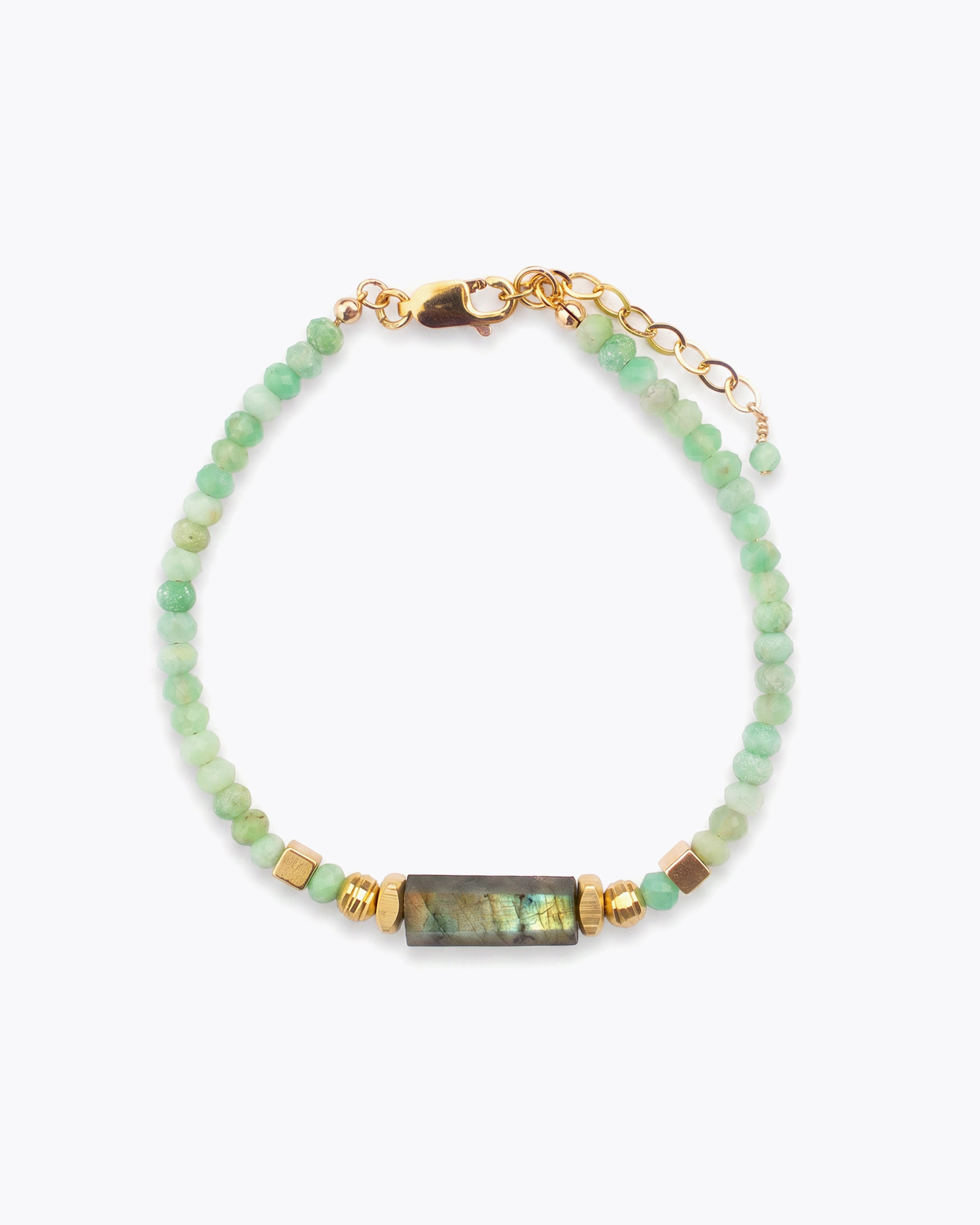
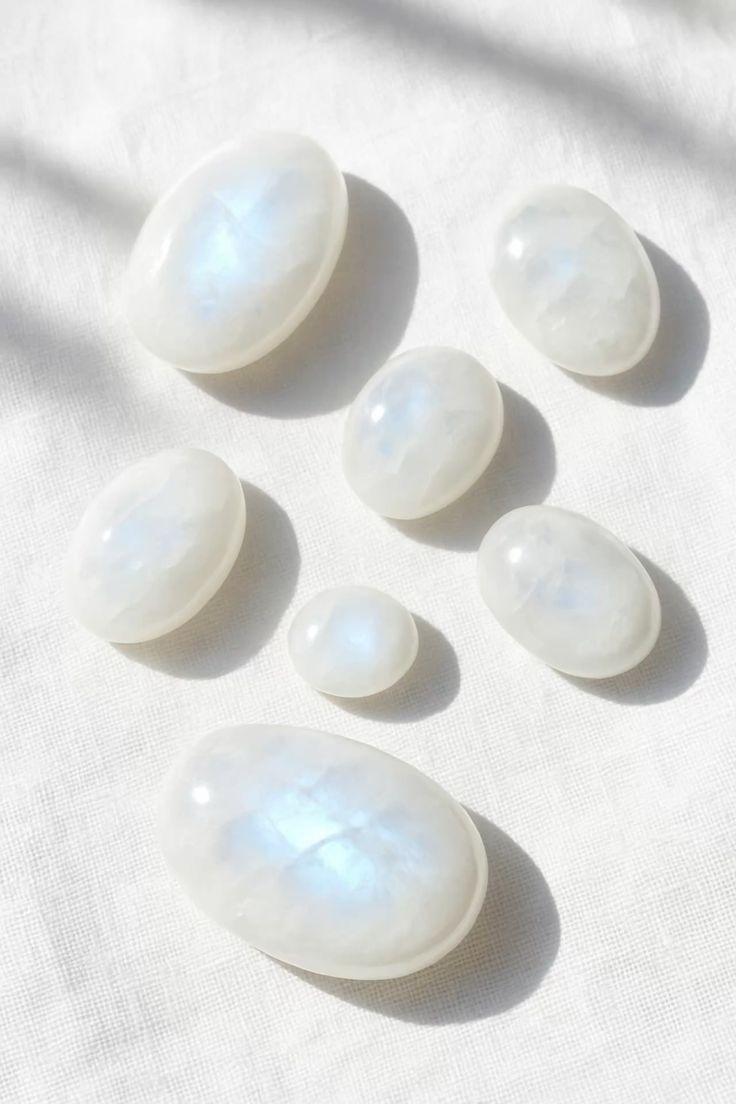
In a stack: labradorite anchors a stack without dominating it. Pair it with moonstone for an iridescent, otherworldly look. Pair it with amethyst for the combination of transformation and clarity. Pair it with a simple gold bead bracelet to let the stone be the focal point.

What is labradorite good for?
Labradorite is most consistently associated with transformation, protection during periods of change, and intuitive awareness. It is considered a stone that supports people navigating significant transitions, helping them access their own inner knowing rather than relying solely on external guidance.
What does labradorescence mean?
Labradorescence is the optical phenomenon that gives labradorite its characteristic iridescent color play. It is caused by light scattering through the stone's internal layers of twinned crystals, producing colors that shift as the viewing angle changes. The colors are not pigment but light itself.
Is labradorite a rare stone?
Standard labradorite is relatively available, but high-quality stones with strong, clear labradorescence and a wide range of colors are less common. Spectrolite, a variety with exceptional color range found primarily in Finland, is genuinely rare.
Who should wear labradorite?
Labradorite is particularly resonant for people going through significant life changes, those seeking to strengthen their intuitive awareness, and anyone drawn to the stone's quality of revealing what was always present but not yet visible.
How do you activate labradorite?
In crystal practice, labradorite is often cleansed and set with intention rather than formally activated. Common practices include leaving it in moonlight, holding it during meditation with a clear intention, or simply wearing it consistently so that it becomes associated with a specific quality you are cultivating.