



Freshwater Pearl
Purity, Grace & Timeless Wisdom
Pearl is the only gemstone made by a living creature. Everything else we call a gem, diamond, emerald, sapphire, tourmaline, is formed by geological processes over millions of years, mined from the earth, cut, and polished. Pearl is different. It is created in response, layer by layer, as a mollusk builds something beautiful around what first arrived as an irritant. There is something worth sitting with in that origin story. The most enduring beauty sometimes comes from the capacity to transform difficulty into something extraordinary.
Pearls have been treasured across virtually every culture with access to them. In ancient China, they were presented as imperial tribute. In Rome, they were the ultimate symbol of social standing, worn only by the elite. In the Islamic tradition, pearls appear in descriptions of paradise. In Japan, the ama divers who harvested wild oysters created a practice so demanding it became its own form of cultural heritage. The global appetite for pearl was so intense for so long that wild pearl populations in many parts of the world were depleted entirely before the twentieth century began.
What Makes Freshwater Pearl Different
There are two broad categories of cultured pearl: saltwater and freshwater. Saltwater pearls, including Akoya, Tahitian, and South Sea pearls, are grown in ocean-dwelling oysters and tend to be perfectly round with a high-gloss surface. Freshwater pearls are cultivated in mussels in lakes and rivers, primarily in China, which now produces the vast majority of the world's pearl supply.
For most of the twentieth century, freshwater pearls were considered the lesser option: smaller, less round, with a more matte surface. What the market has come to understand more recently is that this is not a deficiency but a distinction. Freshwater pearls are composed almost entirely of nacre, the luminous substance that gives a pearl its depth and glow, whereas saltwater pearls have a bead nucleus at their center with a thinner layer of nacre around it. This means a fine freshwater pearl has a softer, more organic luminosity than many of its saltwater counterparts, a light that comes from within rather than from the surface.
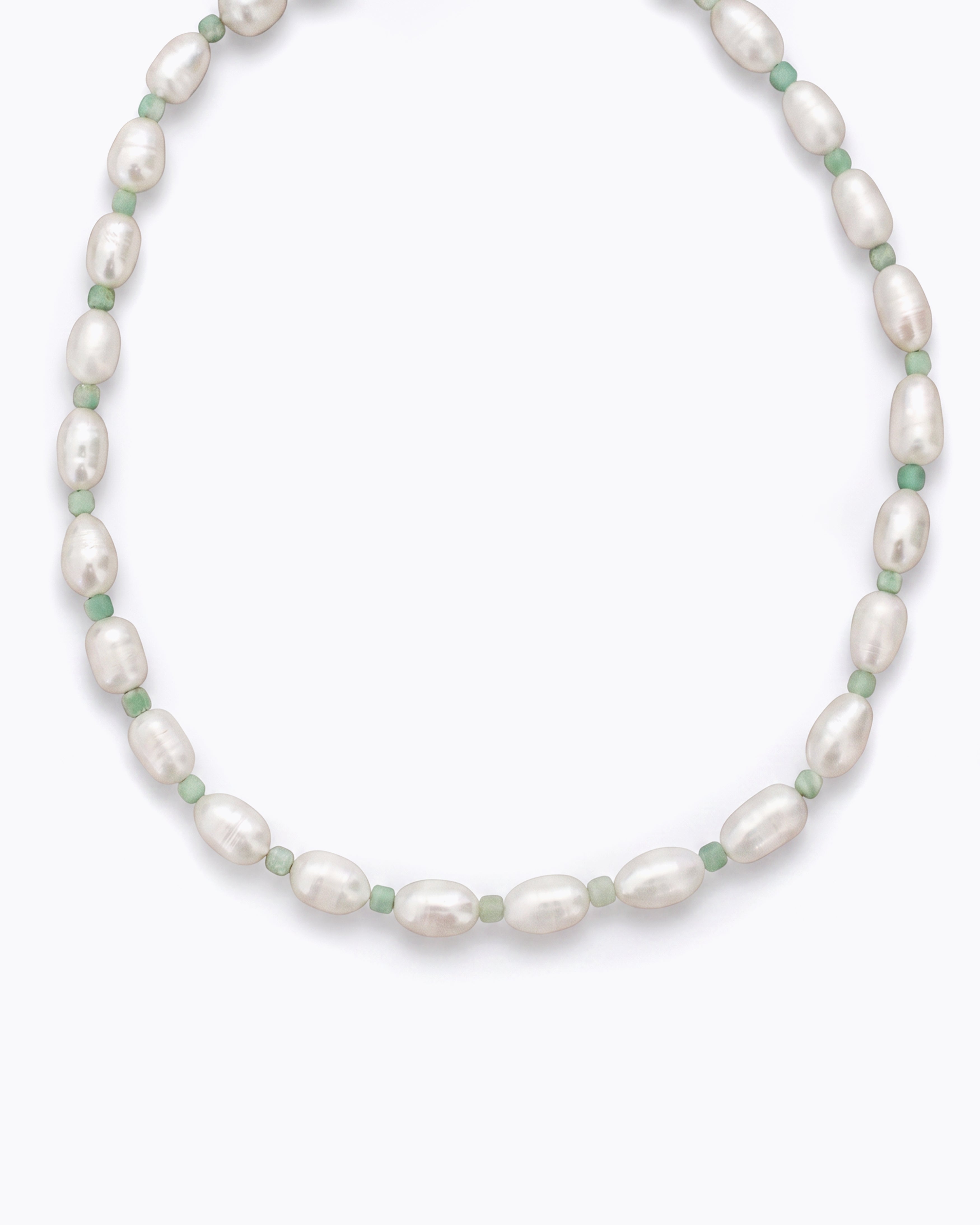
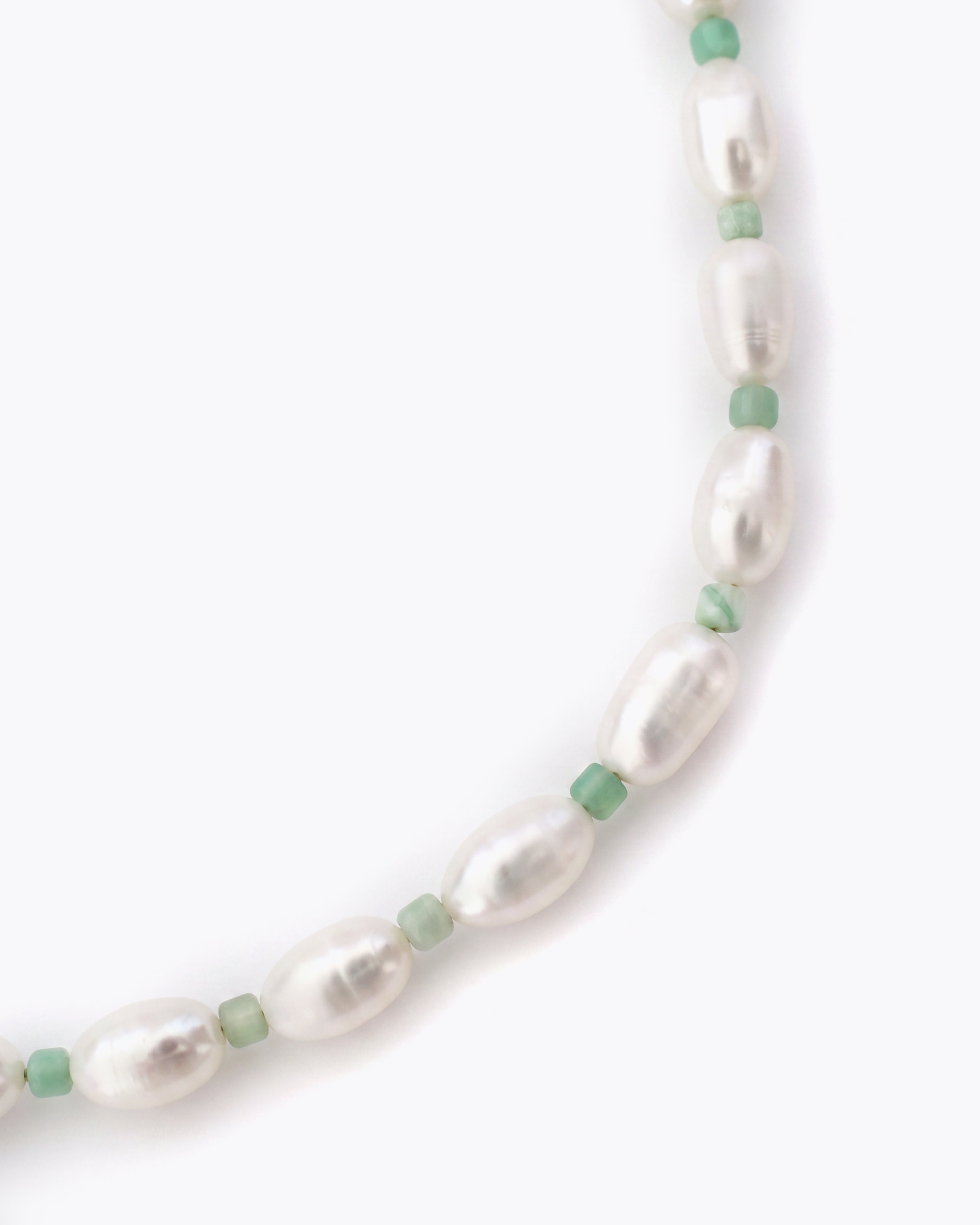
Today's finest freshwater pearls can rival saltwater quality entirely. The Edison pearl, a large, round freshwater pearl developed in China in recent years, has attracted serious collector attention for its exceptional size and luster. Baroque freshwater pearls, irregular in shape and highly individual in character, have become favorites among designers and those who prefer something with genuine personality over machine-like perfection.
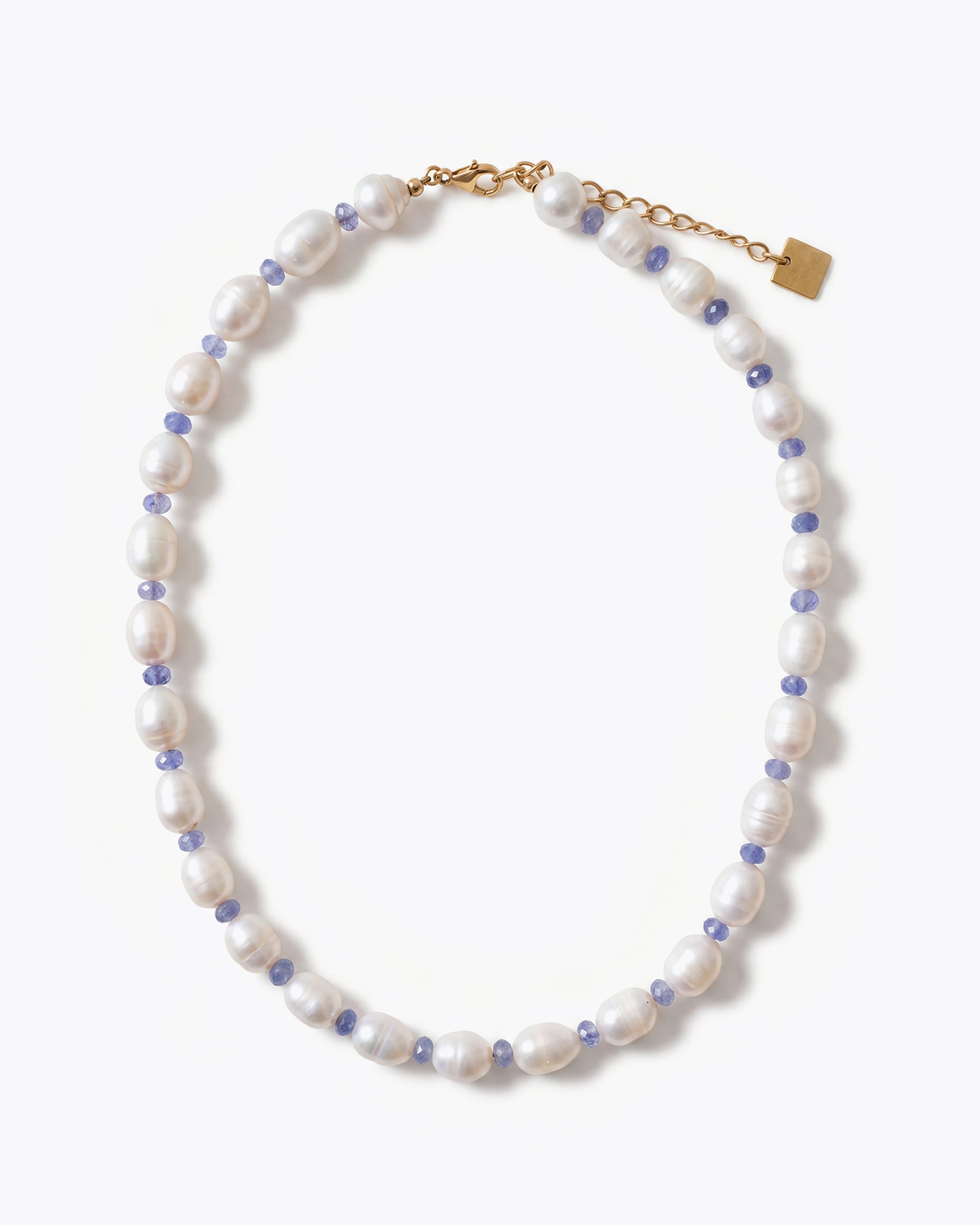
At Opaze, we work with freshwater pearls specifically because of their warm, natural luster and the organic quality they bring to each piece. We look for consistency of nacre depth and a surface that reflects light with genuine depth, not a shellacked, artificial shine.
Energy and Intention
Pearl is associated with the moon and with water, and through them with the qualities those elements have always symbolized: intuition, emotional depth, and the graceful movement between states. Like moonstone, pearl is considered a feminine stone in the broadest sense, one that connects the wearer to their own emotional intelligence and cyclical nature.
In crystal healing traditions, pearl is associated with calmness and clarity. It is said to soothe anxiety and emotional turbulence without numbing the feelings themselves, creating a quieter internal environment from which clearer choices can be made. This is a quality particularly valued during periods of change or uncertainty.
Pearl is also associated with wisdom, specifically the kind that accumulates through lived experience rather than study. Just as the pearl is formed gradually through time and process, the qualities it represents, patience, grace, deep knowing, are not arrived at quickly. Wearing pearl is sometimes described as an honoring of that slower, more layered kind of intelligence.
There is also a strong tradition linking pearl to purity of intention, not moral purity in the narrow sense, but the clarity of purpose that comes when actions align with genuine values. In this way, pearl has long been associated with integrity and authenticity.
Spiritually, many traditions link pearl to connection with lunar energy and the collective wisdom of the ocean, the vast, ancient, flowing intelligence that underlies all individual life. Worn with awareness, it is a reminder of belonging to something larger than the individual moment.
How to Wear It
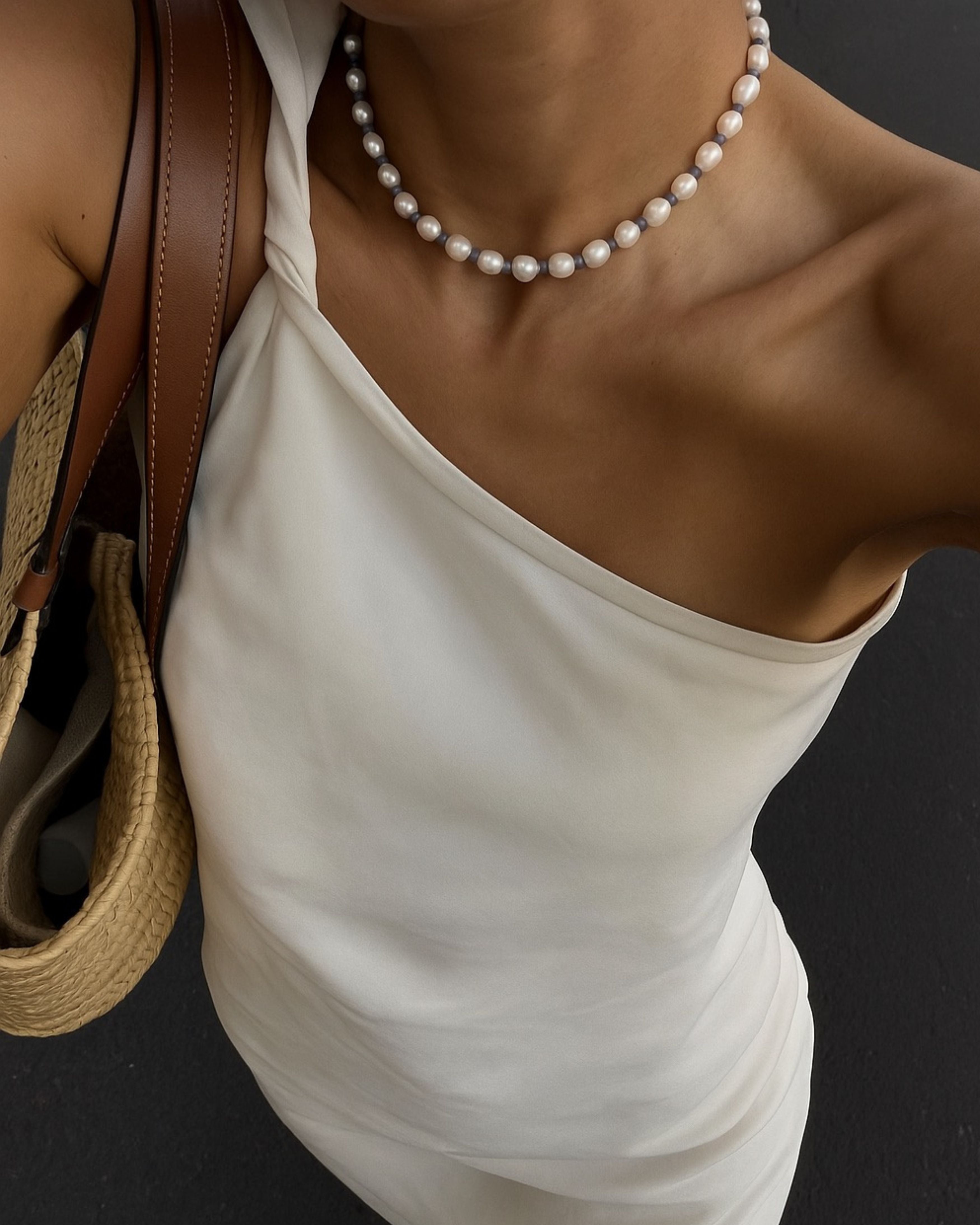
Pearl is one of the most versatile gemstones in existence. It has been worn in every conceivable style across every century, from the elaborate baroque pearl necklaces of the European Renaissance to the single strand championed by Coco Chanel to the organic, asymmetric designs favored by contemporary fine jewelers.
It pairs beautifully with almost every other stone: the contrast between pearl's soft warmth and the clarity of aquamarine or blue topaz is particularly striking. Worn alone, a single pearl pendant carries a quiet authority that needs nothing added to it.
As a daily stone, freshwater pearl is a reminder that elegance is not about display. It is about the quality of attention you bring to yourself and to the world around you.