


What Your Birthstone Says About You (And How to Wear It)
Birthstone jewelry is one of the oldest forms of intentional adornment. Long before the modern list was standardized in 1912 by the American National Retail Jewelers Association, cultures across the ancient world were assigning stones to months, seasons, zodiac signs, and planetary bodies. The specific assignments have shifted over centuries and across traditions, but the impulse has remained constant: certain stones carry certain energies, and wearing your stone is a way of aligning yourself with something larger.
Below is a guide to each birthstone, what it has historically been associated with, and how to wear it in a way that feels meaningful rather than obligatory.
January: Garnet
Garnet is most commonly seen in its deep red form, but it occurs in a range of colors including orange, green, and warm brown. The name comes from the Latin granatum, meaning pomegranate seed, which describes the stone's deep color and rounded form. Garnet has long been associated with vitality, passion, and the protective energy of travel. Medieval warriors carried garnet into battle. Travelers wore it as a talisman.
How to wear it: Garnet is rich enough to wear alone as a statement. A single garnet pendant worn close to the body is a classic form. For those drawn to stacking, garnet pairs beautifully with other warm stones like citrine and carnelian.

February: Amethyst
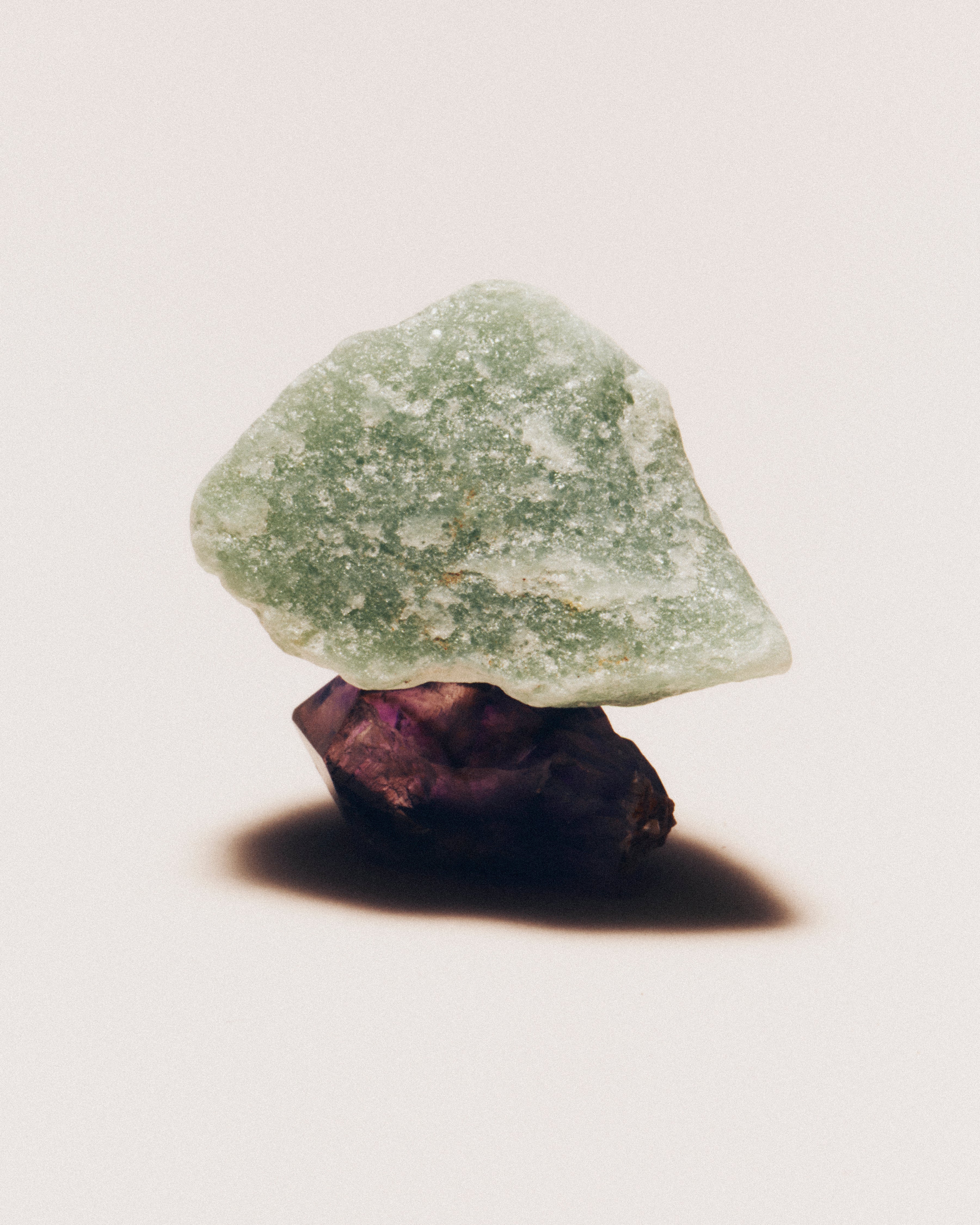
Amethyst is one of the most beloved gemstones in the world, and its reputation spans millennia. The ancient Greeks believed amethyst prevented intoxication and wore it carved into drinking vessels. In spiritual traditions from Tibetan Buddhism to European Christianity, purple has long been the color of elevated consciousness, and amethyst its stone. It is associated with calm, clarity, and the quieting of an overactive mind.
How to wear it: Amethyst is versatile. A delicate amethyst ring worn on the non-dominant hand is a subtle daily talisman. A larger amethyst pendant, particularly one with visible internal depth, becomes a conversation piece worth having.

March: Aquamarine
Aquamarine carries the color of clear seawater in its best form: pale, luminous blue-green with a quality of light that seems to come from within. It has been associated with the ocean and with the calming, clarifying energy of water since antiquity. Sailors traditionally wore aquamarine for protection at sea. Today it is connected to clear communication, emotional ease, and the courage to speak truthfully.

April: Diamond or Clear Quartz
Diamond is the traditional April stone. For those who prefer an alternative, clear quartz is a meaningful substitute that shares diamond's association with clarity and amplification. Clear quartz is often called the master stone because of its believed capacity to amplify the energy of both the wearer and any other stones it accompanies.

May: Emerald
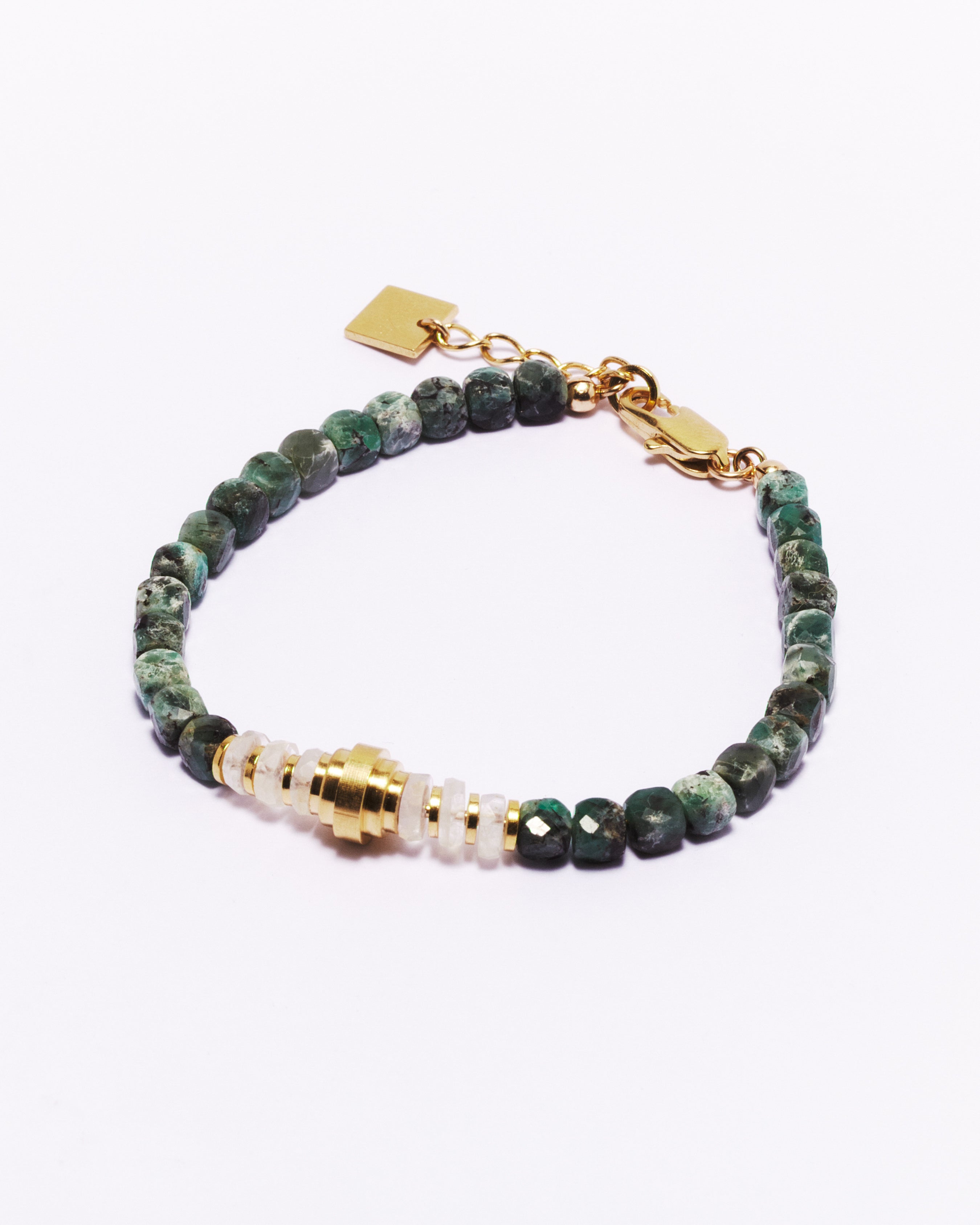
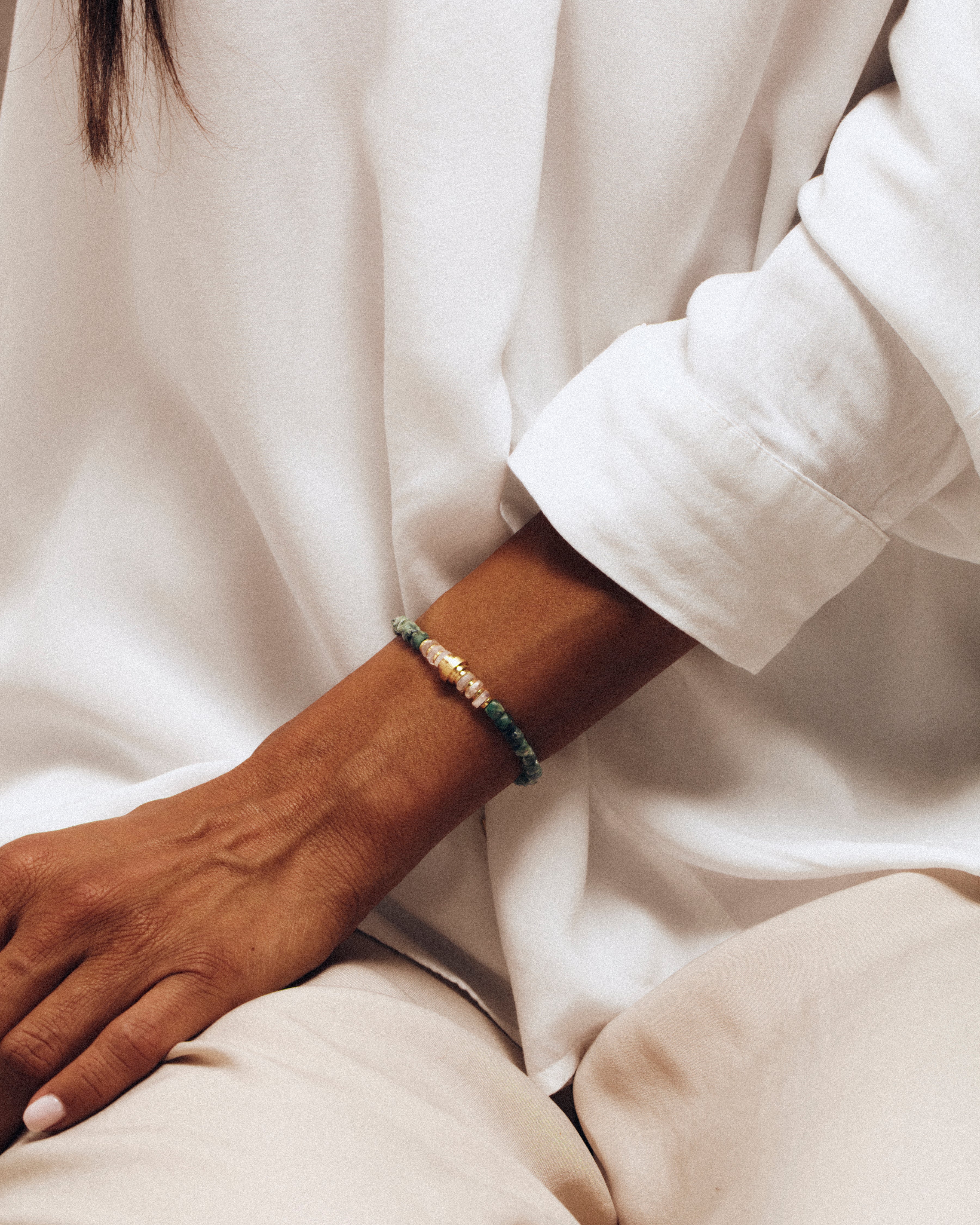
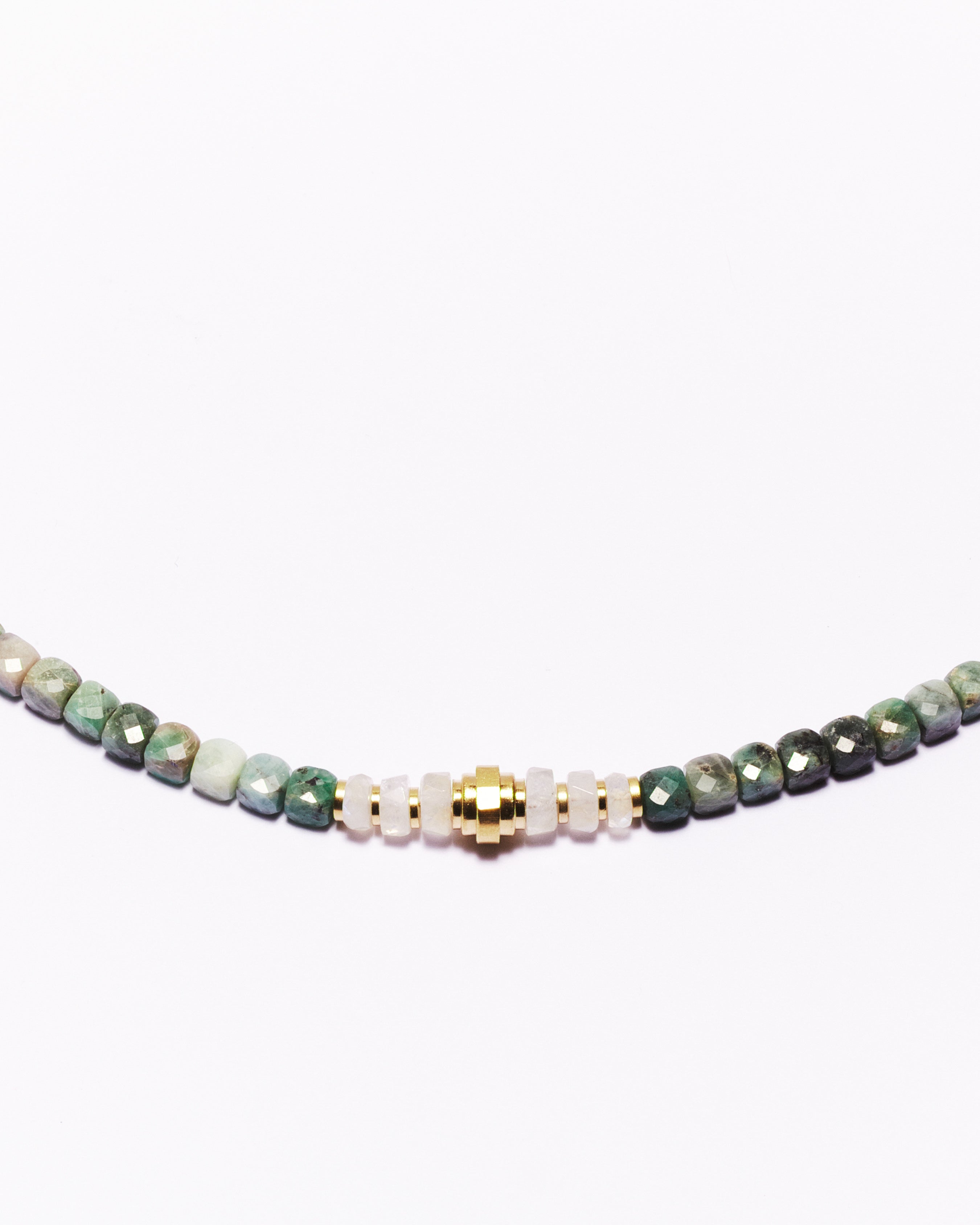
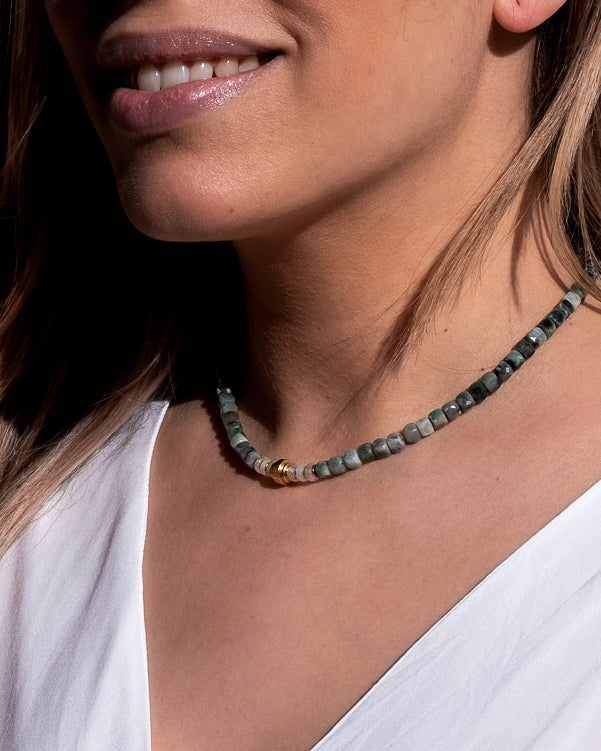
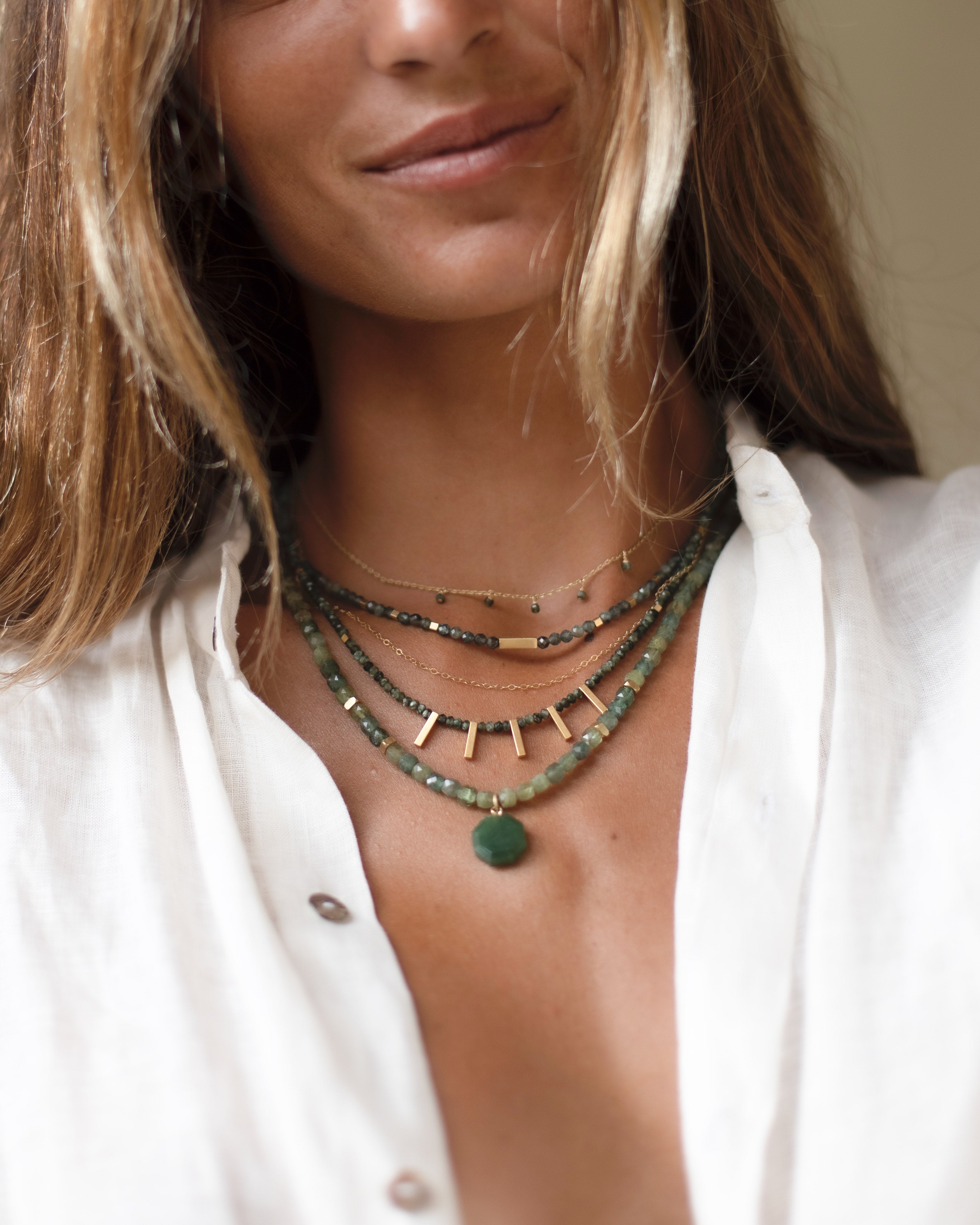
Emerald is the stone of Venus, the planet of love and beauty. It has been prized since antiquity, worn by Cleopatra, mined in Egypt and Colombia, and associated with regeneration, growth, and the deep green of spring. It is a stone of prosperity, both material and emotional. Of patience. Of the ability to see clearly without the distortion of anxiety or fear.

June: Moonstone
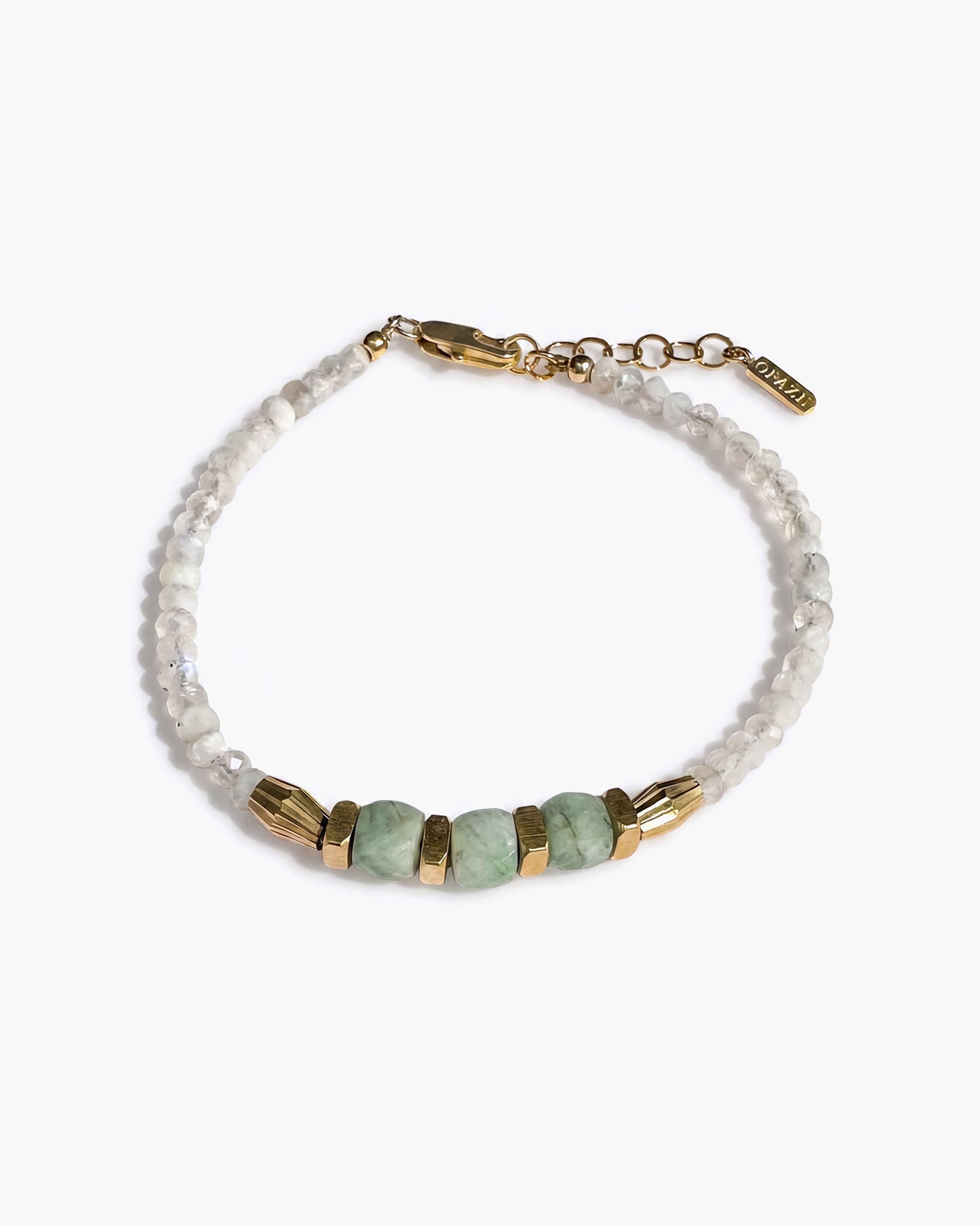
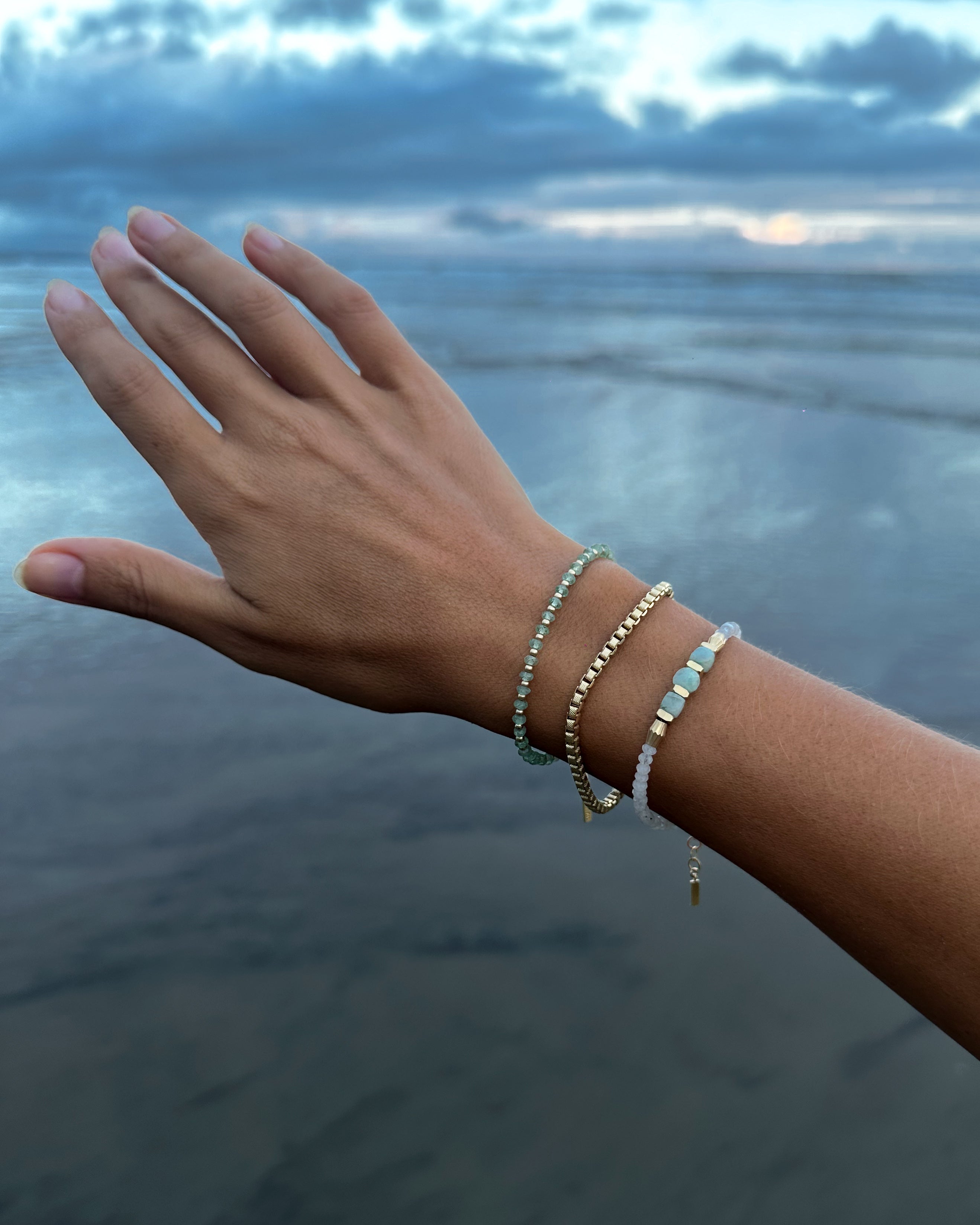
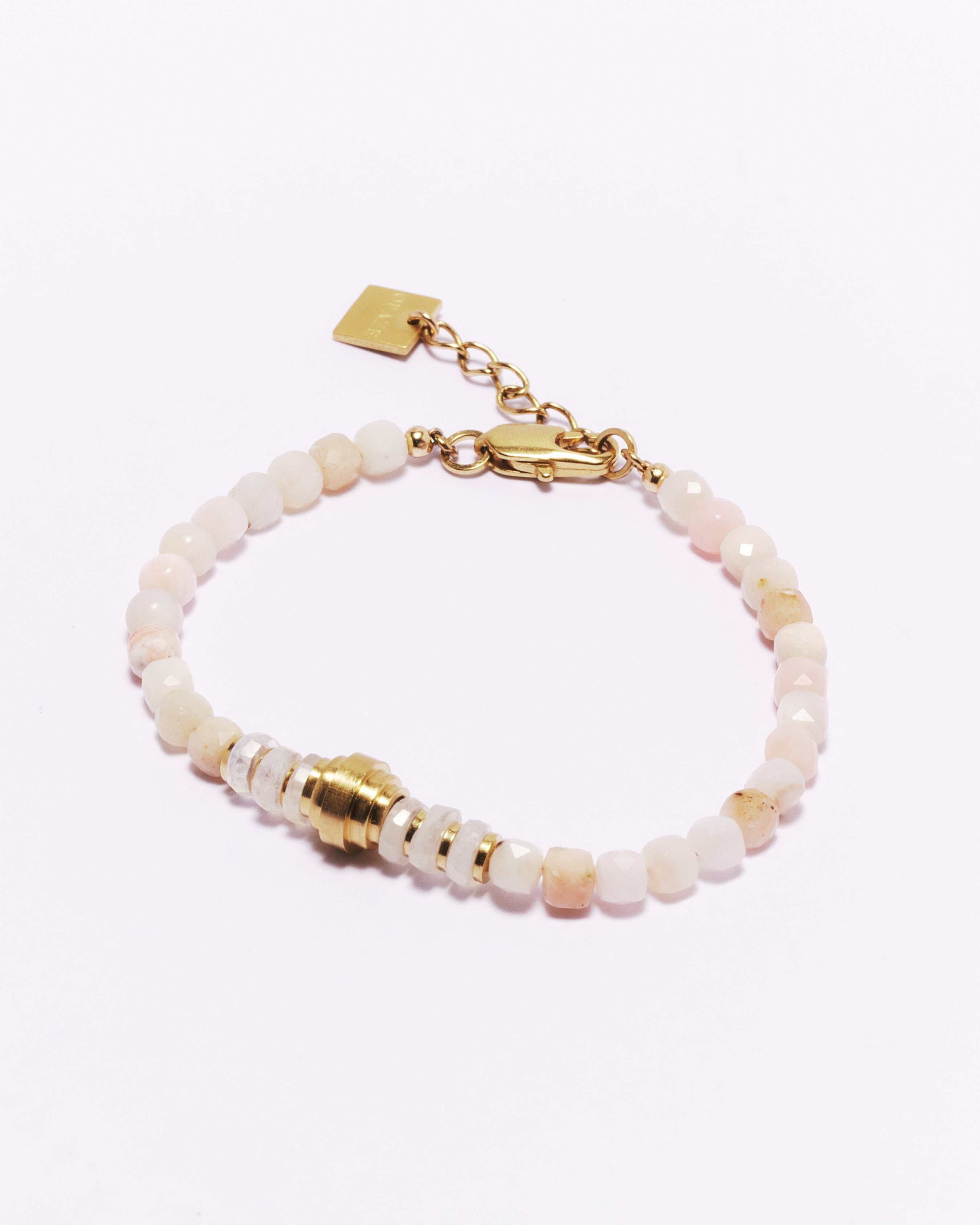
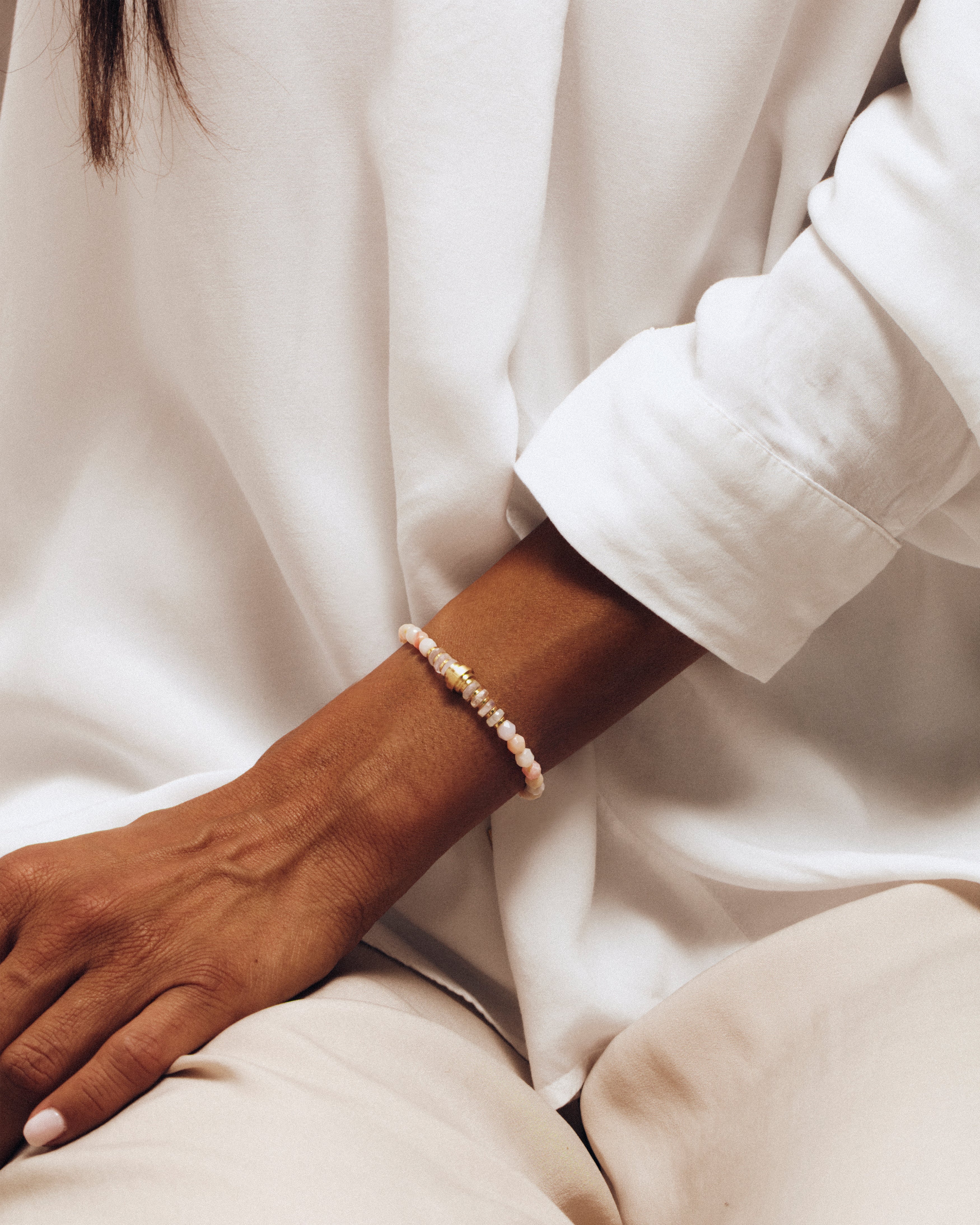
Moonstone is the June birthstone that resonates most deeply with the Opaze aesthetic. It is associated with intuition, cycles, and the luminous quality of things seen just before they are fully understood. Pearl, the traditional June stone, carries similar associations: softness, the wisdom accumulated through layering, and the beauty that results from sustained pressure. How to wear it: Moonstone worn close to the skin, particularly on the wrist or chest, is the traditional placement for stones associated with intuition and the body's inner rhythms.

July: Ruby
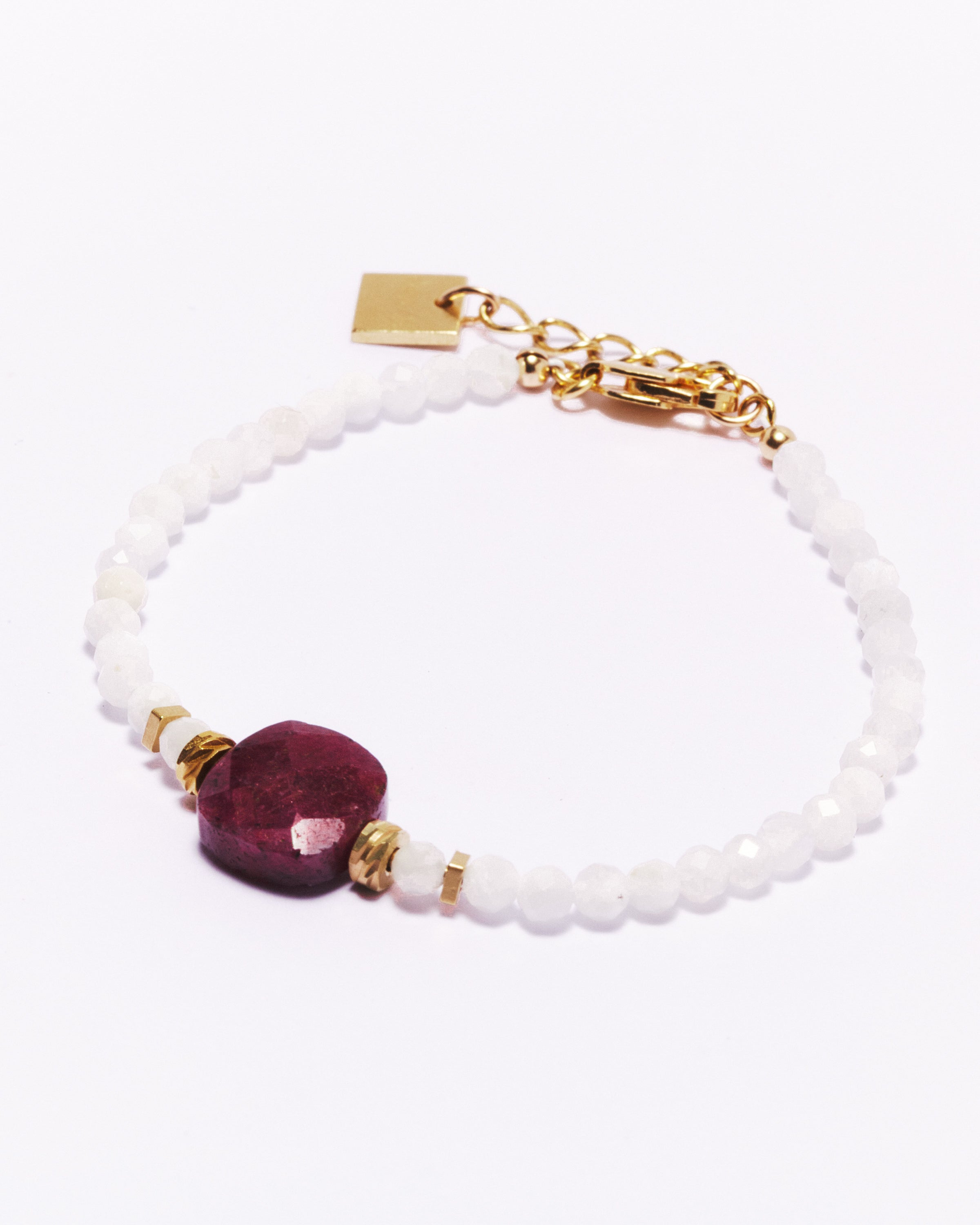
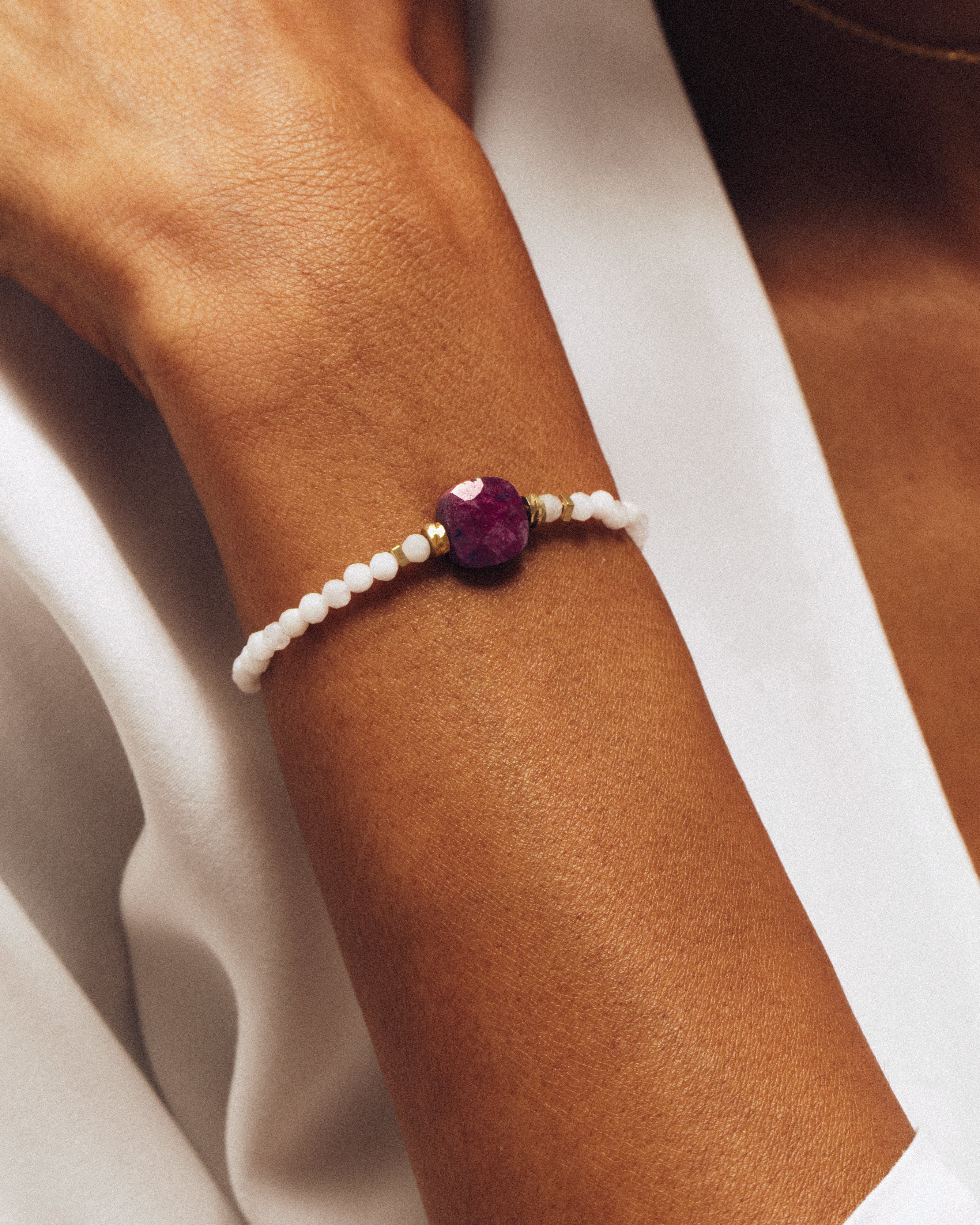
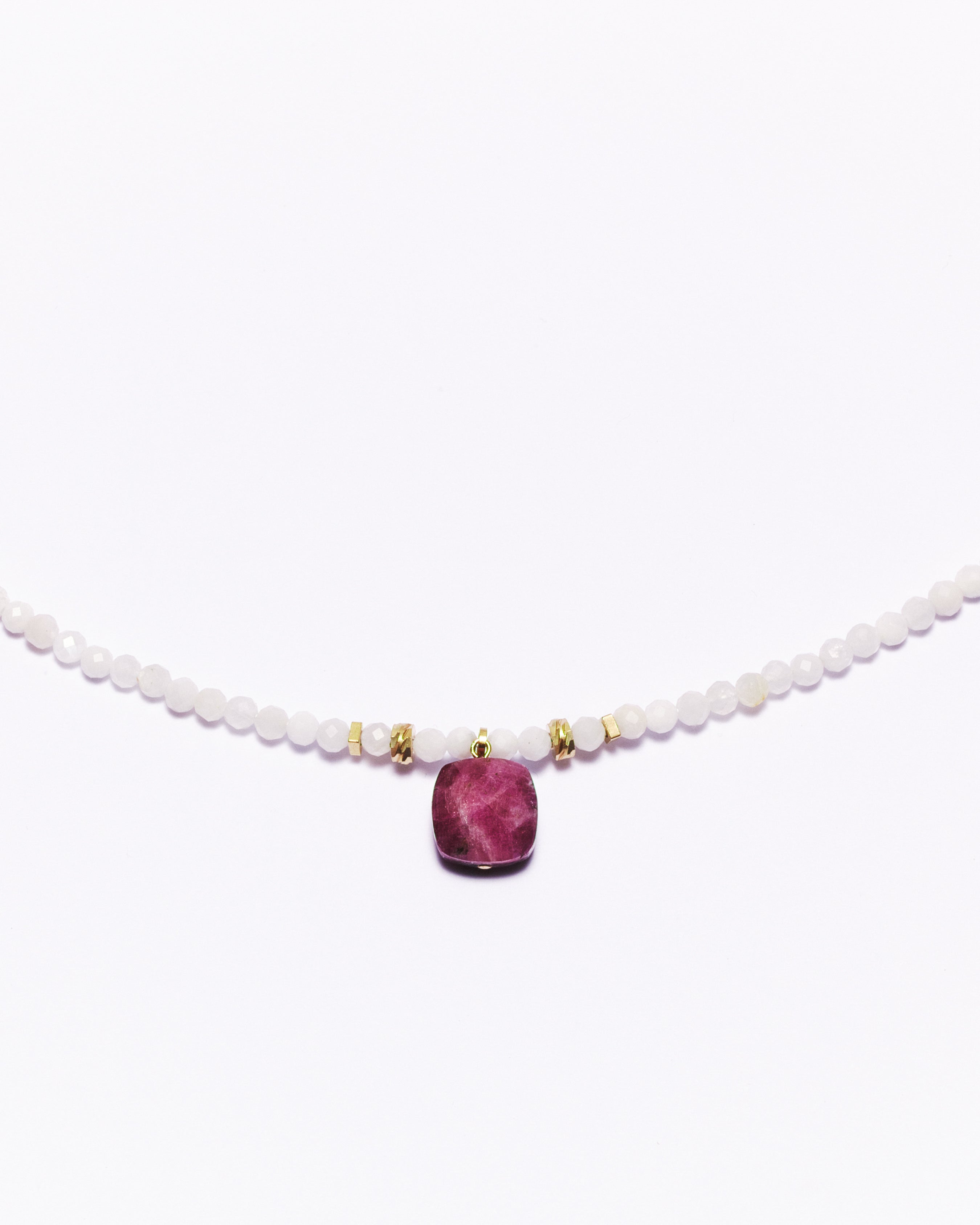
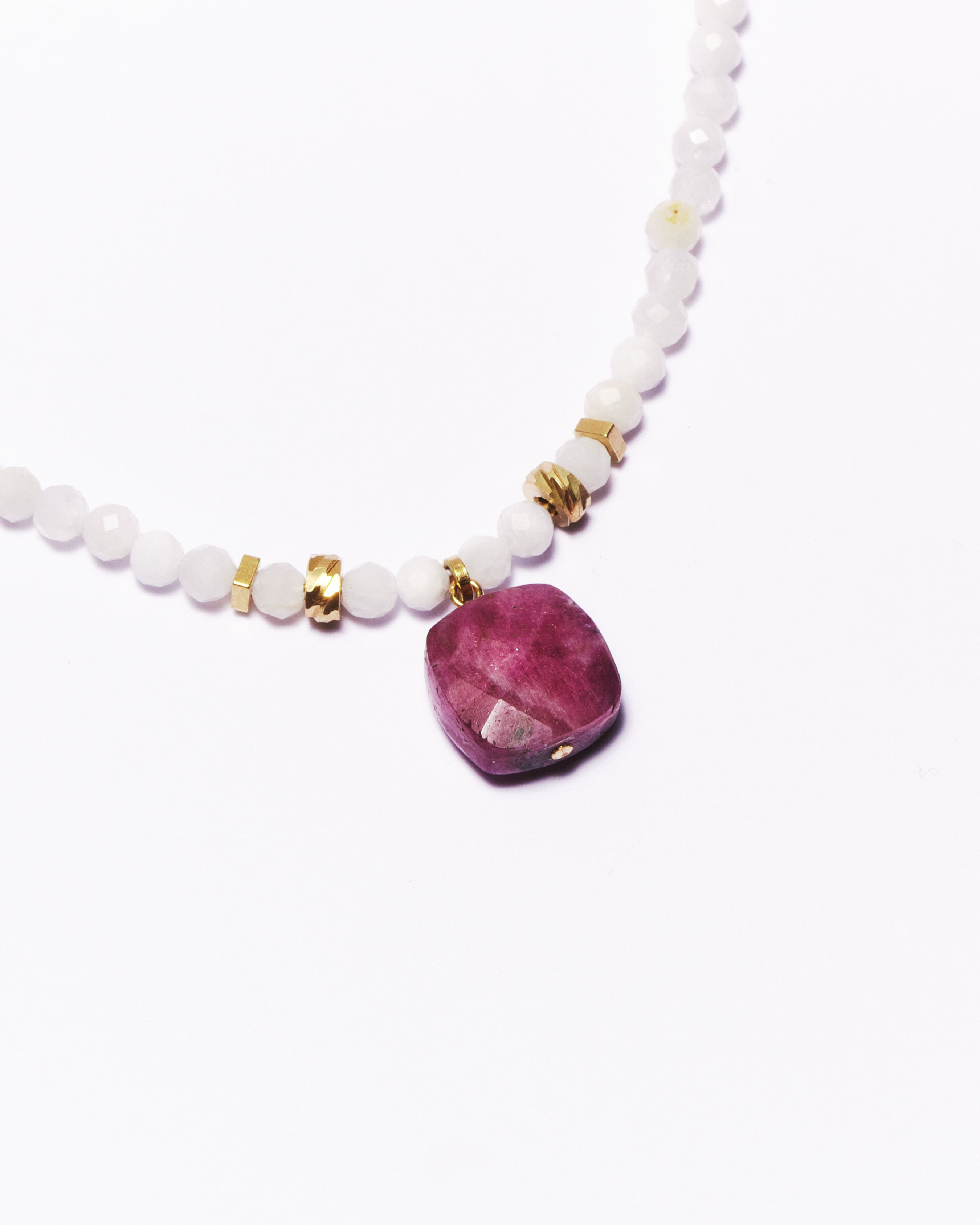
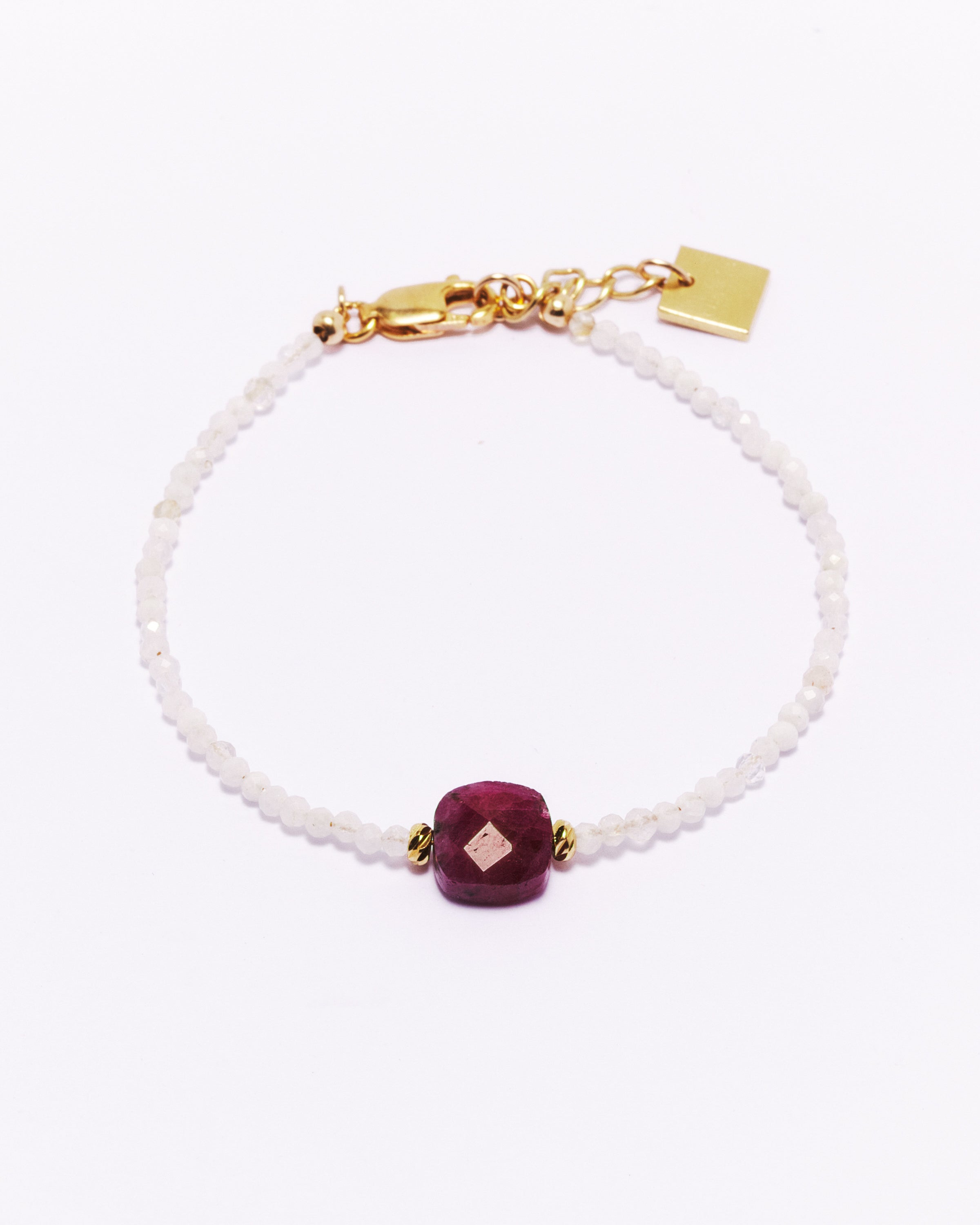
Ruby is fire. It is the stone of passion, of courage, of the heart fully committed to its direction. In Sanskrit, ruby is called ratnaraj, king of precious stones. It has been offered to deities, worn by royalty, and carried as a talisman of protection and strength for centuries. It is not a stone for ambivalence. Ruby belongs to people who know what they want.

August: Peridot
Peridot is one of the few gemstones that occurs in only one color: a vivid, slightly yellow-toned green. Ancient Egyptians called it the gem of the sun. Peridot is associated with lightness, renewal, and the release of patterns that have run their course. It is a stone of forward movement.
September: Sapphire
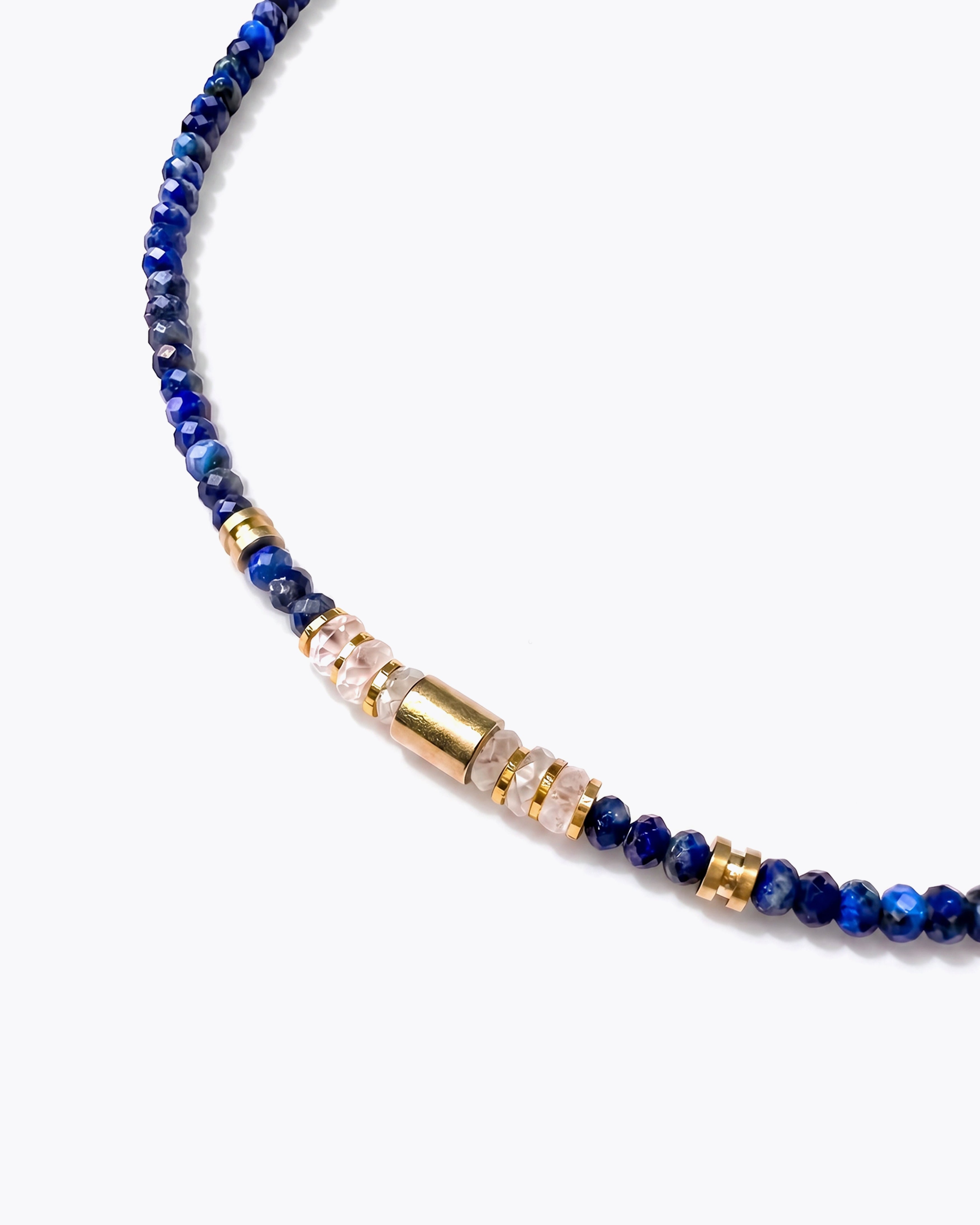
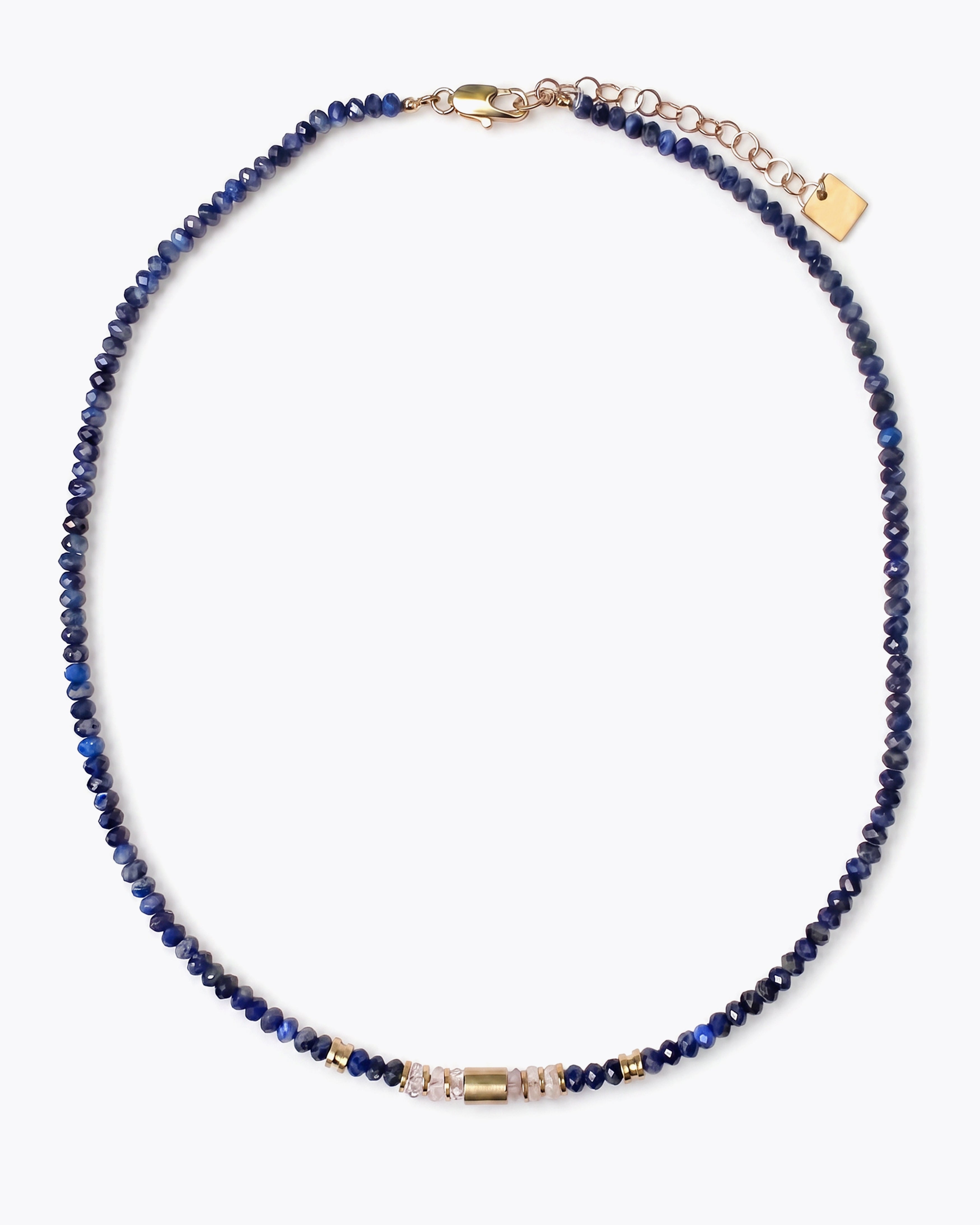
Blue sapphire is the stone of wisdom, of the kind of knowing that does not come from analysis alone but from depth of experience. It has been associated with royalty, with divine favor, and with the clarity that comes after sustained searching. It is also associated with loyalty and with truth.

October: Opal or Tourmaline
Opal is unlike any other gemstone. Its internal fire, the shifting play of color that moves as the stone moves, is the result of silica spheres diffracting light. The Romans called it opalus, the stone that contains all others, because within a single opal you can find every color. Opal is associated with creativity, with the full expression of one's inner world, and with the beauty of things that cannot be easily categorized.

November: Citrine
Citrine is warm, golden, and associated with abundance, optimism, and the energy of the sun in late autumn. It is sometimes called the merchant's stone because of its long association with prosperity and the confidence to attract it. It is a stone of clarity about what you want, and of the warmth required to stay open to it arriving in unexpected forms.

December: Labradorite or Turquoise or Blue Topaz
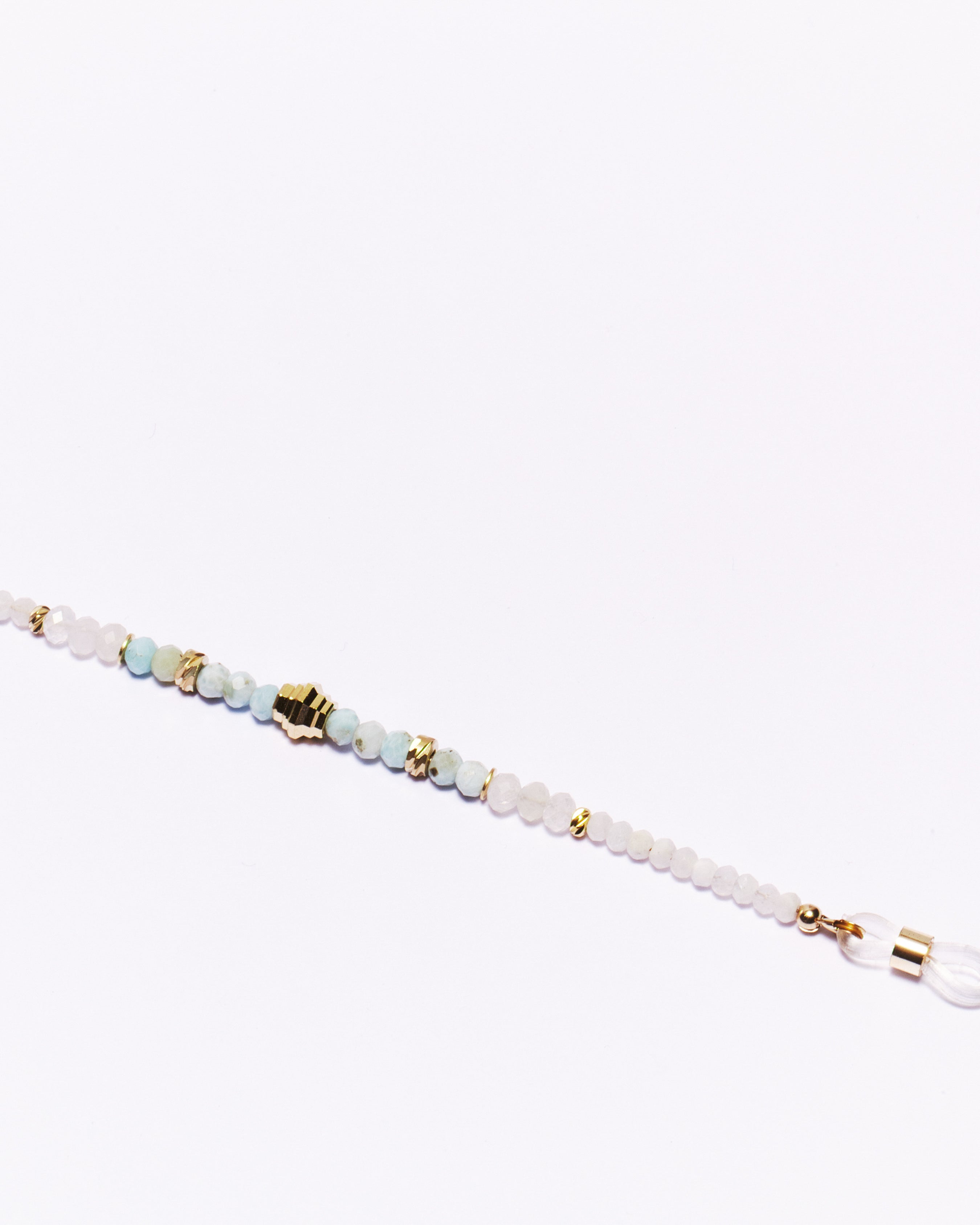
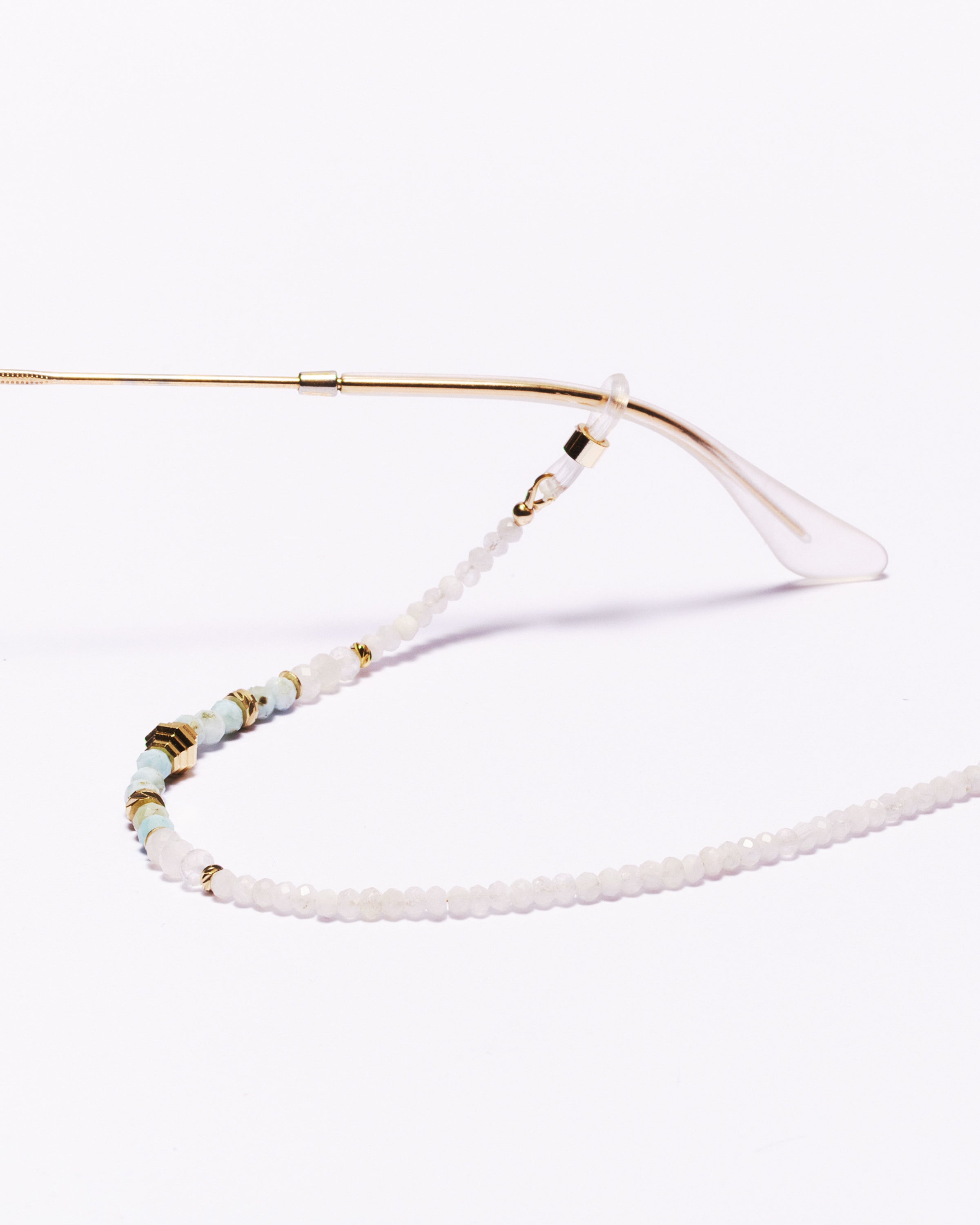
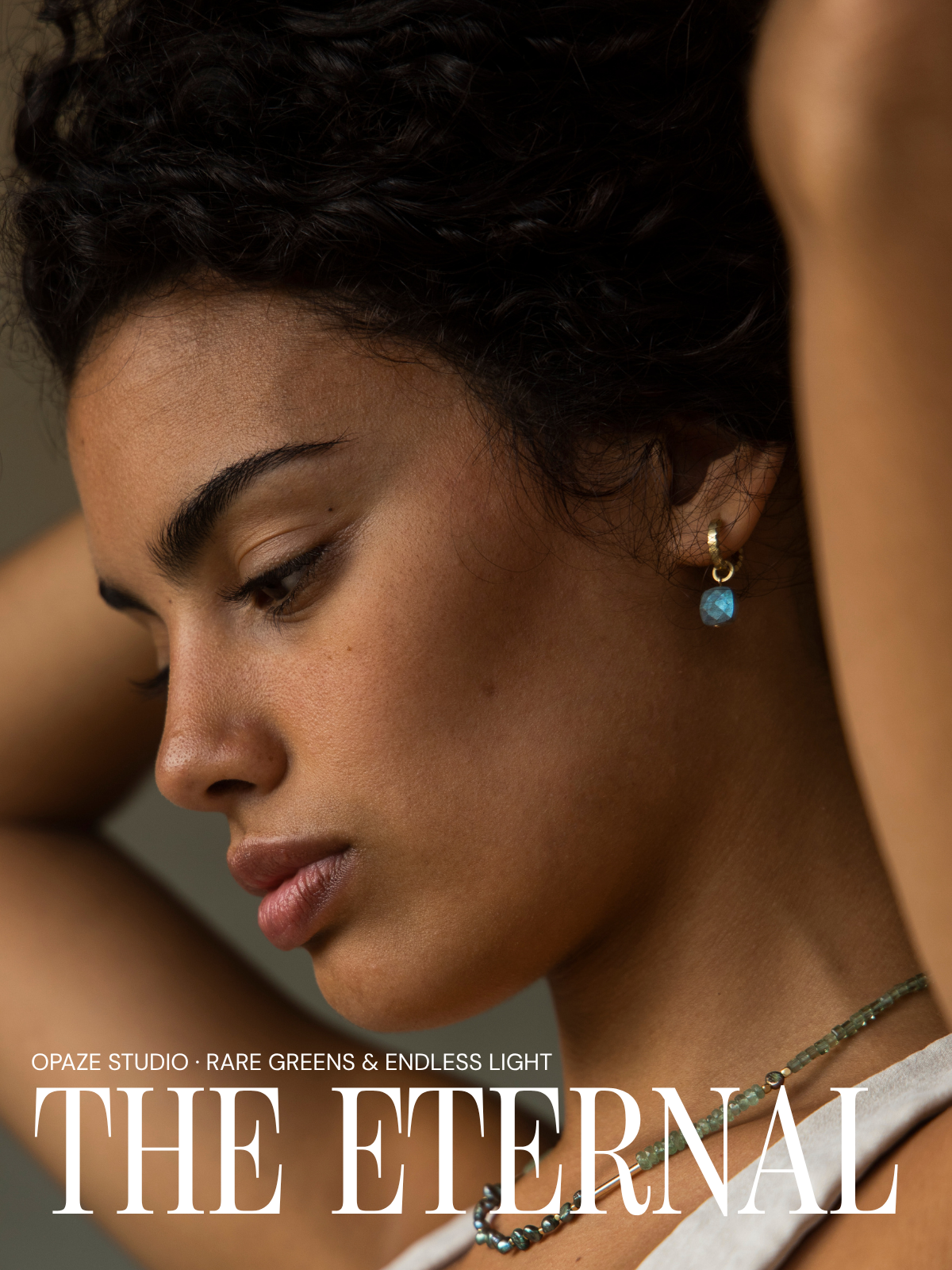
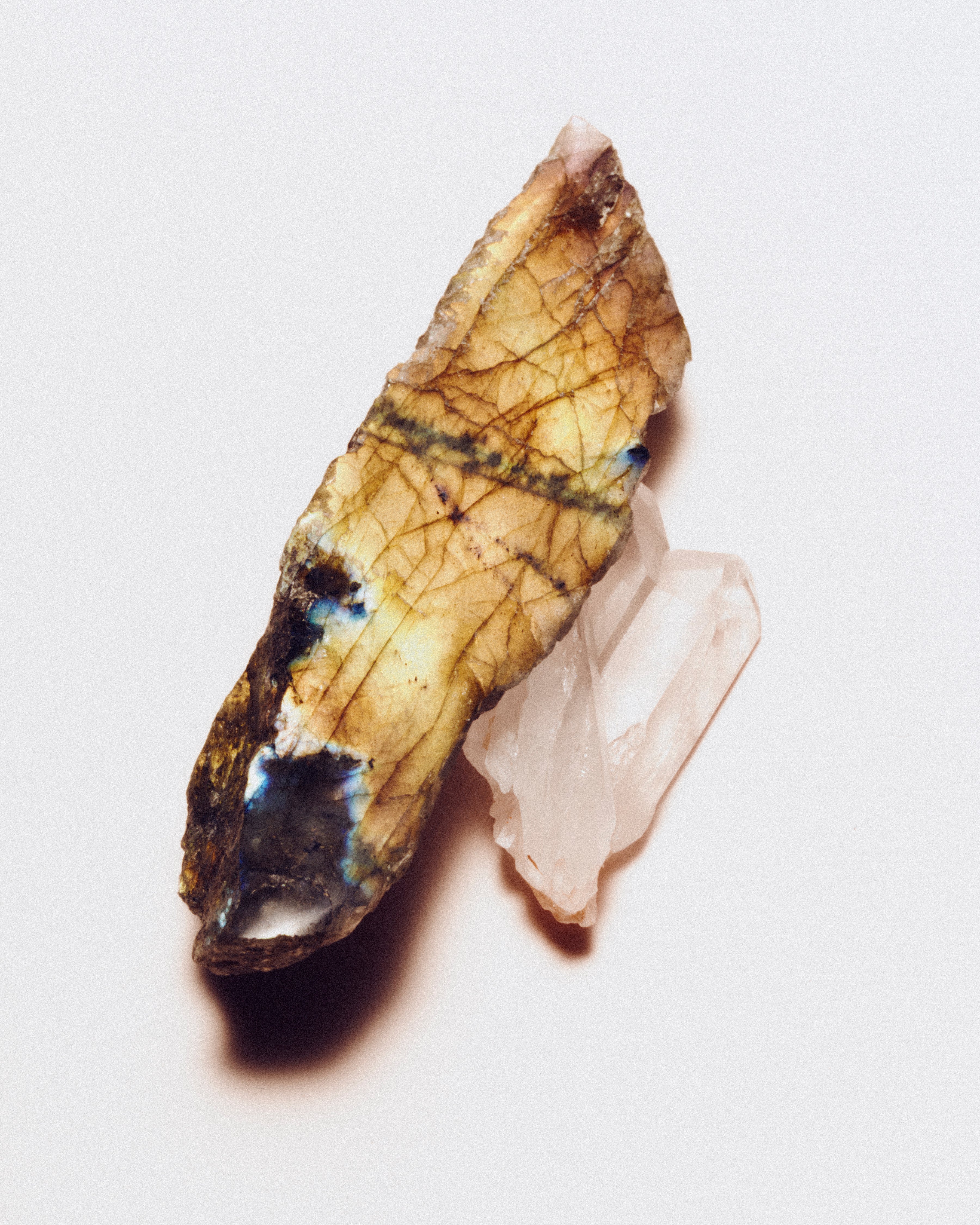
Labradorite is the December stone that speaks most distinctly within the Opaze world. Its iridescence, called labradorescence, is a phenomenon produced by light scattering through the stone's internal layers, and the result is extraordinary: a stone that appears dark grey in one light and electric blue, gold, or green in another. It is a stone of transformation, of the unseen made visible, and of the courage required to trust what you sense but cannot yet prove.

What is the most powerful birthstone?
This depends entirely on what you are looking for. Ruby carries the strongest association with courage and passion. Amethyst is most consistently linked to calm and clarity. Labradorite is often cited for transformation and protective energy. The stone that resonates most with your current chapter is the most powerful stone for you.
Can I wear a birthstone that is not mine?
Absolutely. The tradition of birthstone wearing began as a way of connecting with specific energies, not as a restriction. Wear the stone whose qualities you want to cultivate, regardless of your birth month.
What is the rarest birthstone?
Alexandrite, a June birthstone, is among the rarest gemstones in the world. It changes color dramatically between daylight and incandescent light. Natural alexandrite of any significant size is extraordinarily valuable.
What birthstone is good for anxiety?
Amethyst is the stone most consistently associated with calming an overactive mind. Aquamarine is linked to emotional ease and clear communication. Blue sapphire carries an association with deep, settled knowing. All three have been used in this way across different traditions.