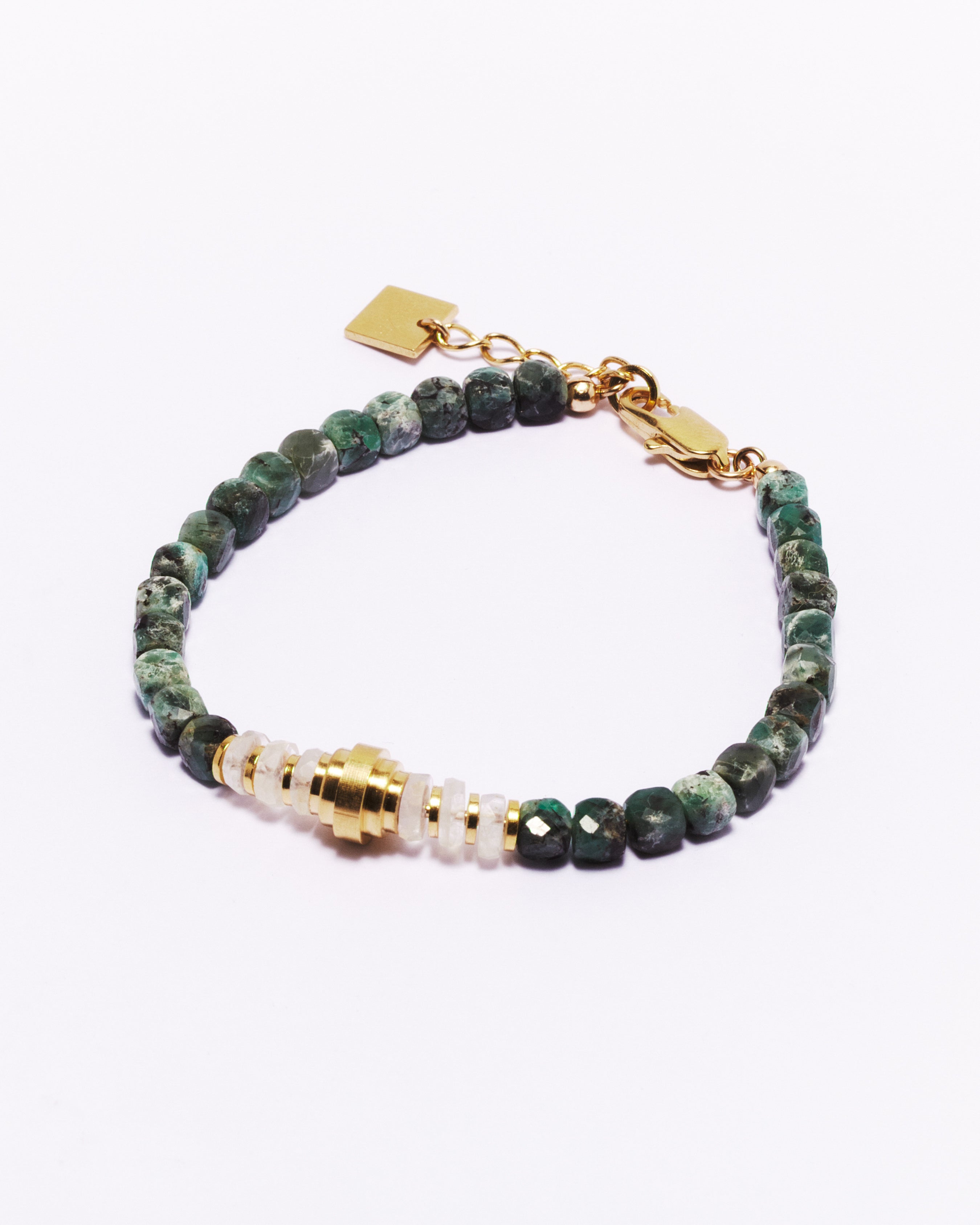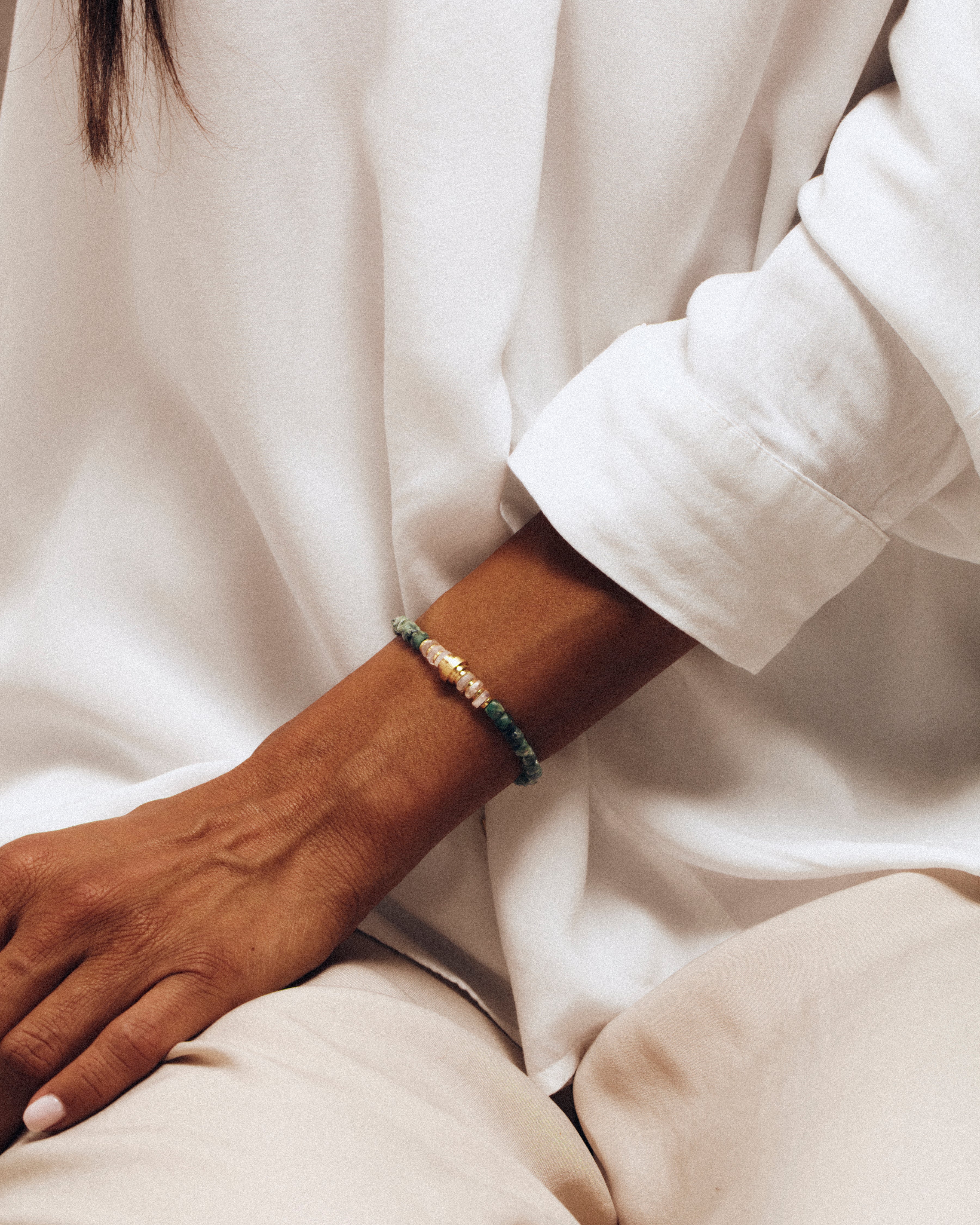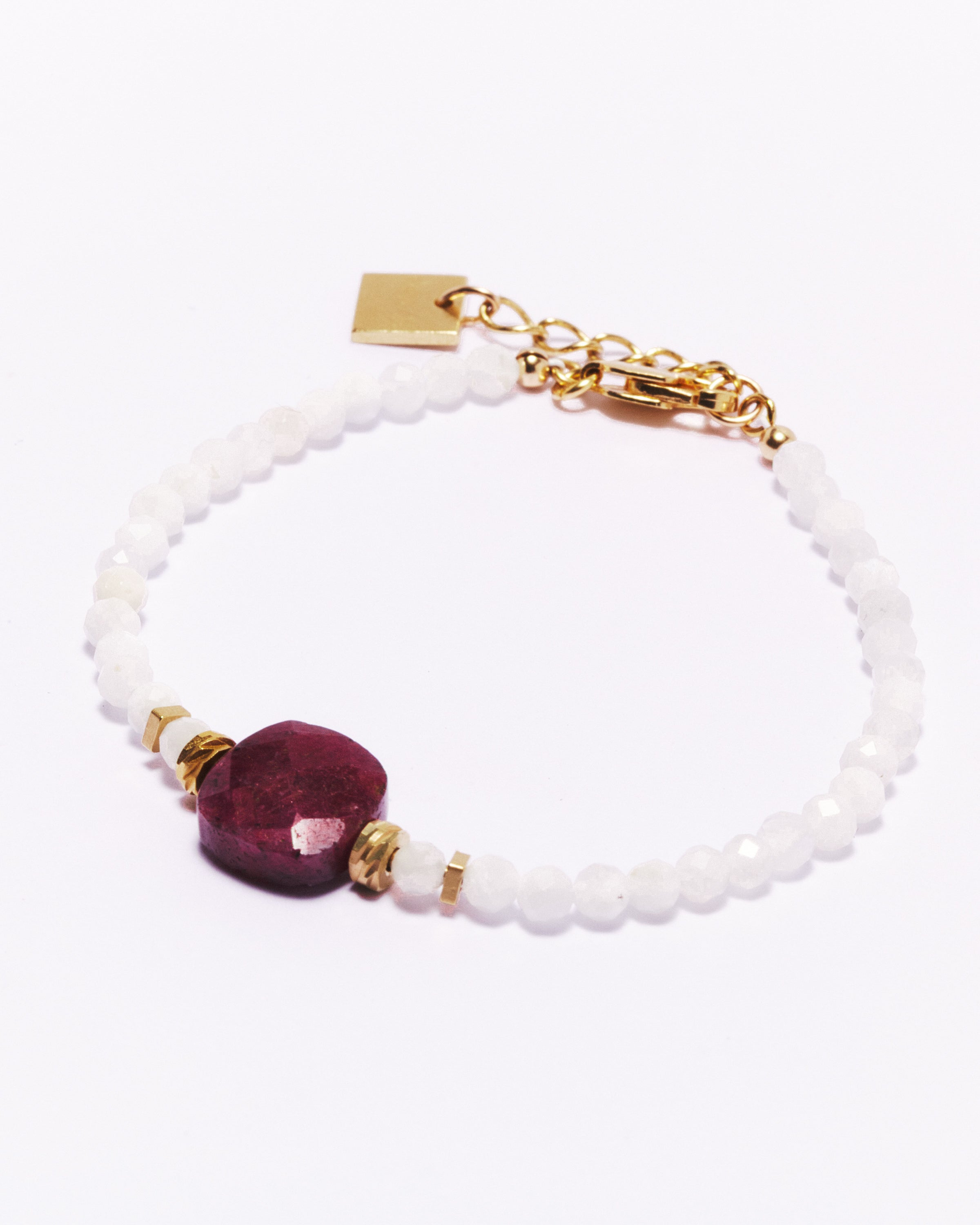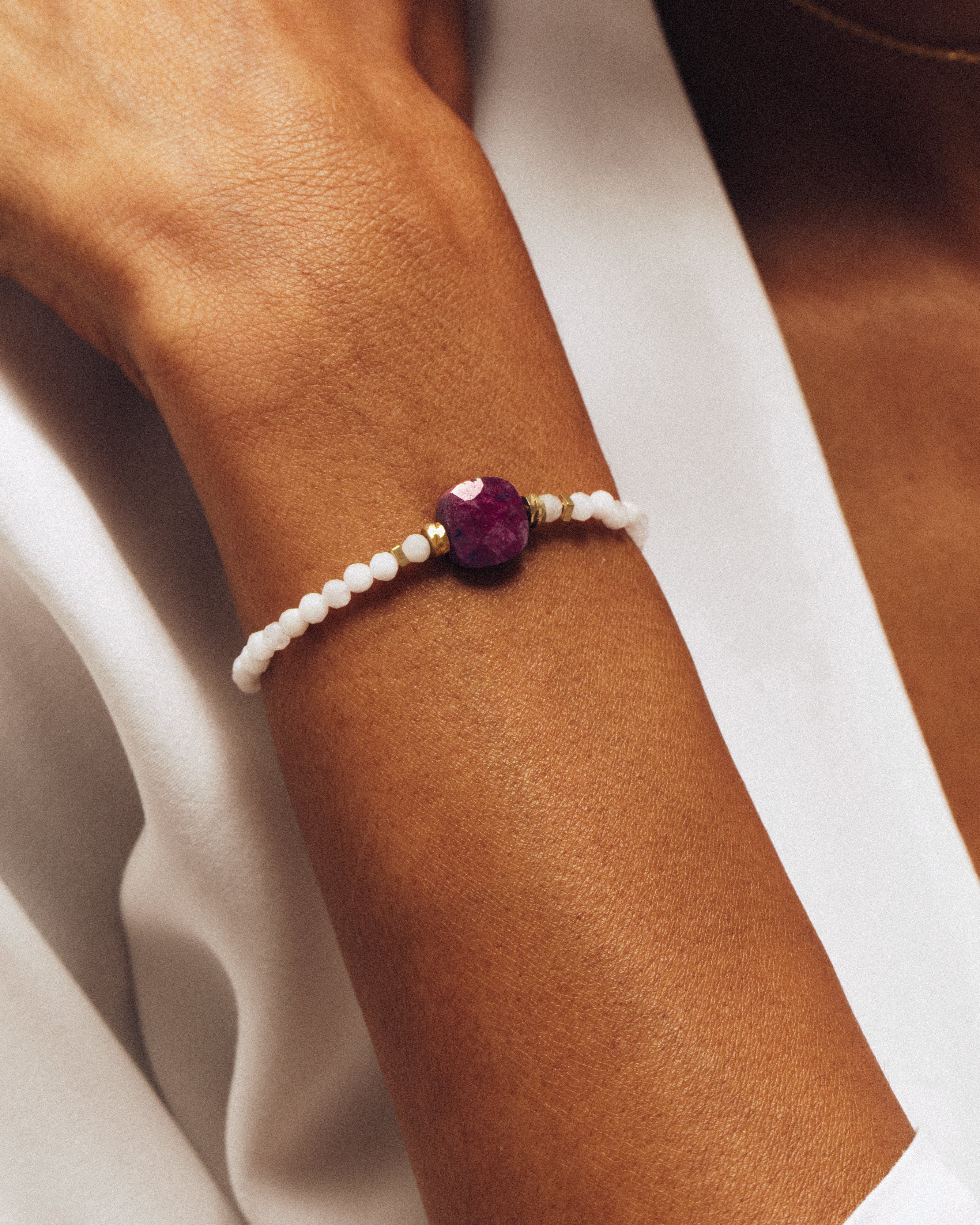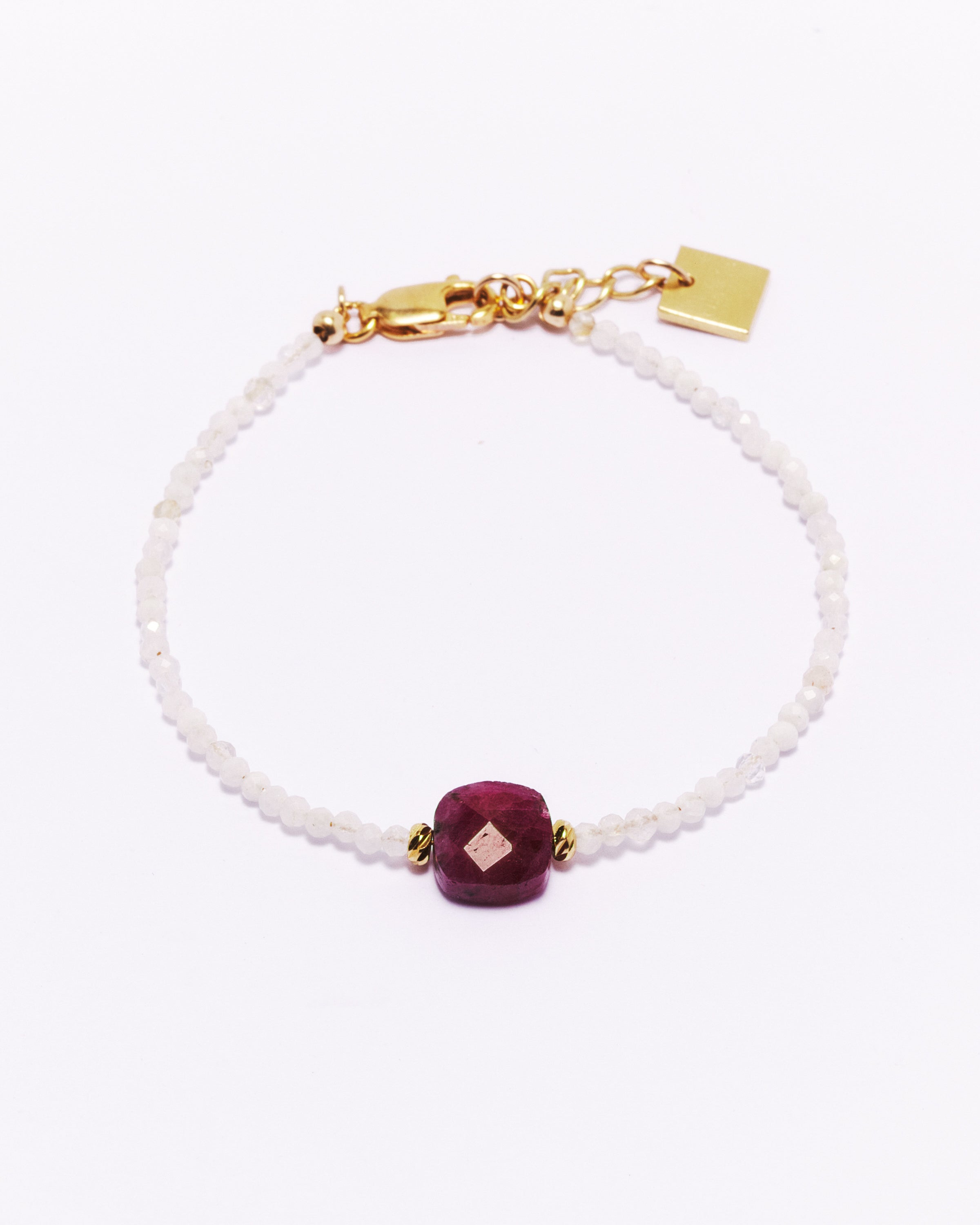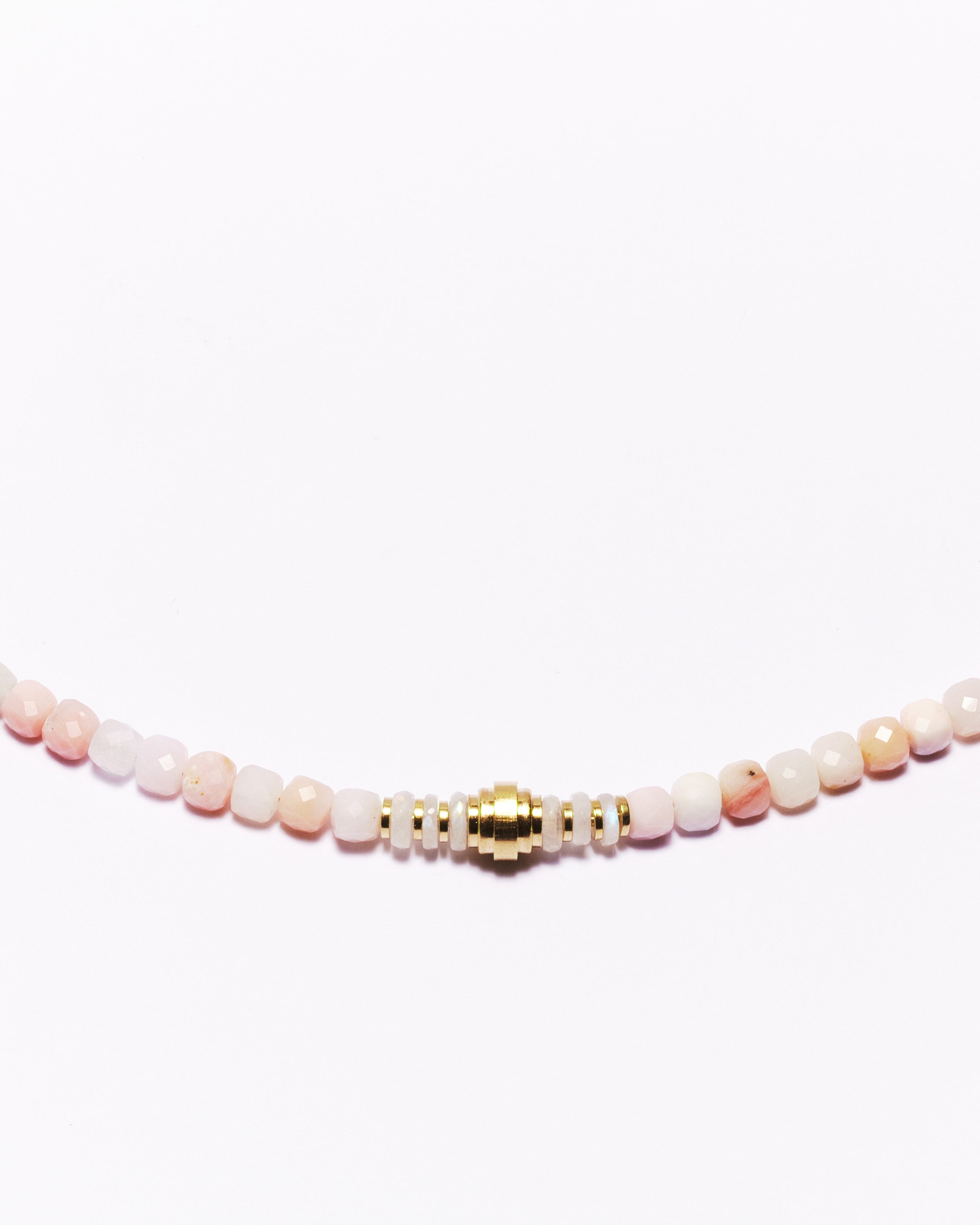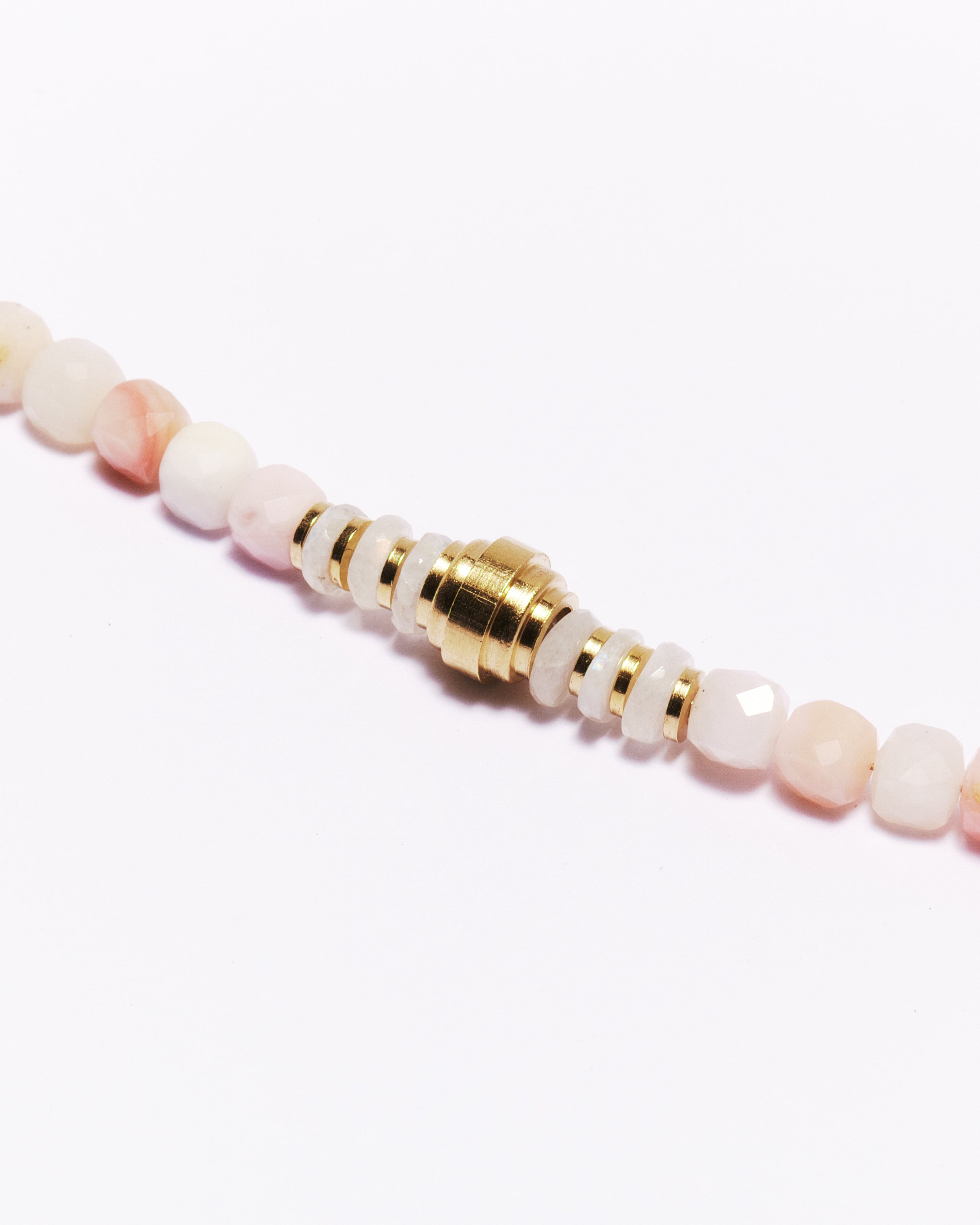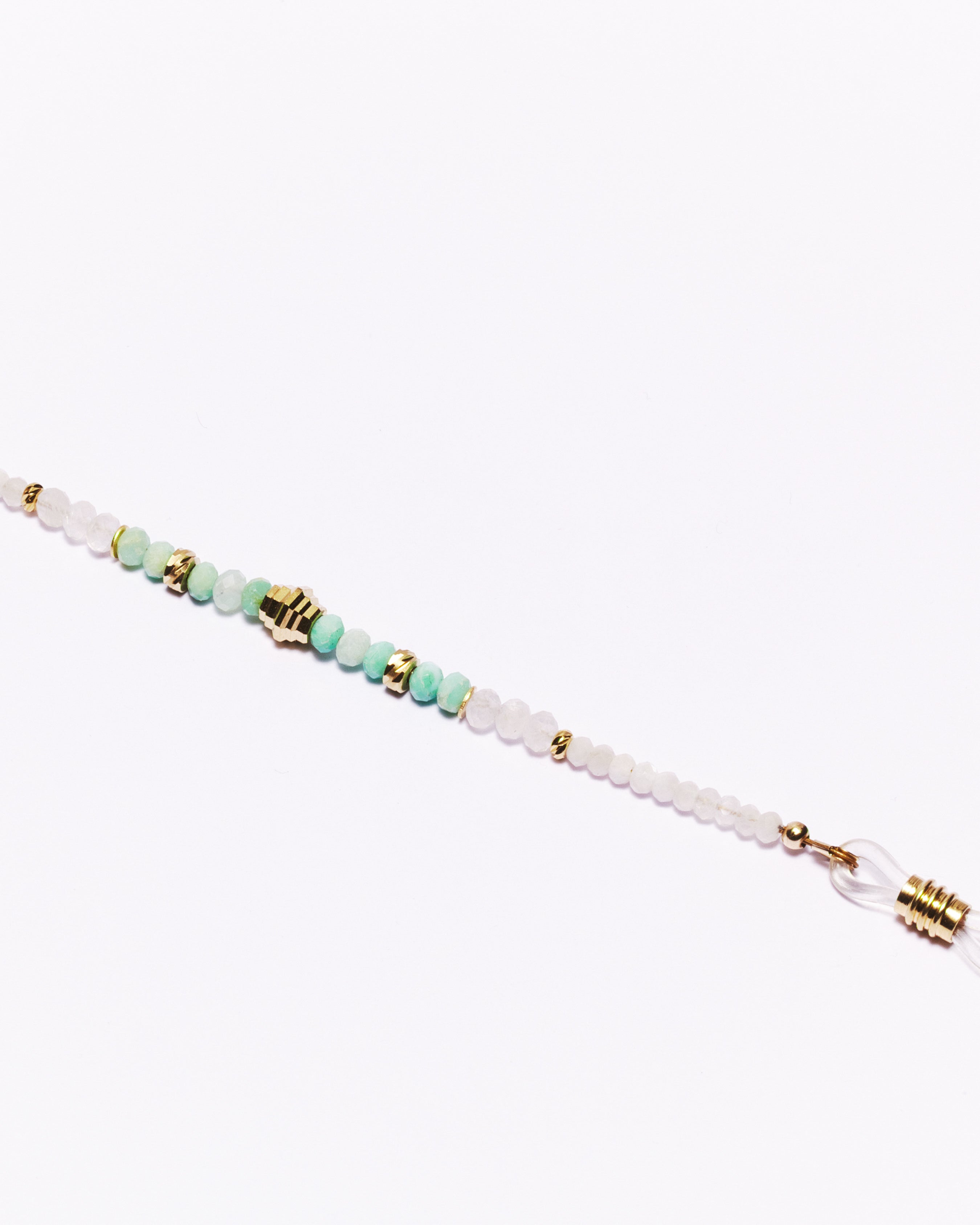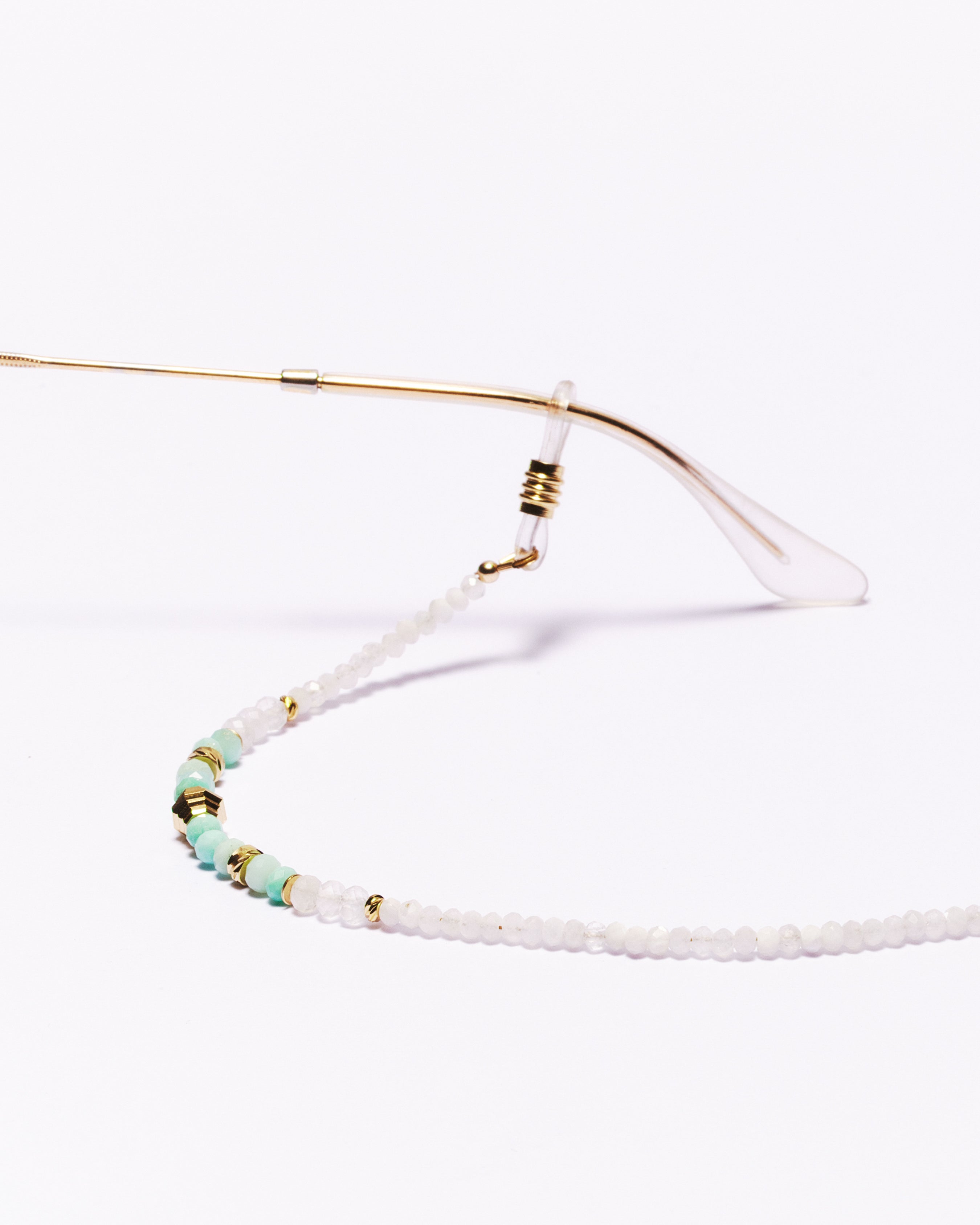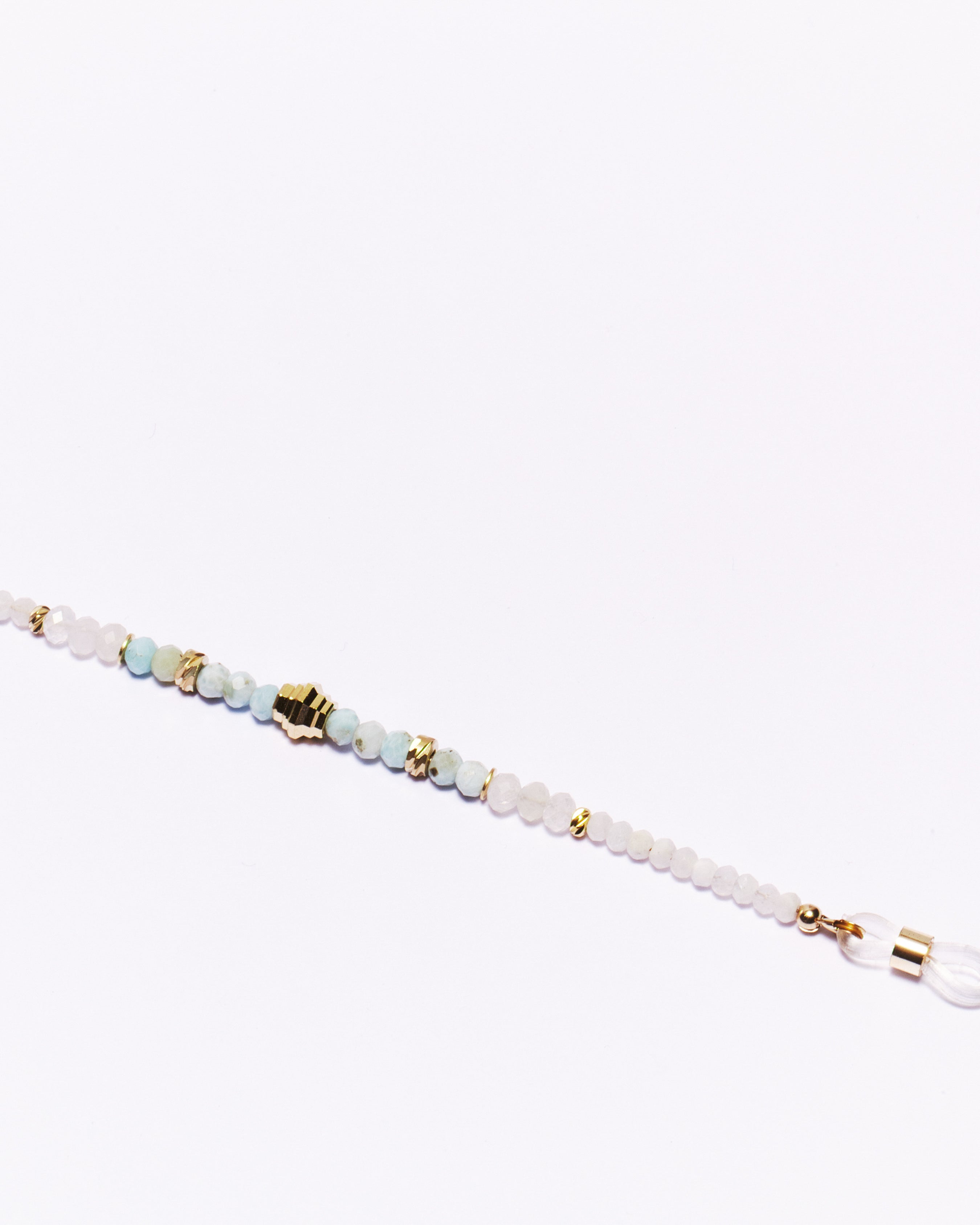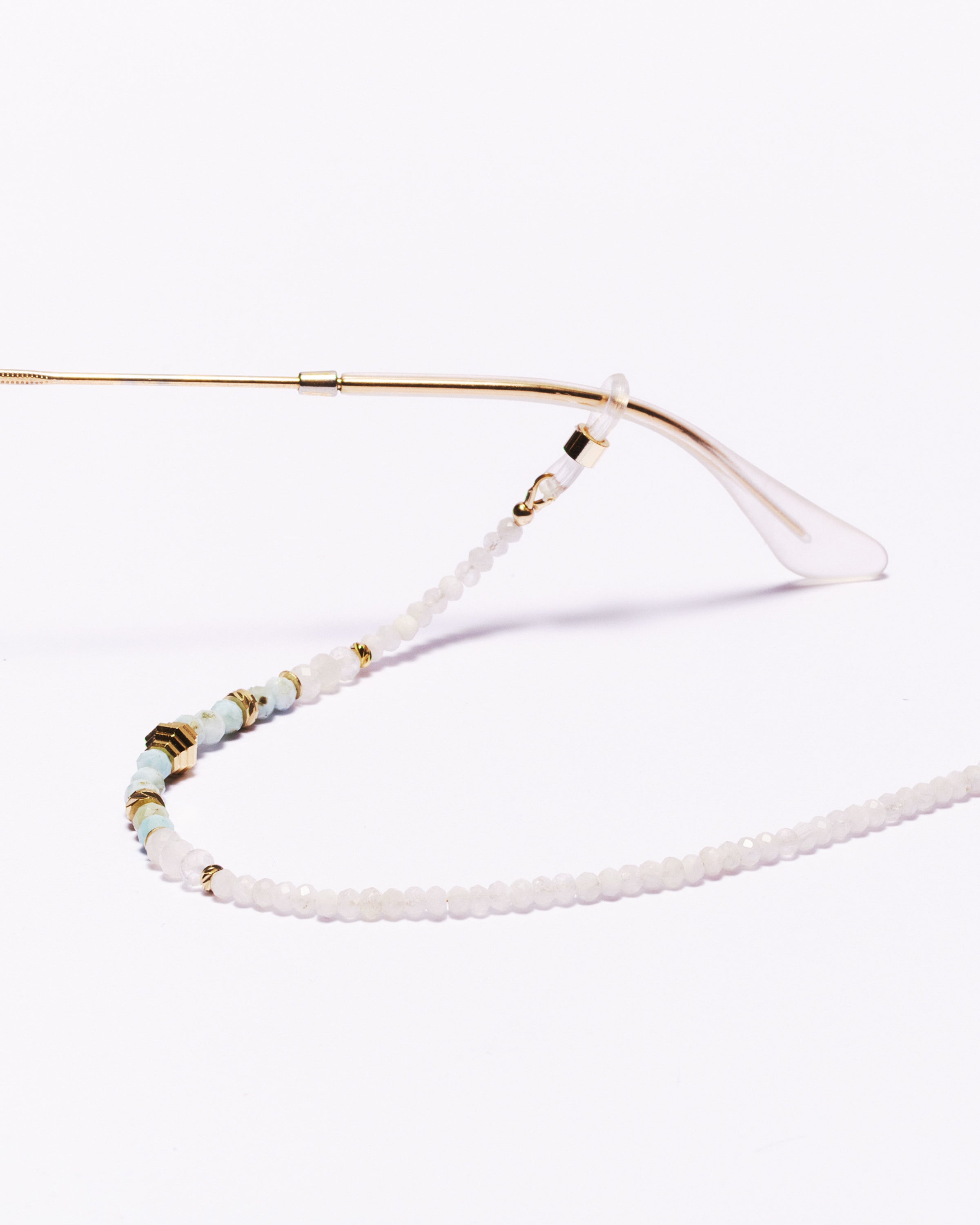

Moonstone Jewelry: Meaning, Lore, and How to Style It
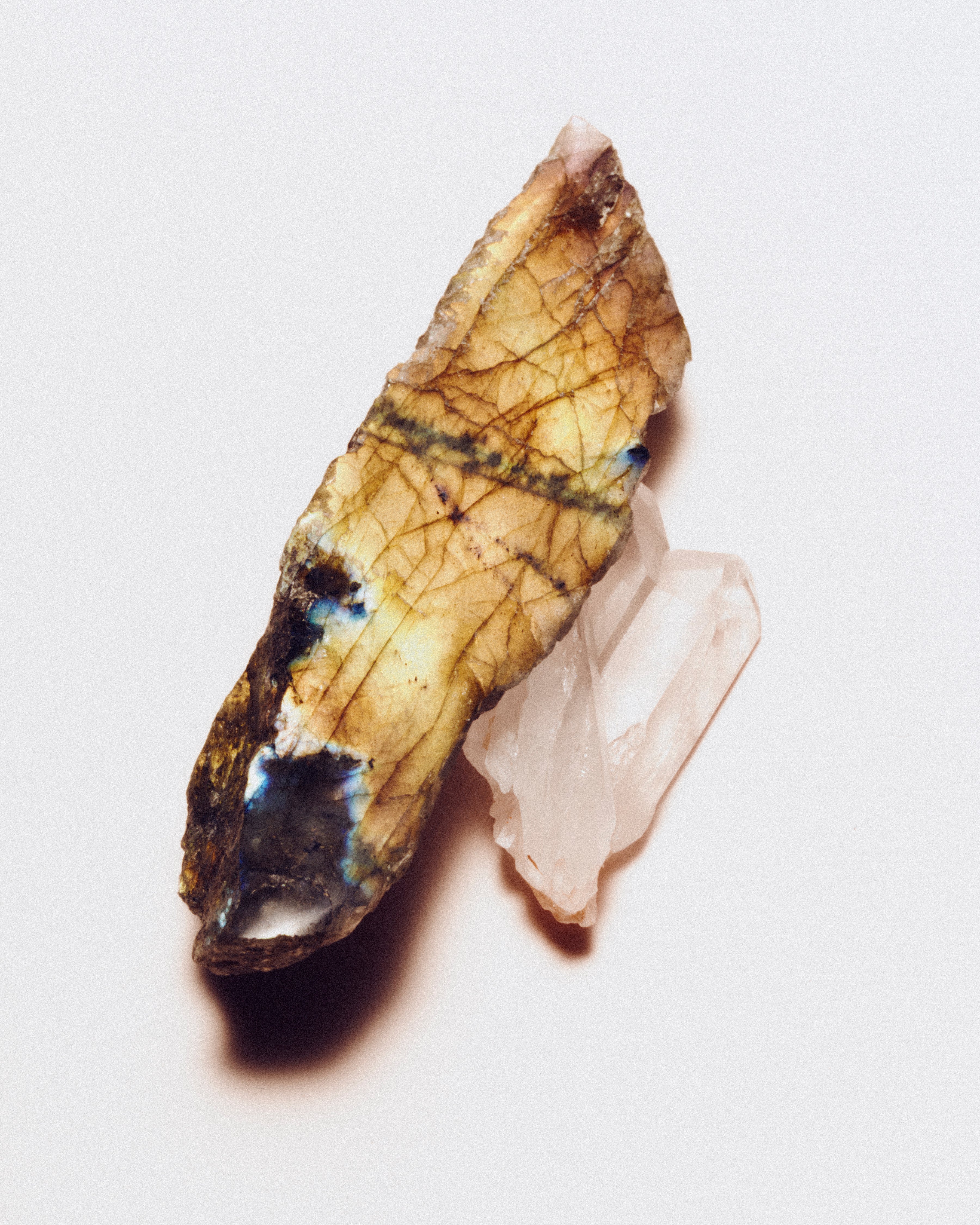
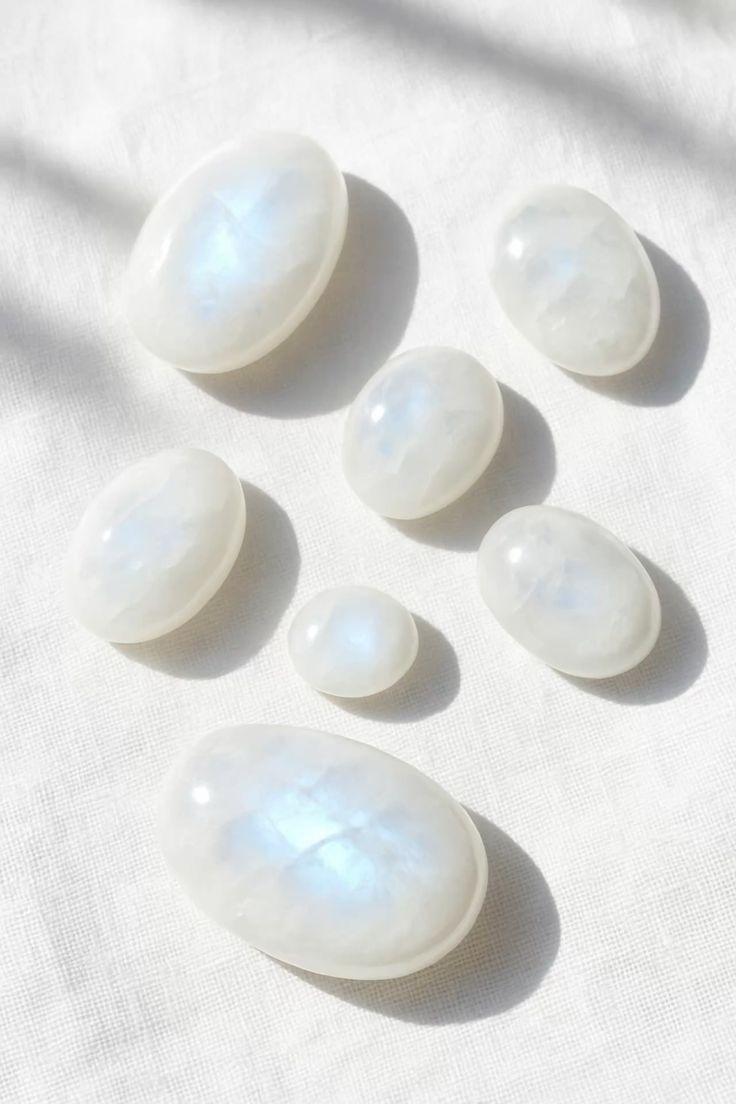
There is a quality that the best moonstones share with very few other things in the world. Hold one toward light and the stone appears to glow from within, a soft, blue-white luminosity that seems to move as the stone moves. Gemologists call this adularescence. Ancient cultures called it the light of the moon, trapped in stone.
Moonstone has been worn with intention for at least two thousand years, and its associations have remained remarkably consistent across traditions separated by continents and centuries. That consistency is worth paying attention to. When a belief persists that long across that many cultures, something is being observed.

What Is Moonstone?
Moonstone is a member of the feldspar group, composed of alternating layers of two different minerals: orthoclase and albite. When light enters the stone, it scatters between these internal layers and creates the characteristic glow, a phenomenon called adularescence, named after the Swiss mountain Adular where some of the earliest known moonstones were found.
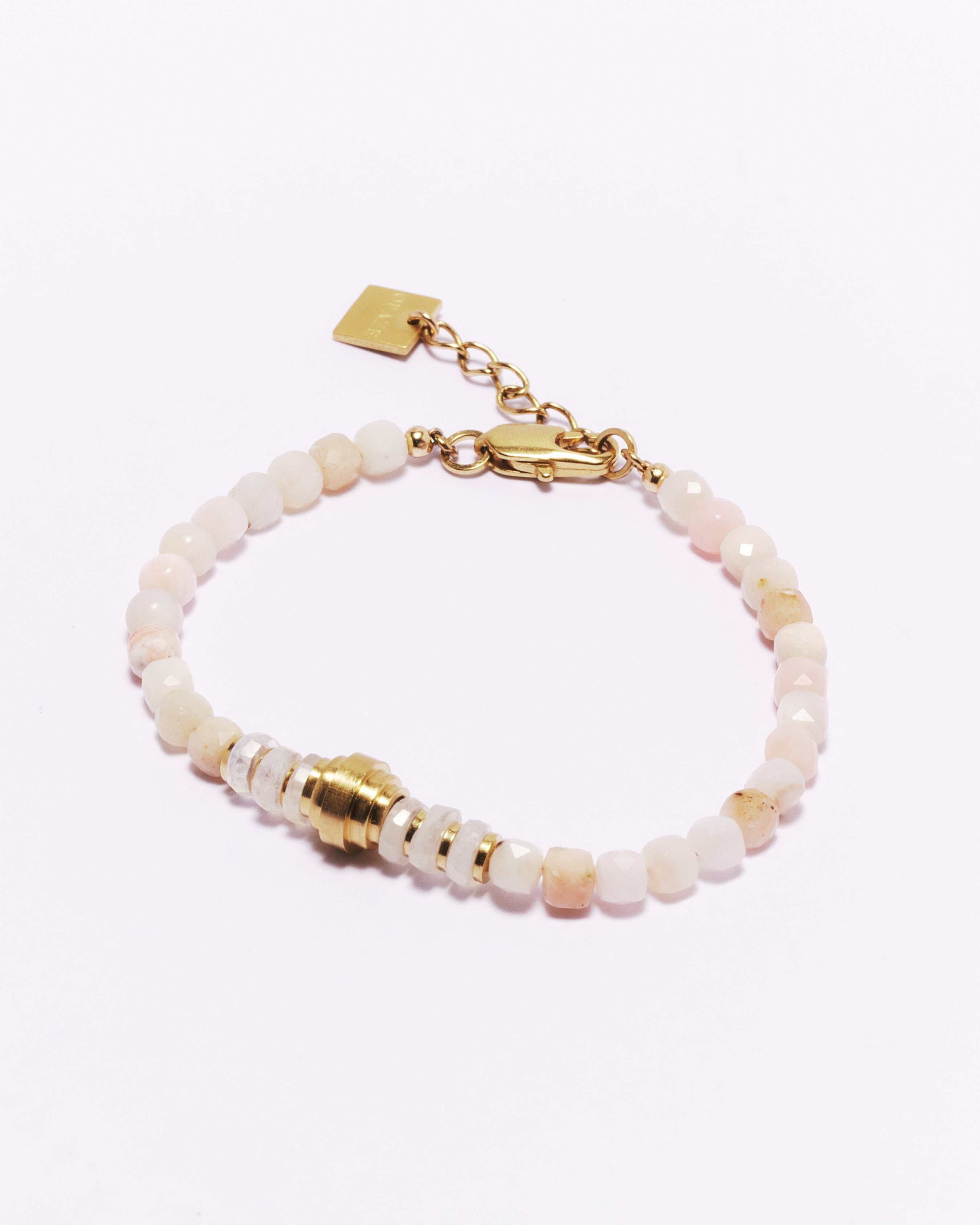
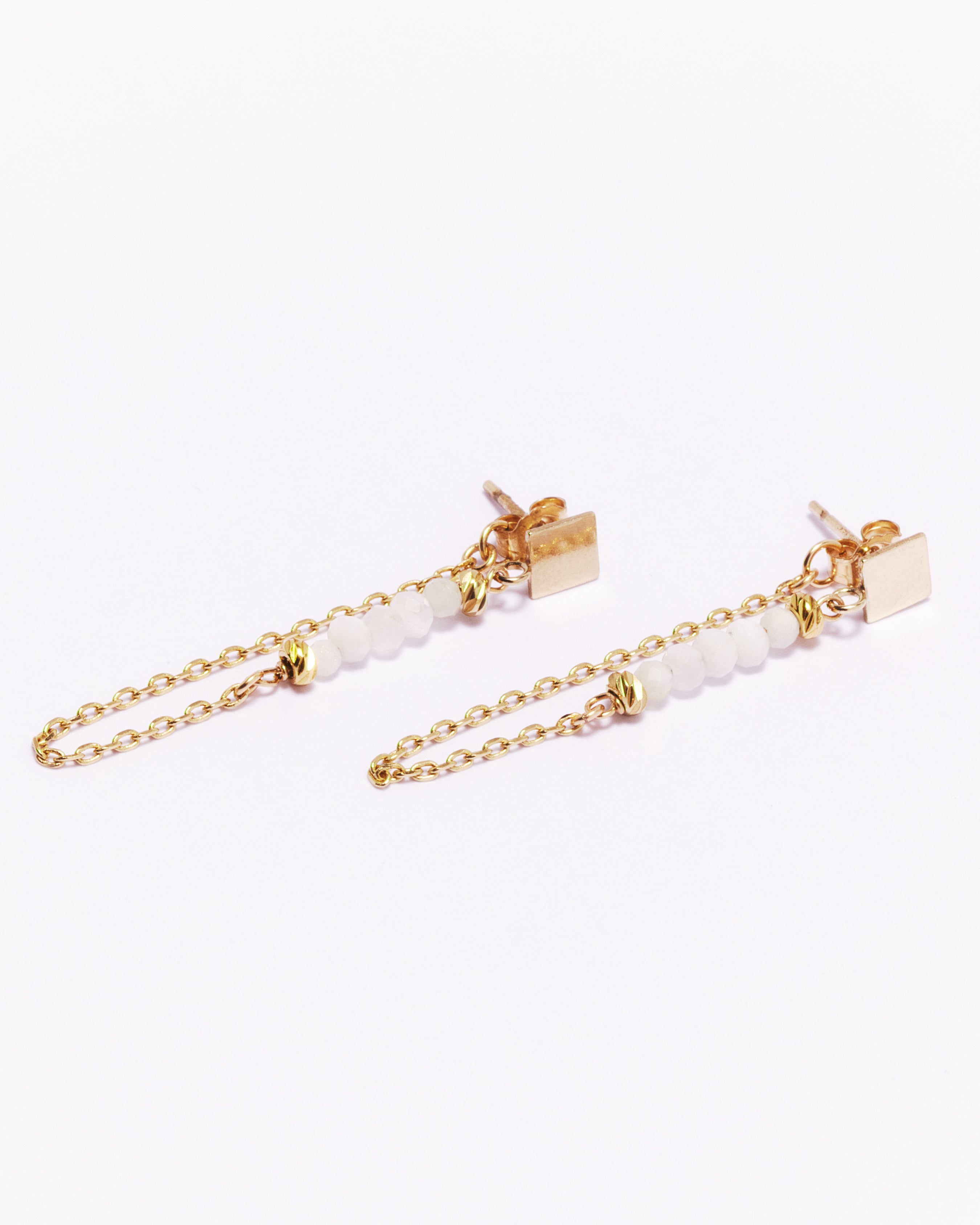
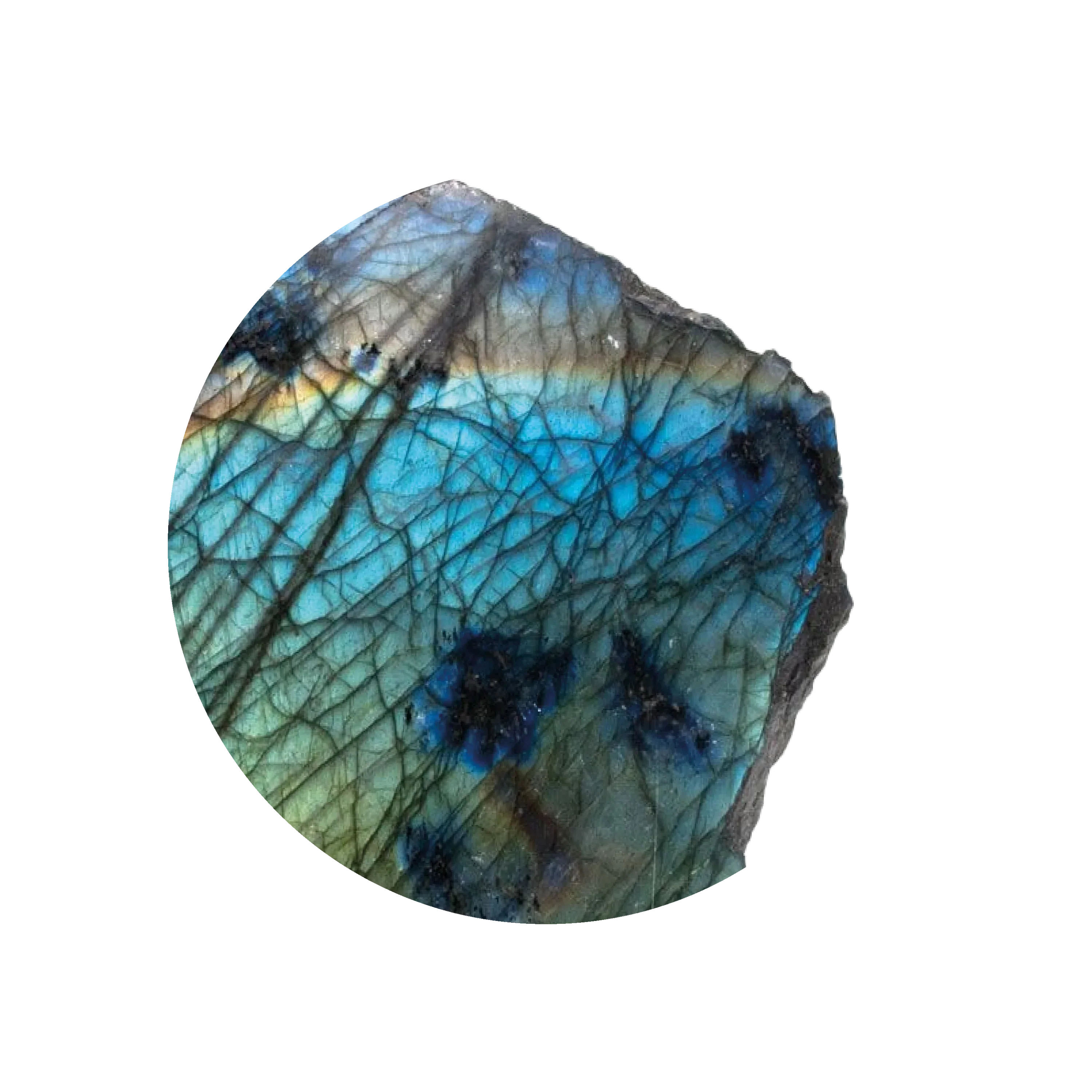
The finest moonstones are colorless with a strong blue sheen, but the stone also occurs with a white glow, a peachy tone, or a more diffuse silver luminosity. Rainbow moonstone, which is technically a variety of labradorite, shows multiple colors within its glow. Each variety has its own quality of light and its own character.
At Opaze, we select moonstone for the depth of the glow, the clarity beneath, and the sense that the stone is doing something when you look at it. Those pieces are harder to find. They are worth finding.
Moonstone Meaning Across Traditions
In ancient Rome, moonstone was believed to be formed from solidified moonlight, and it was associated with Diana, goddess of the moon. Roman jewelers prized it and believed it changed in appearance with the phases of the moon, growing brighter as the moon grew full.
In Hindu tradition, moonstone was considered a sacred stone of deep significance, associated with the moon god Chandra. It was believed to bring good fortune and to have a calming, balancing effect on the emotions.

In European medieval tradition, moonstone was associated with lovers. It was said that holding moonstone in the mouth under a full moon would reveal the future of a relationship. Whether or not this is literally true, the association tells you something about what the stone was understood to access: the heart's private knowledge, the things we sense before we can articulate them.
In modern crystal practice, moonstone is consistently associated with intuition, emotional intelligence, cycles, and the feminine archetype in its broadest sense: receptivity, inner knowing, and the capacity to trust what has not yet arrived. It is considered particularly supportive during times of change or transition, when the path forward is not yet clear.
The Modern Moonstone Moment
Moonstone is experiencing a significant resurgence in fine and artisan jewelry. Search data from Pinterest shows opalescent stones, including moonstone, increasing dramatically in interest. This is not coincidence.
Jewelry buyers today are increasingly drawn to pieces that mean something beyond their aesthetic value. Moonstone satisfies this on multiple levels: it is genuinely beautiful in a way that photographs well and wears differently in different lights; it carries a rich, cross-cultural tradition of meaning; and it is accessible in a way that fine diamonds or rare colored stones are not.
It is also distinctly individual. No two moonstones glow in exactly the same way. The direction, intensity, and color of the adularescence varies with every stone. Wearing moonstone is wearing something singular.

How to Style Moonstone Jewelry
Moonstone's luminosity makes it one of the most versatile gemstones for styling. It picks up the tones around it and reflects them back softly. In warm light, the blue sheen shifts toward silver. In cooler light, it intensifies. This responsiveness to environment is part of what makes it worth wearing daily.
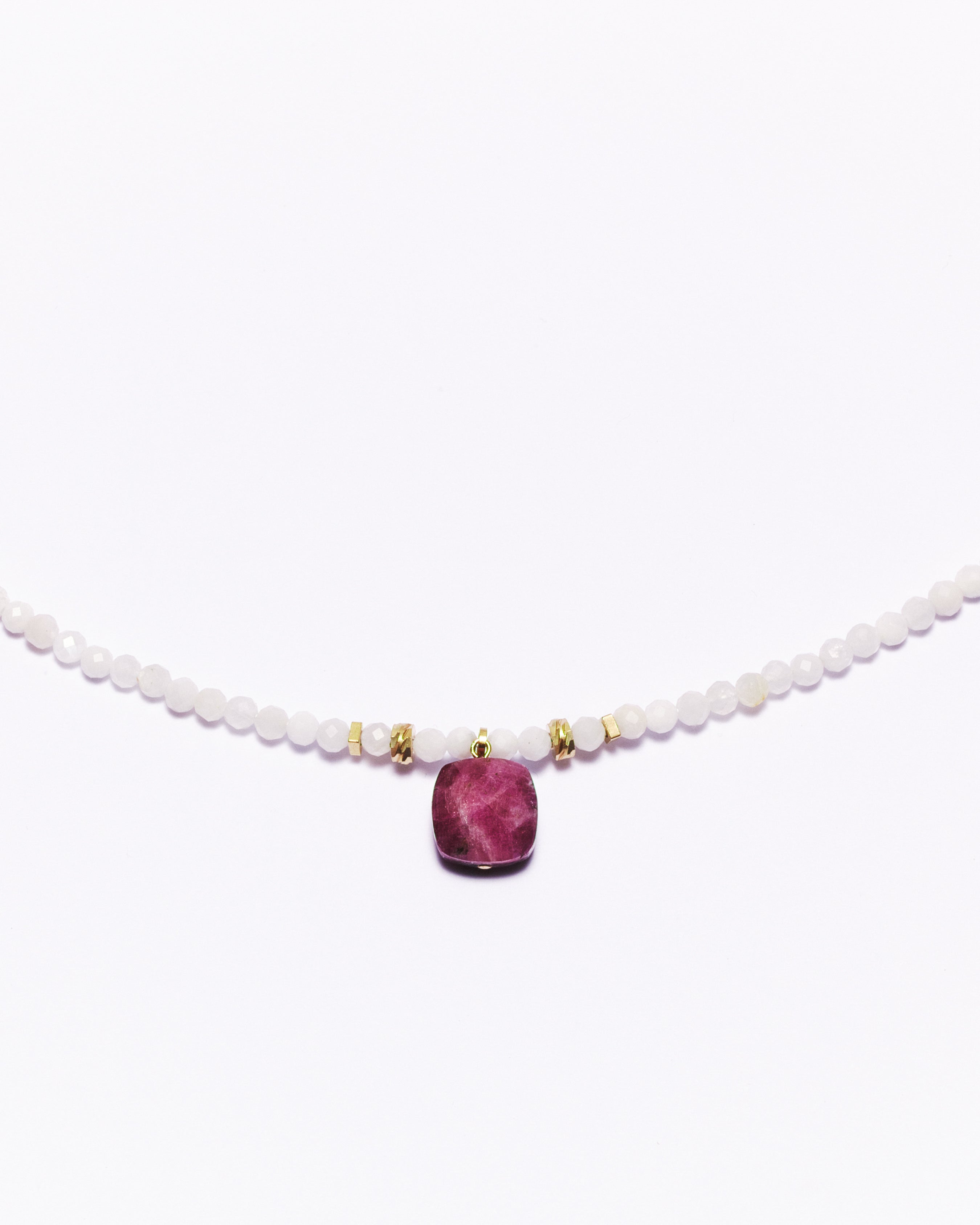
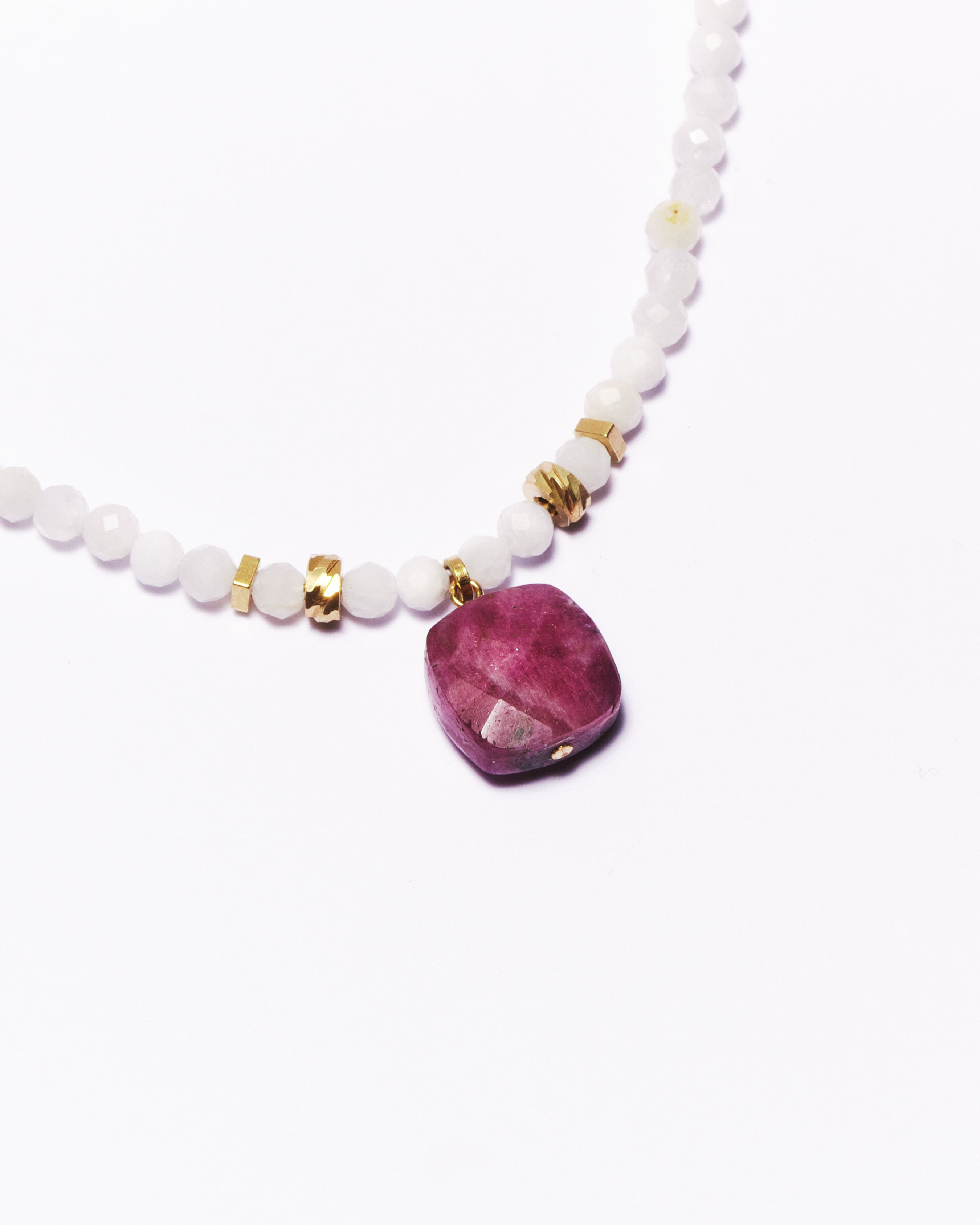
For everyday wear: a small moonstone pendant on a delicate chain is one of the most wearable pieces of jewelry in existence. It catches light all day without demanding attention. Worn against the chest, it sits in the intuitive center of the body, which is precisely where many traditions suggest it belongs.
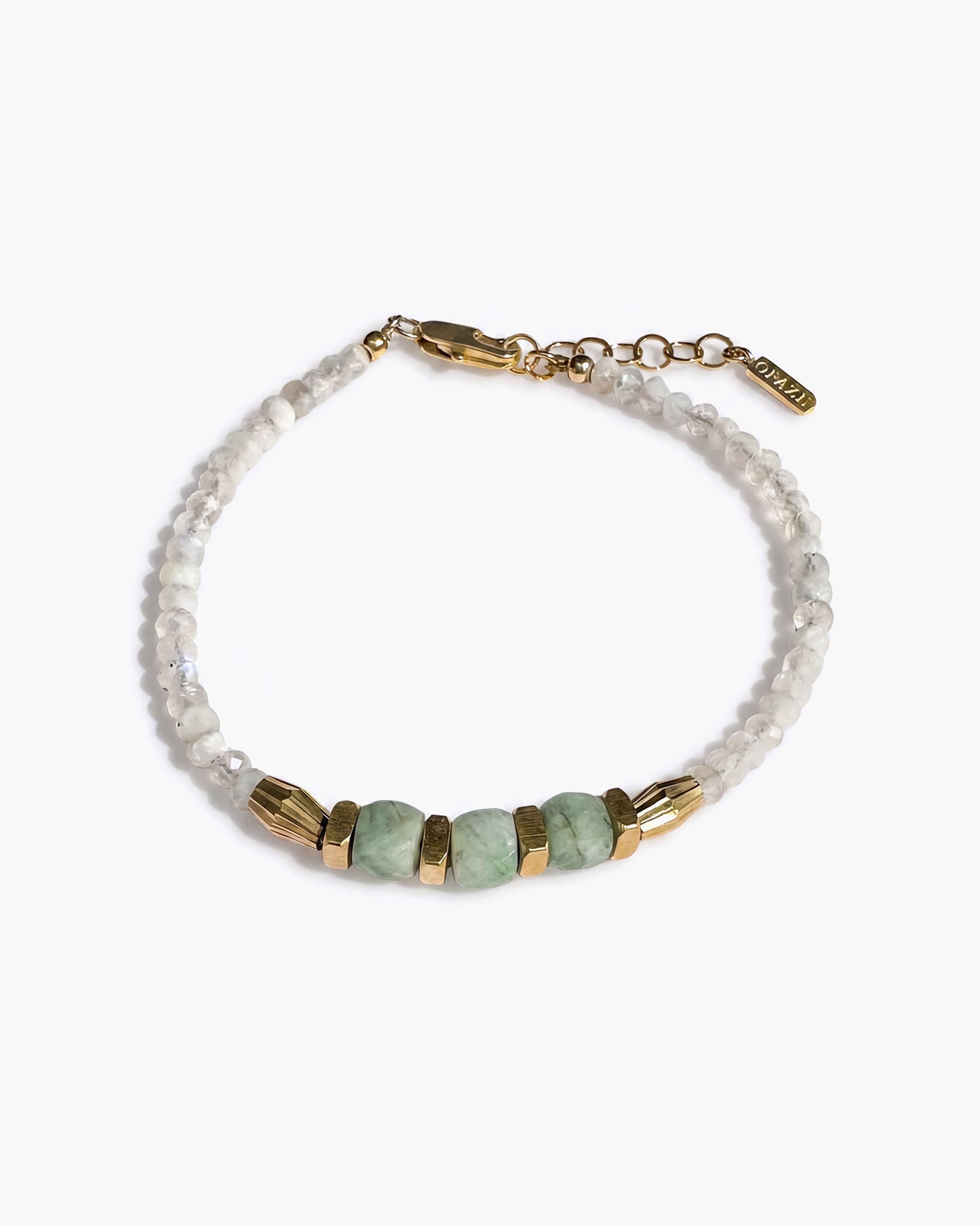
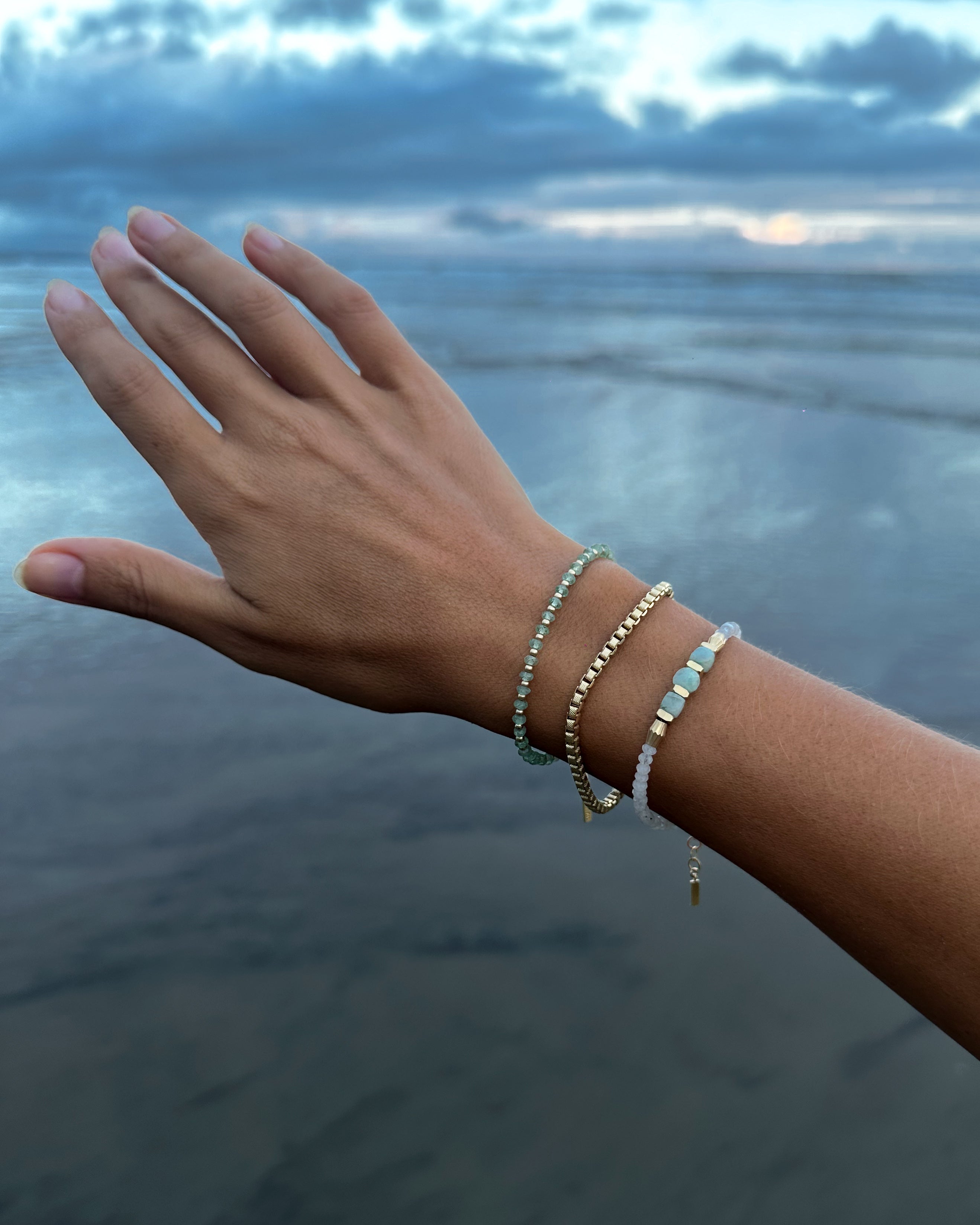
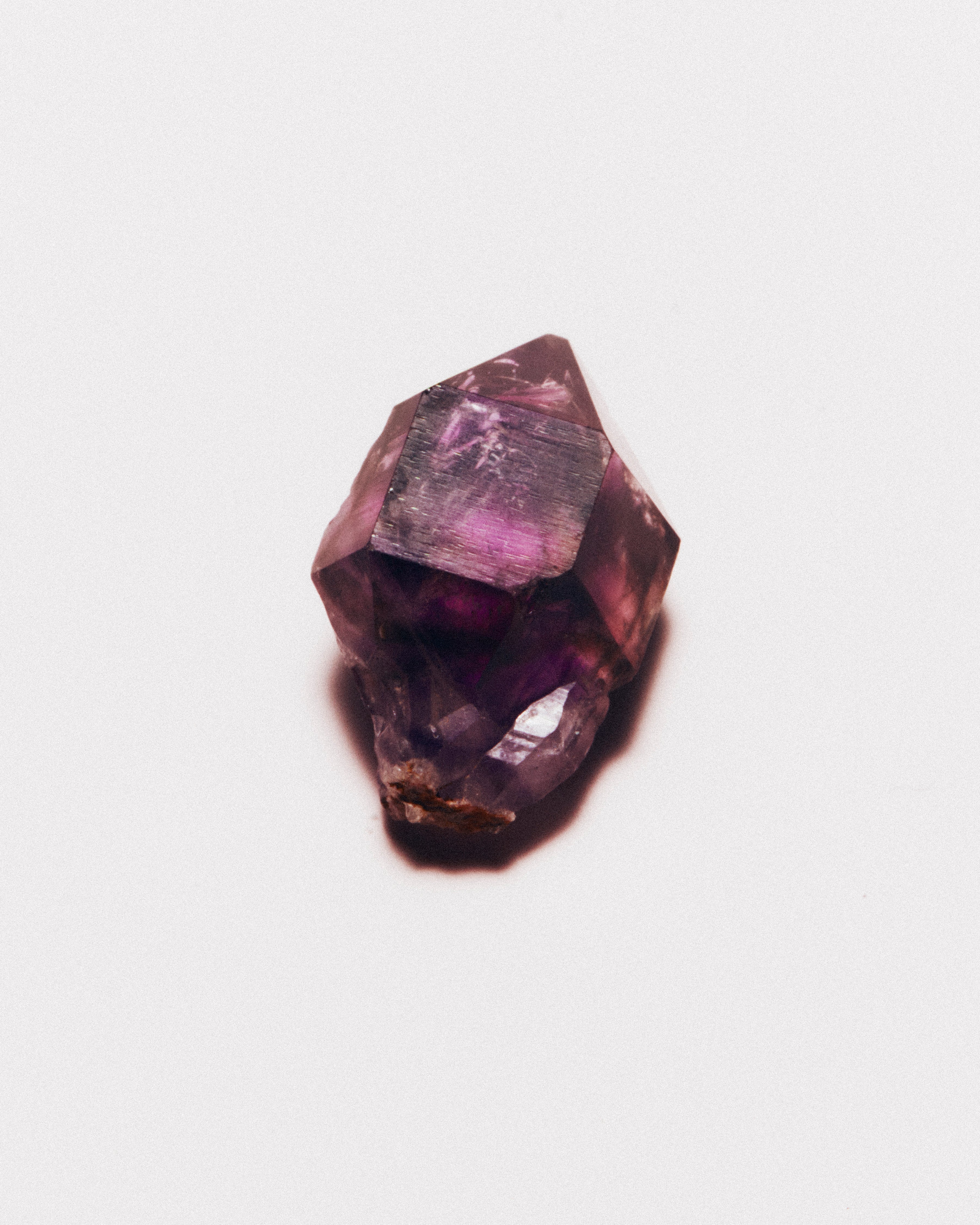
For stacking: moonstone works with almost everything because it does not compete. Pair it with labradorite for an otherworldly, iridescent combination. Pair it with amethyst for a calming, spiritually resonant stack. Pair it with citrine if you want warmth and light in the same look.
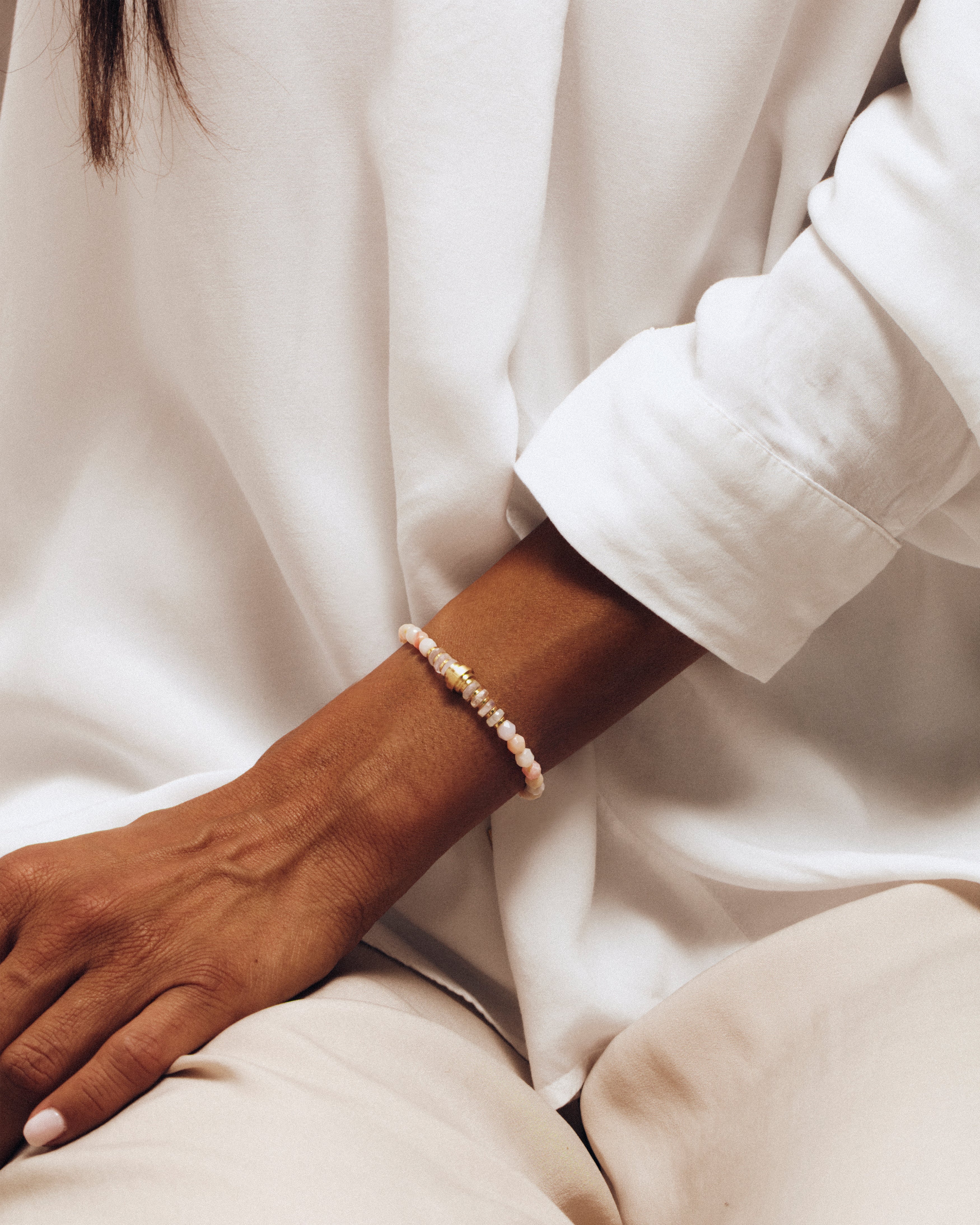
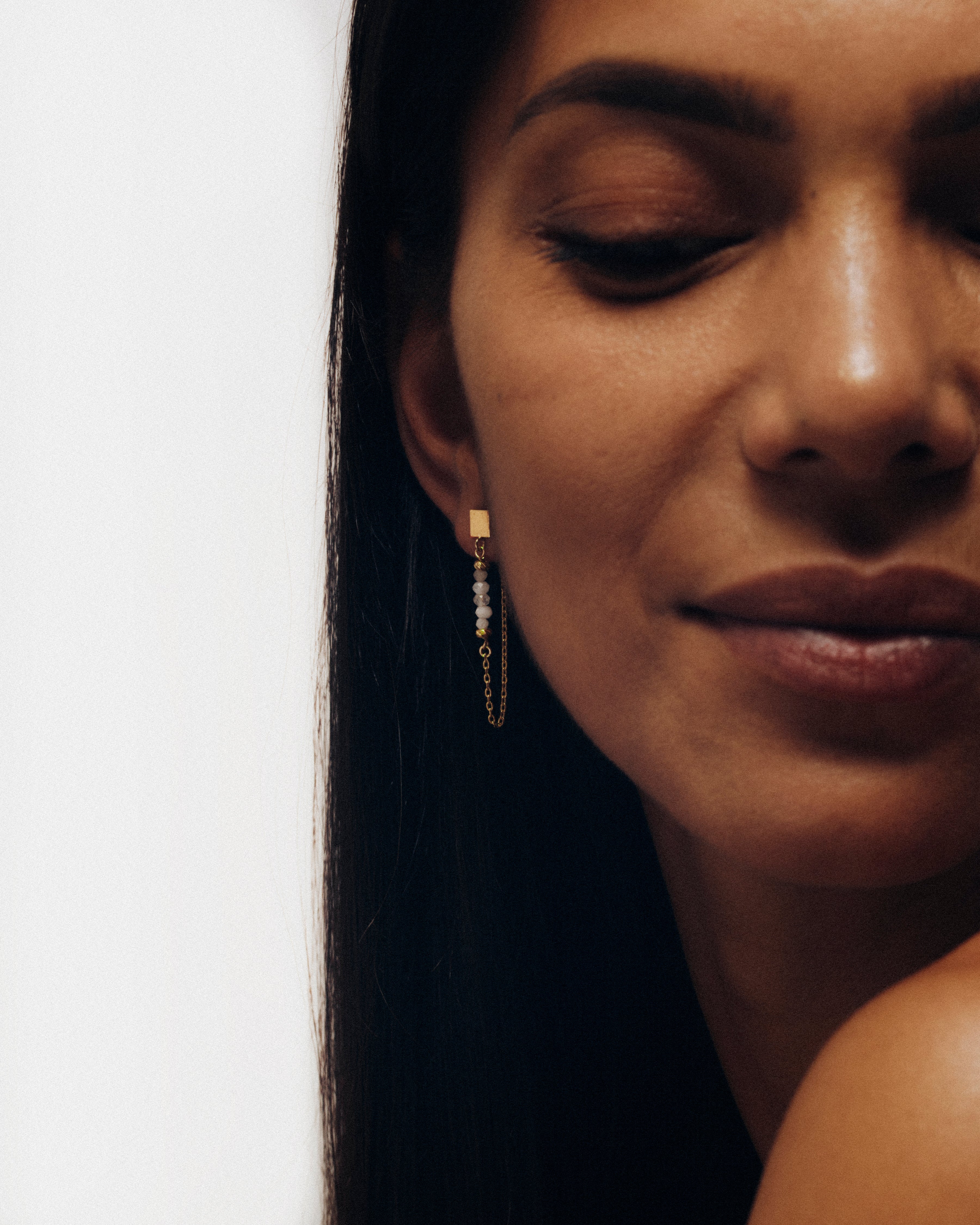
With metals: moonstone is traditionally paired with silver and white gold because the cool metal tone harmonizes with the blue of the adularescence. But moonstone in warm gold plating creates a deliberate contrast that is equally beautiful, the warm tone of the gold setting off the cool glow of the stone.
Caring for Moonstone
Moonstone is relatively soft compared to stones like sapphire or diamond, rating 6 to 6.5 on the Mohs hardness scale. This means it can be scratched by harder materials and should be stored separately from other jewelry. Avoid ultrasonic cleaners and harsh chemical cleaners. Clean moonstone gently with a soft, damp cloth and dry it carefully.
Many people who work with crystal energy also recommend charging moonstone under a full moon, leaving it on a windowsill or outside overnight to refresh its energy. Whether you approach this literally or as a meaningful practice of intention-setting, the ritual of tending to your stones creates a different relationship with the objects you wear.

What does moonstone symbolize?
Moonstone is most consistently associated with intuition, emotional intelligence, cycles, and inner knowing. It is linked to the moon across many cultures and traditions, and is considered supportive during periods of transition or when clarity is needed about something felt but not yet understood.
What is the difference between moonstone and rainbow moonstone?
Classic moonstone shows a white or blue adularescence. Rainbow moonstone, which is technically a variety of labradorite, shows multiple colors within its glow, including flashes of blue, orange, and green. Both are beautiful; rainbow moonstone tends to be more dramatic.
Is moonstone a birthstone?
Moonstone is one of the traditional birthstones for June, alongside pearl and alexandrite. It is also associated with the zodiac signs of Cancer and Scorpio in various astrological traditions.
Who should wear moonstone?
Moonstone is especially resonant for people who are navigating significant transitions, who want to deepen their intuitive awareness, or who are simply drawn to its luminosity. It is a June birthstone but is worn with intention by people of all birth months.
Can moonstone be worn every day?
Yes, with reasonable care. Avoid exposing it to harsh chemicals, extreme impact, or abrasive surfaces. A moonstone pendant or ring worn daily, stored carefully between wearings, can maintain its beauty for years.